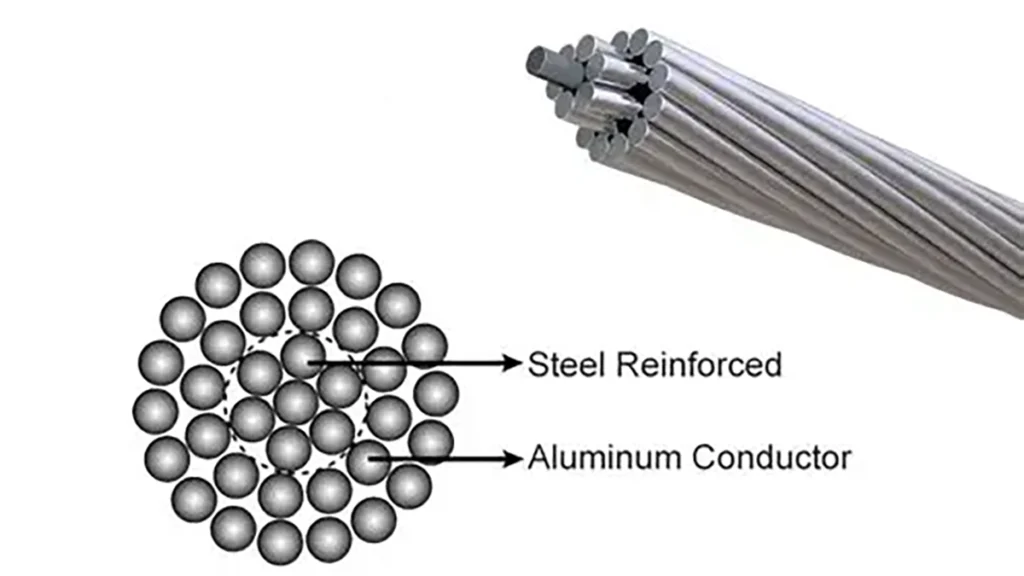
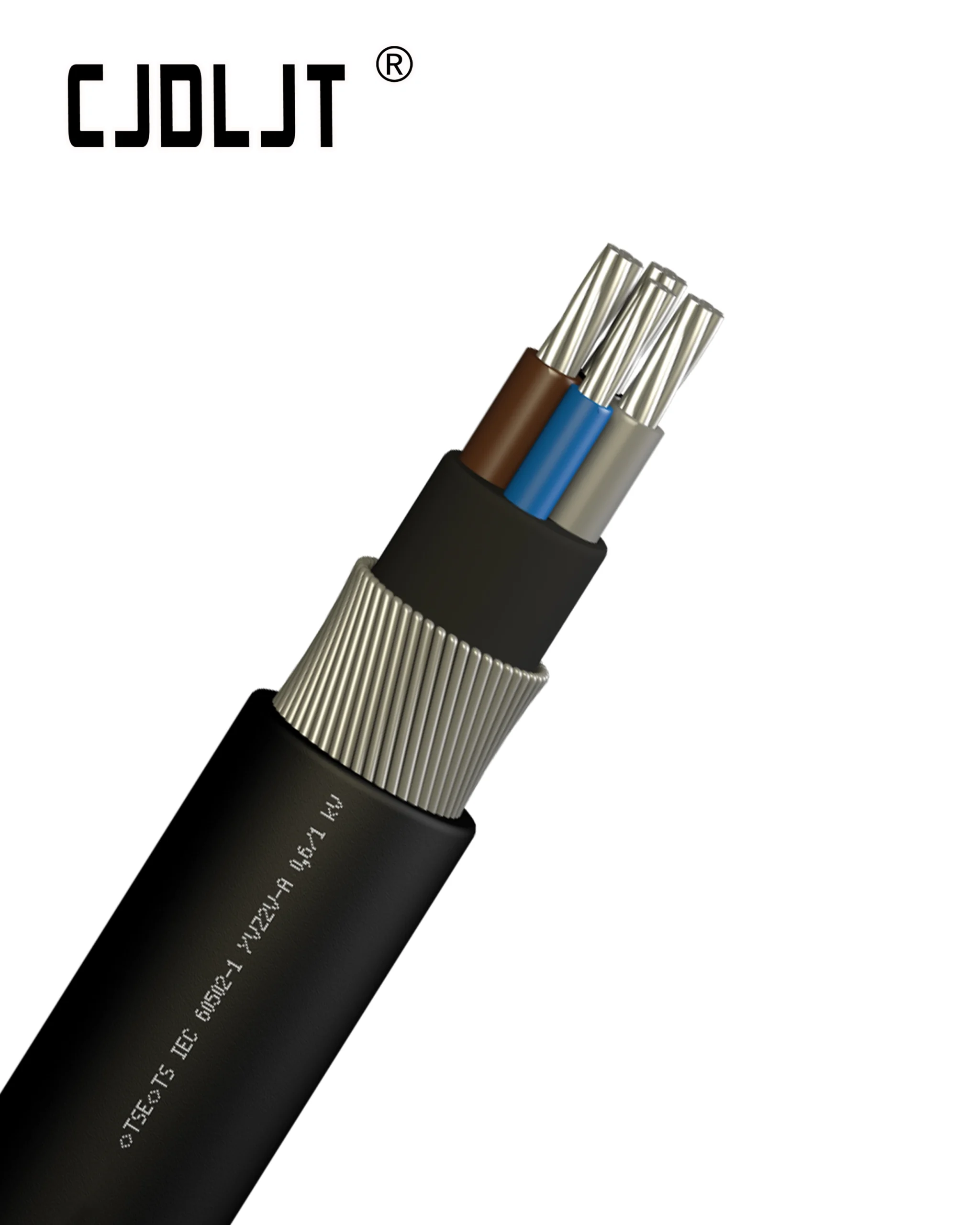


An ACSR conductor (Aluminum Conductor Steel Reinforced) combines a high-strength steel core with aluminum strands to provide excellent tensile strength while keeping weight manageable. This enables long-span transmission with controlled sag, cost efficiency, and good weather resistance, making ACSR a common choice for utility-scale distribution and transmission lines.
ACSR is designed to balance mechanical robustness with electrical performance. The steel core bears the majority of the mechanical load from wind, ice, and gravity, while the aluminum strands conduct electricity with decent conductivity and corrosion resistance. The strand count and alloy composition can be tailored to optimize sag, current rating, and temperature performance for specific routes, such as mountainous terrain or long-distance corridors. Although aluminum is less conductive than copper, ACSR remains cost-effective for very long spans where direct burial isn’t feasible.
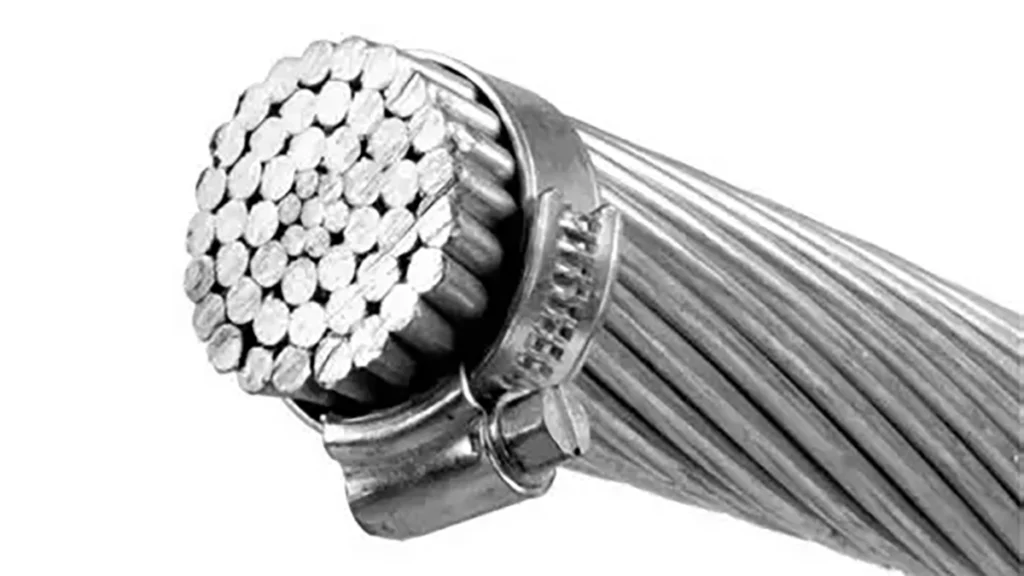
Key Advantages of ACSR:
- High tensile strength-to-weight ratio enables long spans with controlled sag
- Cost-effective for large-scale transmission due to abundant materials and straightforward manufacturing
- Steel core provides durability under wind and ice loading; aluminum strands offer good conductivity
- Easy to install with standard transmission hardware and widespread availability
- Flexible configurations allow customization for different voltage levels and terrains
- Broad range of alloy and strand designs to balance strength and electrical performance
Installation and Maintenance Considerations:
- Sag and spacing: accurate sag calculations are essential for compliance and safety at various temperatures
- Corrosion resistance: steel core vs. corrosion-resistant coatings for outdoor routes
- Termination and hardware: compatible clamps, connectors, and maintenance-friendly fittings
- Environmental factors: wind load, ice accumulation, and UV exposure influence coating and jacket choices
- Inspection and age: routine checks for wear, corrosion, and insulation integrity; plan lifecycle maintenance accordingly