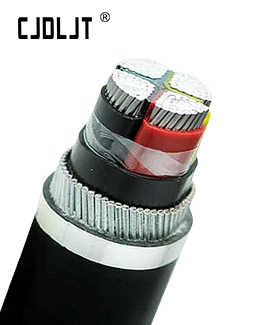
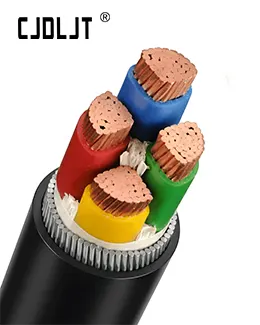
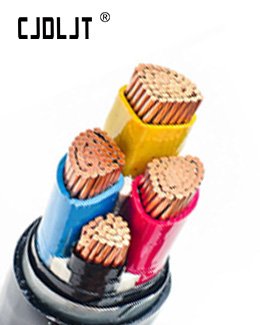
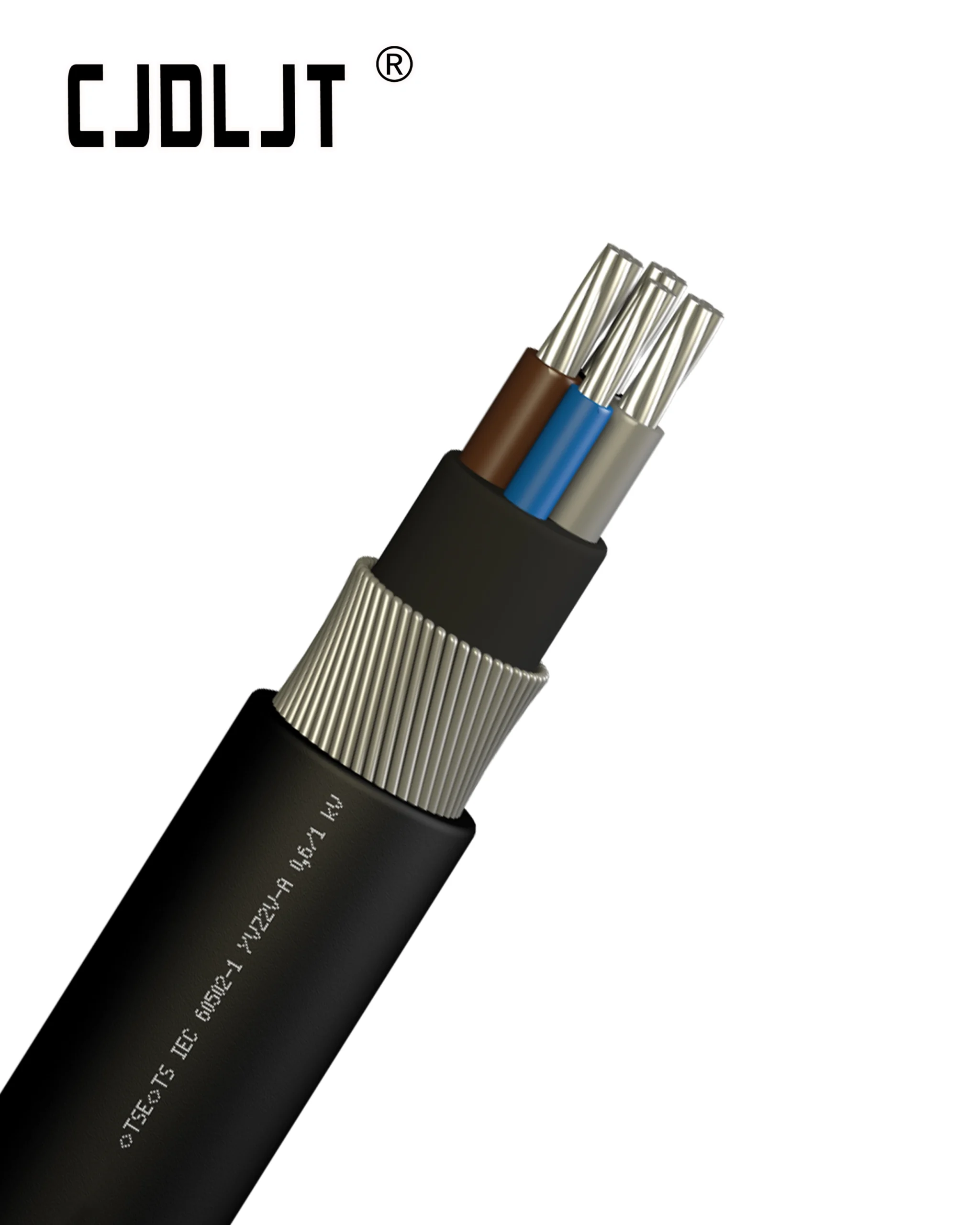


The primary differences between High-Voltage (HV) cables and Low-Voltage (LV) cables lie in their insulation structure and rated voltage (\(U_0/U\)). According to the IEC 60038 and IEC 60502 standards, low-voltage cables typically operate within the range of 0.6/1kV, using simple-structured Polyvinyl Chloride (PVC) or Cross-Linked Polyethylene (XLPE) insulation. In contrast, high-voltage cables (typically graded from 35kV to 220kV and above) are equipped with a complex multi-layer shielding system, including a semiconductive conductor shield, an insulation shield, and a metallic sheath (lead sheath or corrugated aluminum sheath), to control the intense electric field stress gradient. Visually, high-voltage cables are noticeably thicker due to the thicker dielectric layers required to prevent electrical breakdown and control partial discharges.
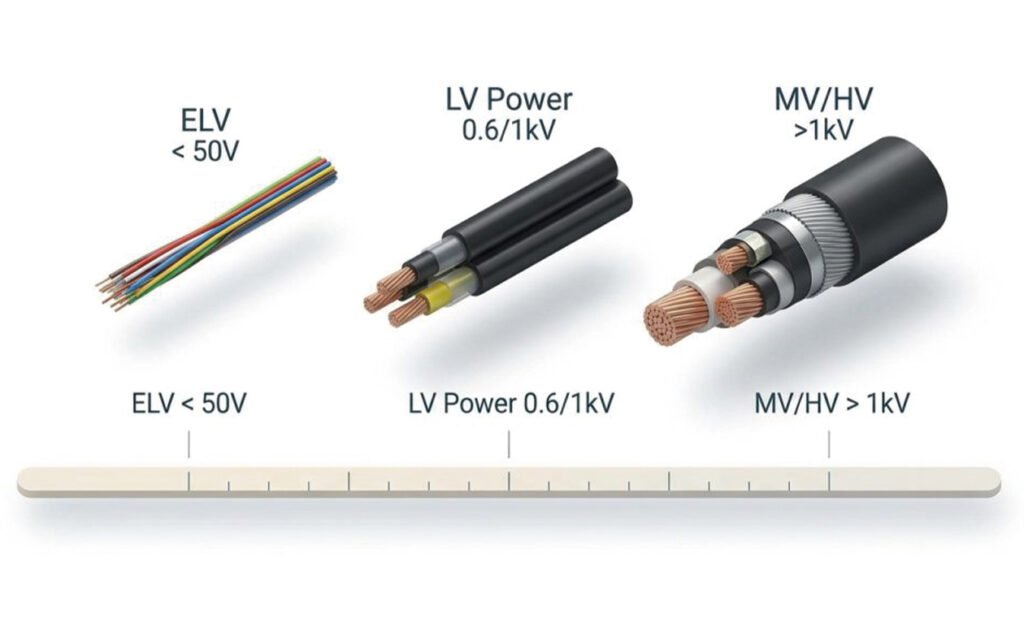
Visual Differentiation Tips for High-Voltage and Low-Voltage Cables
In addition to the professional structural and parameter differences mentioned above, the two can be quickly distinguished in daily life through the following visual methods:
- Identification Markings: Low-voltage cable sheaths are usually printed with “0.6/1kV”, while high-voltage cables are clearly marked with their specific voltage level (e.g., 35kV, 110kV). Their sheaths are often dark-colored with bold, prominent printing for easy identification.
- Weight and Stiffness: For the same cross-sectional area, high-voltage cables are significantly heavier than low-voltage cables due to their thicker insulation and shielding layers. They also have extremely high rigidity and are difficult to bend, whereas low-voltage cables are relatively lightweight and flexible, allowing for quick 判断 by touch.
- Installation Markers: When buried underground, high-voltage cables are marked with “High Voltage Danger” warning posts. Low-voltage cables do not have such warnings, or are only labeled “Power Cable”, allowing for auxiliary differentiation through ground markers.
Technical Comparison Table: Low-Voltage vs. High-Voltage Cable Specifications
This data sheet compares the structure and electrical parameters of the two cable types, based on IEC 60502-1 (Low-Voltage Standard) and IEC 60840/IEC 60502-2 (High/Medium-Voltage Standard).
| Characteristic | Low-Voltage (LV) Cable | High-Voltage (HV) Cable | Technical Significance |
|---|---|---|---|
| Rated Voltage (U0/U) | 0.6/1kV | 35kV, 66kV, 110kV, 220kV | Determines the required dielectric strength |
| Insulation Material | PVC, XLPE, or Low-Smoke Zero-Halogen (LSZH) materials | High-purity, ultra-clean XLPE | High-voltage cables require impurity-free insulation to prevent “water treeing” |
| Shielding Layer | Usually none (except shielded types) | Semiconductive shield + Metallic shield | High-voltage cables require balanced electric field distribution |
| Armoring Layer | Steel Wire Armoring (SWA) or Steel Tape Armoring (STA) | Typically lead or aluminum-polymer sheaths | The armoring layer of high-voltage cables also provides moisture protection |
| Bending Radius | 6 to 12 times the cable Outer Diameter (OD) | 15 to 25 times the cable Outer Diameter (OD) | High-voltage cables have significantly higher rigidity |
| Termination Treatment | Simple stripping / crimping | Complex stress cones / joint kits | High-voltage cables require professional electric field control |
Applications and Installation Locations in Daily Life
While both types of cables are integral parts of the power grid, their distance from end-users differs based on safety and distribution efficiency.
Applications of Low-Voltage (LV) Cables
- Residential Wiring: All internal wiring in homes (lighting, sockets, appliances) uses low-voltage cables.
- Commercial Buildings: Distribution systems in malls, offices, and hospitals.
- Street Lighting: Municipal standard lighting circuits typically use 0.6/1kV underground low-voltage cables.
- Industrial Equipment: Power supply for motors, CNC machine tools, and factory assembly lines.
- Special Scenarios: New energy vehicle home charging pile circuits, elevator power supply lines in residential buildings, and corridor emergency lighting circuits all use low-voltage cables, making them closely tied to daily life.
Applications of High-Voltage (HV) Cables
- Urban Power Transmission: Buried deep in concrete ducts under city streets, responsible for delivering power from the city’s outskirts to the center.
- Substation Connections: Linking the main power grid to local step-down transformers.
- Intercity Power Lines: Crossing bays or straits via large overhead transmission towers or dedicated submarine cables.
- Large-Scale Infrastructure: Supplying power to railway catenary systems or large mining operations.
- Special Scenarios: Centralized power supply trunk lines in large commercial districts and industrial parks, traction power supply lines for urban subways, and rural high-voltage transmission lines in remote areas. While not directly encountered, these are critical to daily electricity supply.