

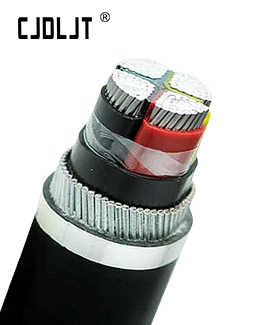
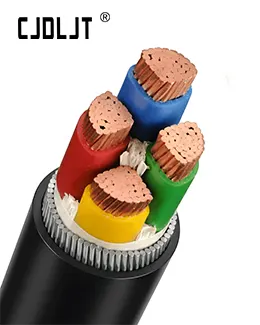
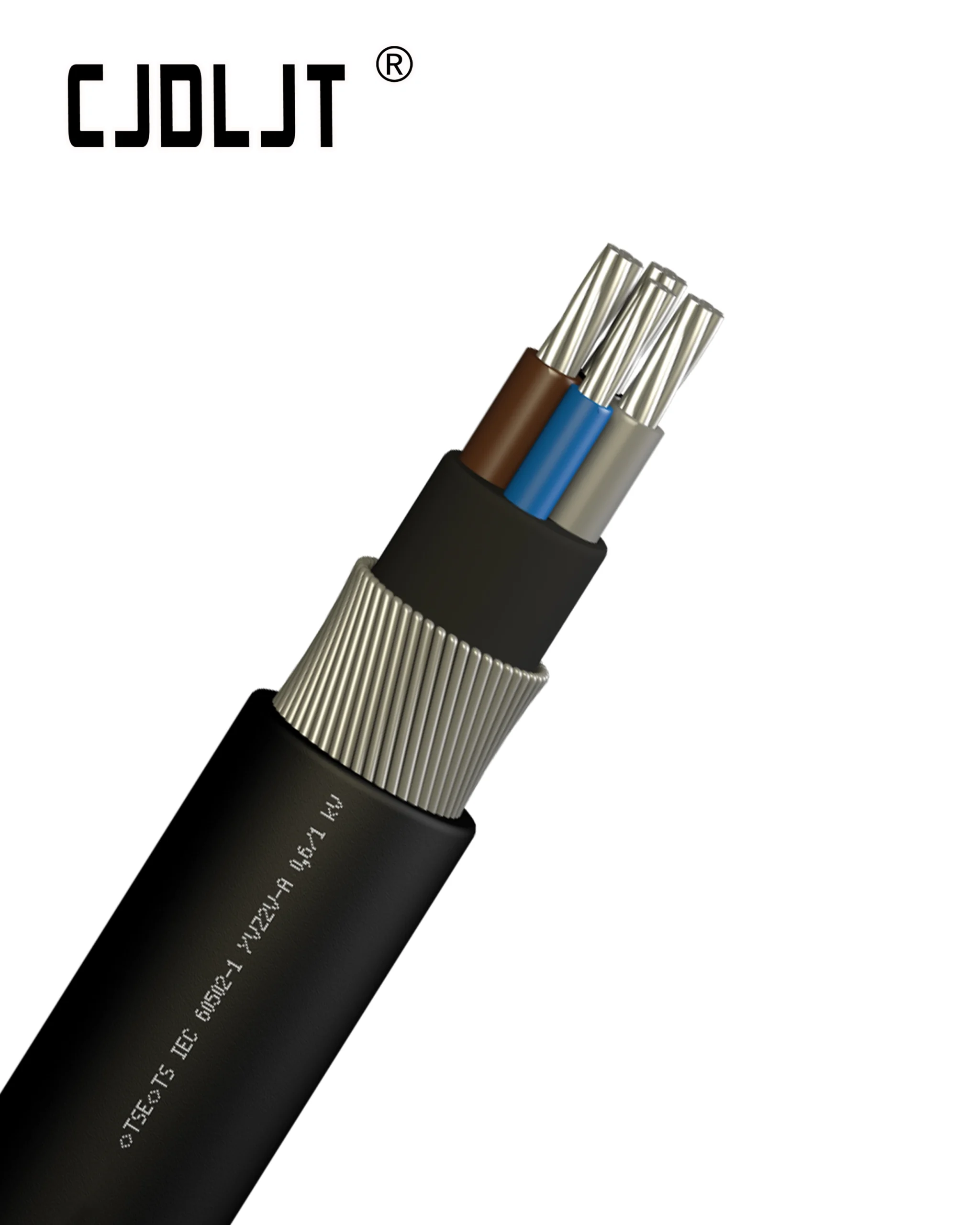


Core Technical Differences: BS 5467, IEC 60502, and GB/T 12706
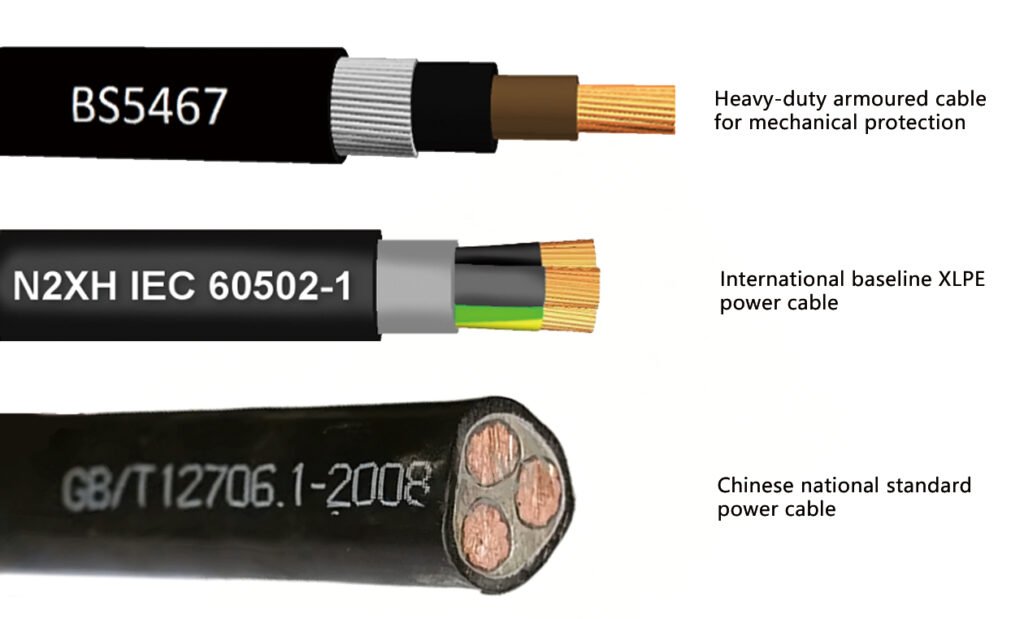
The core variance among BS 5467, IEC 60502-1, and GB/T 12706.1 lies in structural dimensional margins, design intents, and region-specific mechanical tolerances. While IEC 60502 acts as the harmonized international parent standard establishing minimum baseline parameters, GB/T 12706 is its Chinese national equivalent, modified to integrate strict domestic grid system requirements, manufacturing tolerances, and standardized metric test regimes. Conversely, BS 5467 is a highly specific British national standard tailored strictly for low-voltage armoured power distribution. It enforces significantly greater insulation and outer sheath thick-margin walls to withstand harsher physical stress without auxiliary protection.
Structured Data Matrix (Technical Parameters)
The matrix below highlights the direct differentiation across 0.6/1 kV Cross-Linked Polyethylene (XLPE) insulated power cables under nominal production configurations.
| Technical Attribute | BS 5467 | IEC 60502-1 | GB/T 12706.1 |
| Primary Design Focus | Mechanical heavy-duty armored configurations | International baseline framework (unarmored & armored) | Chinese localized grid standardization |
| Conductor Standard Alliance | BS EN 60228 (Class 1 solid, Class 2 stranded) | IEC 60228 (Global baseline for classes 1, 2, 5, 6) | GB/T 3956 (Identical to IEC 60228 class profiles) |
| Conductor Shapes Allowed | Circular, compacted circular, shaped (sectoral) | Circular, compacted circular, shaped | Circular, compacted circular, shaped |
| Nominal Insulation Thickness ($1.5 \text{ mm}^2$) | 0.6 mm | 0.7 mm | 0.7 mm |
| Nominal Insulation Thickness ($16 \text{ mm}^2$) | 0.7 mm | 0.7 mm | 0.7 mm |
| Nominal Insulation Thickness ($240 \text{ mm}^2$) | 1.7 mm | 1.7 mm | 1.7 mm |
| Outer Sheath Compound Requirements | PVC Type 9 (Enhanced tensile & hardness profile) | PVC Type ST1 / ST2 (General purposes) | PVC Type ST2 / Polyethylene (ST7) |
| Mechanical Armoring Focus | Galvanized Steel Wire Armor (SWA) or Aluminum Wire Armor (AWA) | SWA, Aluminum Wire, Double Steel Tape Armor (STA) | Double Steel Tape Armor (STA) preferred; SWA used for tension paths |
| Bending Radius (Armored) | 8x to 12x overall diameter (depending on core count) | 12x (Single-core), 15x (Multi-core) baseline | 15x (Single-core), 12x (Multi-core) baseline |
Modular Technical Analysis
Conductor Structure Profiles
Conductor designs across all three standards converge on Annealed Copper or Aluminum configurations governed by IEC 60228 derivatives. However, application restrictions vary. BS 5467 strictly focuses on Class 1 (solid) and Class 2 (stranded circular or shaped) conductors for fixed installations. IEC 60502 explicitly accommodates flexible Class 5 and Class 6 layouts within its foundational scope. GB/T 12706 pairs directly with GB/T 3956, adopting identical resistance metrics to IEC but optimizing production towards massive industrial scales, favoring highly compacted sector-shaped multi-core conductors to reduce total cable weight and material costs.
Insulation Thickness Discrepancies
For XLPE (Cross-Linked Polyethylene) low-voltage variants, the nominal insulation thickness calculations align tightly for large cross-sections but diverge at small dimensions:
- Small Cross Sections (<= 16 mm²): BS 5467 specifies a thinner 0.6 mm insulation layer for 1.5 mm² sizes, whereas IEC 60502 and GB/T 12706 mandate a strict 0.7 mm floor.
- Large Cross Sections (>= 240 mm²): The standards converge uniformly at 1.7 mm. The fundamental distinction lies in testing: GB/T 12706 enforces strict lower-limit thickness checks (t_min >= 0.9 t_nom – 0.1 mm), leaving narrower margins for manufacturer negative deviation than generalized IEC baselines.
Sheath Mechanical Properties & Armoring
Mechanical sheath properties showcase the most significant architectural divergence:
- BS 5467: Engineered exclusively for high mechanical abuse. It mandates a dense PVC Type 9 outer jacket paired with uniform heavy SWA (Steel Wire Armor) layers. This gives it superior longitudinal tensile strength, making it ideal for deep trenching and direct-burial environments.
- IEC 60502-1: Offers a broad framework allowing both tape and wire armor alternatives. Its sheath requirements change based on whether the installation specifies general-duty ST1 or thermal-stabilized ST2 jacket parameters.
- GB/T 12706.1: Tailored around dual-layer steel tape armor configurations (YJV22). This design provides unmatched radial crush and rodent protection in concrete conduits and direct burial, but sacrifices the high longitudinal tensile strength found in British wire-armored alternatives.