

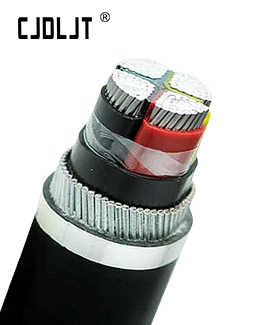
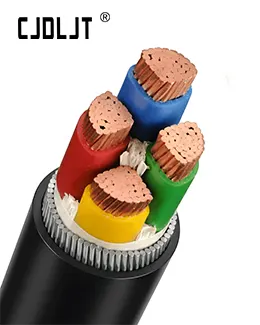
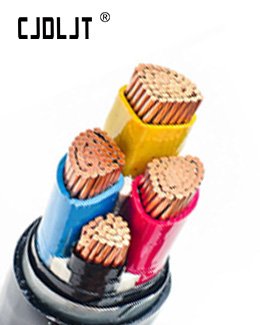
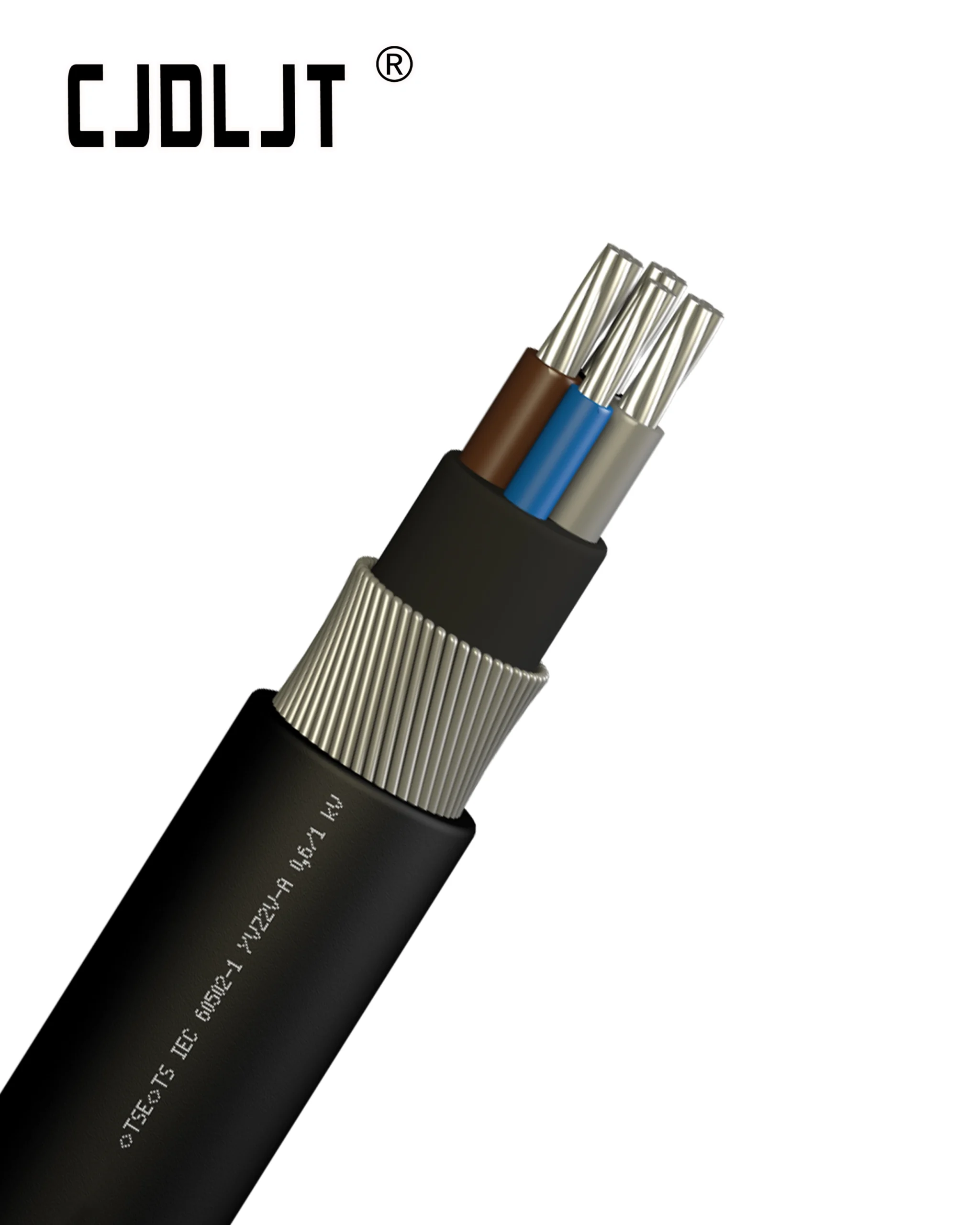


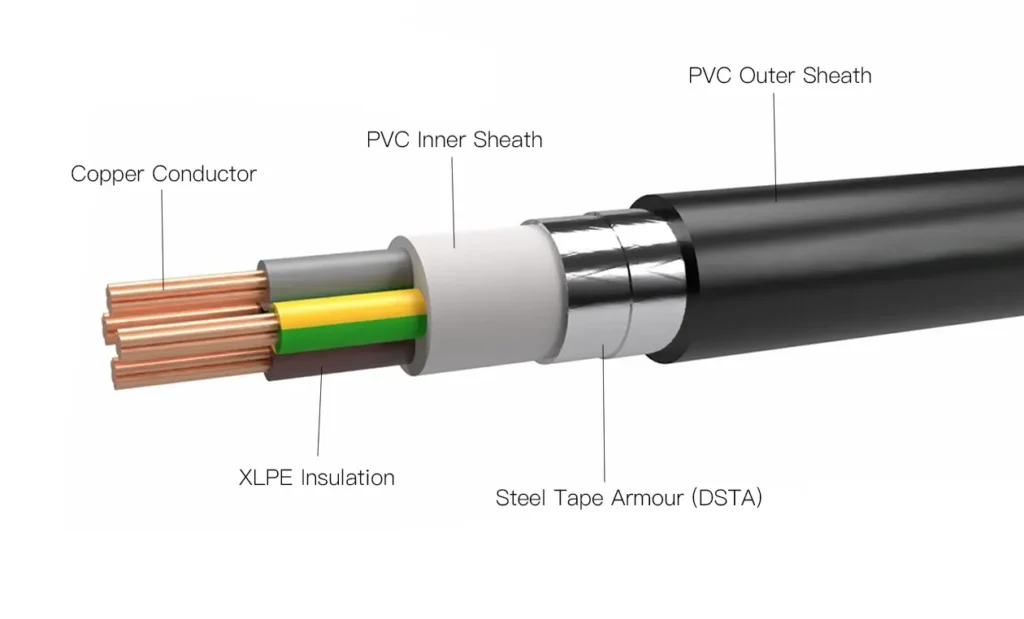
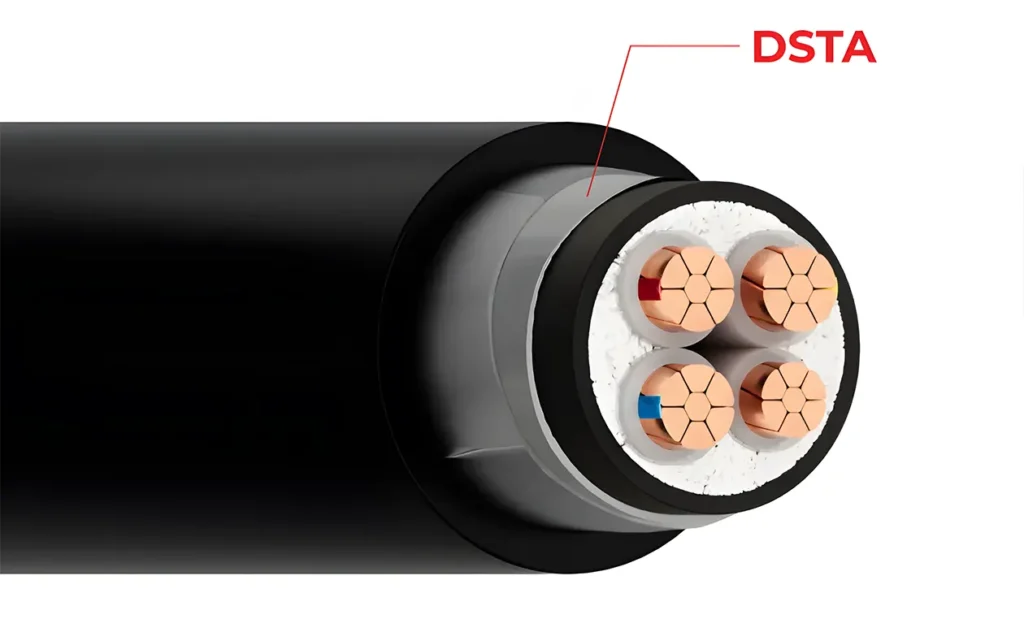
The primary difference between STA (Steel Tape Armour) and DSTA (Double Steel Tape Armour) in N2XBY cables lies in the layer count and mechanical protection level. N2XBY is an [1]standard power cable featuring a plain annealed copper conductor, [2]insulation, [3]inner sheath, [4]steel tape armour, and a PVC outer sheath, rated for 0.6/1 kV. Standard STA utilizes a single helical layer of steel tape with a gap between turns, whereas DSTA applies two overlapping layers of galvanized steel tape, ensuring 100% continuous coverage with no helical gaps, significantly increasing crush and rodent resistance in heavy-duty underground direct-burial applications.
Technical Parameter Comparison Matrix
| Technical Parameter | Single Steel Tape Armour (STA) | Double Steel Tape Armour (DSTA) |
| Armour Layer Construction | Single galvanized steel tape helical wrap | Two overlapping galvanized steel tapes (50% overlap minimum) |
| Coverage Continuity | Gap between turns (~10–20%) | 100% continuous physical coverage |
| Crush & Impact Resistance | Moderate mechanical resistance | High mechanical resistance against static/dynamic loads |
| Rodent & Termite Protection | Moderate risk of gap penetration | High protection; complete barrier preventing burrowing |
| Minimum Bending Radius | ~12–15 × Cable Outer Diameter | ~15–18 × Cable Outer Diameter |
| IEC Standard Compliance | IEC 60502-1 | IEC 60502-1 |
| Primary Installation Environment | Underground conduits, cable trenches | Direct burial in soil, harsh industrial/mining terrains |
Structural Breakdown of N2XBY Cable
N2XBY is designated under VDE / IEC standard codes representing its material layers:
- N: Standardized power cable (VDE standard designation).
- 2X: XLPE (Cross-Linked Polyethylene) insulation, rated for a maximum continuous conductor operating temperature of 90°C and short-circuit temperatures up to 250°C ().
- B: Galvanized Steel Tape Armour (STA or DSTA depending on single or double tape specification).
- Y: PVC (Polyvinyl Chloride) outer sheath providing flame retardancy and chemical resistance.
Mechanical Protection Mechanisms: STA vs. DSTA
Single Steel Tape Armour (STA)
STA consists of a single strip of galvanized steel wrapped helically over the PVC inner bedding.
- Gap Defect: To allow cable flexibility, a single tape cannot be wrapped with 0% gap without buckling. The resulting helical gap leaves isolated points where sharp rocks or burrowing pests can bypass the metallic layer.
- Flexibility: Provides a lower overall weight and smaller outer diameter (OD), allowing tighter bending radii during cable pull through ducting systems.
Double Steel Tape Armour (DSTA)
DSTA utilizes two layers of galvanized steel tape applied in the same direction.
- Overlap Protection: The outer steel tape is aligned to explicitly bridge the helical gaps left by the inner steel tape (typically with a minimum 50% overlap ratio).
- Load Distribution: Offers superior resistance against localized point-loads, heavy earth compression, vehicle traffic over unpaved trenches, and mechanical shock.
Grounding, Current Rating, and Installation Constraints
- Non-Tensile Load Limitation: Steel tape armour (both STA and DSTA) is designed exclusively for radial compression and crush protection. It provides minimal longitudinal tensile strength. For vertical shafts or high-pull installations, [5] must be specified instead.
- Earthing and Equipotential Bonding: Galvanized steel tape serves as a mechanical protective shield, not a primary protective earth conductor (PE). Grounding must conform to IEC electrical safety standards, verifying that armour impedance meets short-circuit earth fault loop requirements.
- Current Carrying Capacity: Eddy currents induced in the magnetic steel tape can cause localized heating. STA and DSTA variants are engineered for multi-core AC systems or DC systems to prevent excessive magnetic loop losses.
CJDL CABLE Engineering Insight
For direct-burial installations where crushing loads and rodent ingress are real risks, DSTA adds a second overlapping galvanized steel tape over the STA layer, closing the helical gap while keeping the cable fully compliant with IEC 60502-1. Our engineering team recommends DSTA for harsh underground and mining terrain, and STA where lighter weight and tighter bending radii are priorities. All CJDL CABLE armoured cables are manufactured and routinely tested to IEC 60502-1.
References
[1] Wikipedia. VLF cable testing[EB/OL]. 2026-09-28.
[2] Wikipedia. Cross-linked polyethylene[EB/OL]. 2026-09-28.
[3] Wikipedia. Polyvinyl chloride[EB/OL]. 2026-09-28.
[4] Wikipedia. Galvanization[EB/OL]. 2026-09-28.
[5] Wikipedia. Armoured cable[EB/OL]. 2026-09-28.