

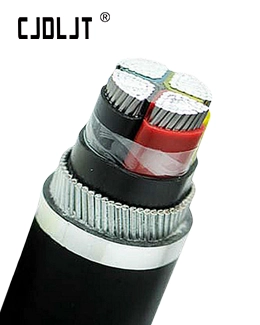
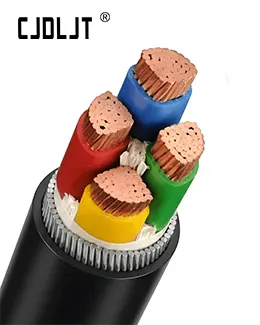
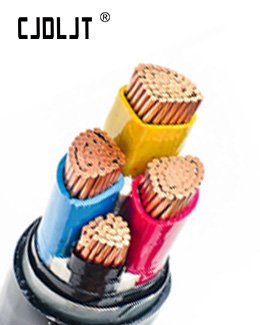
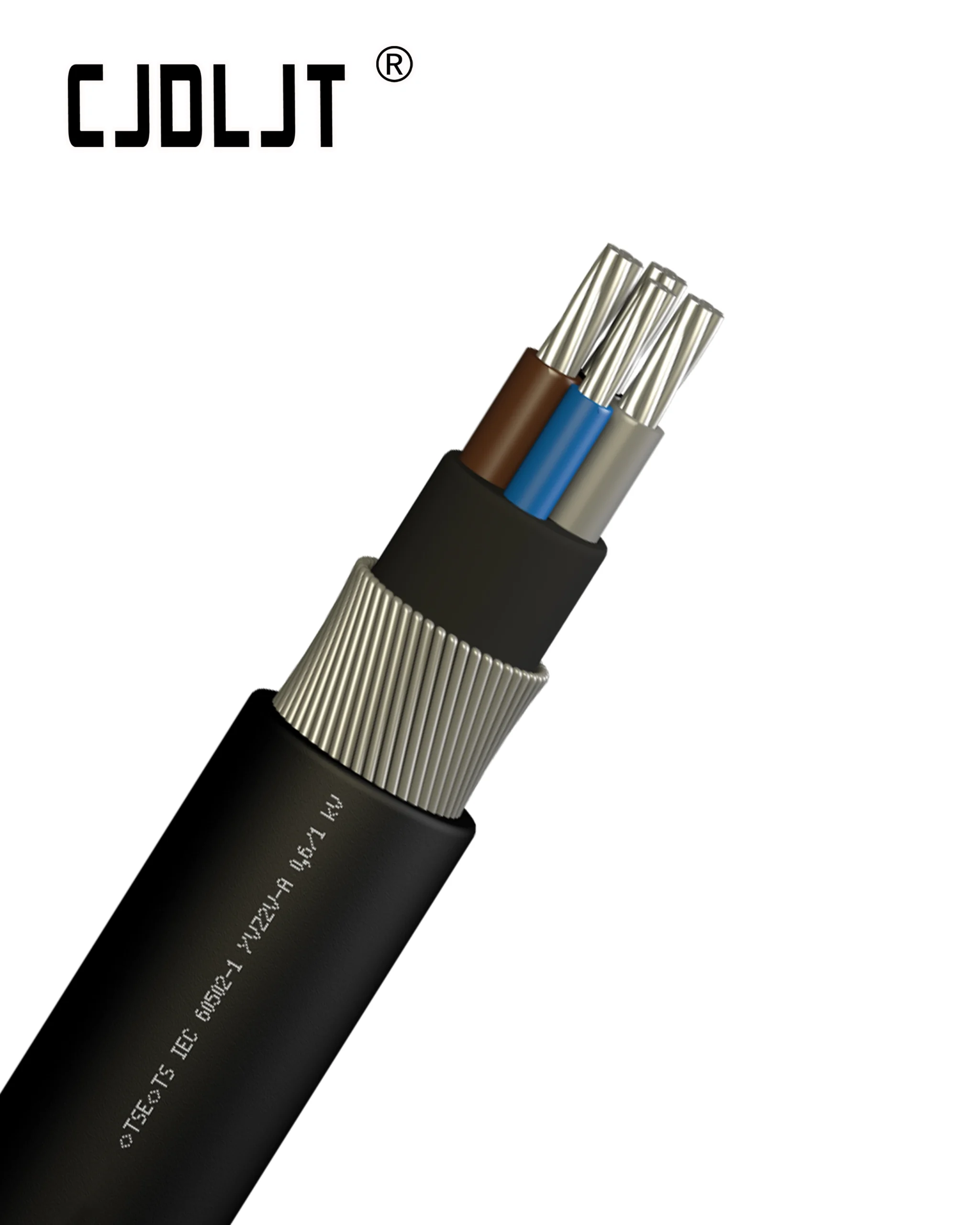


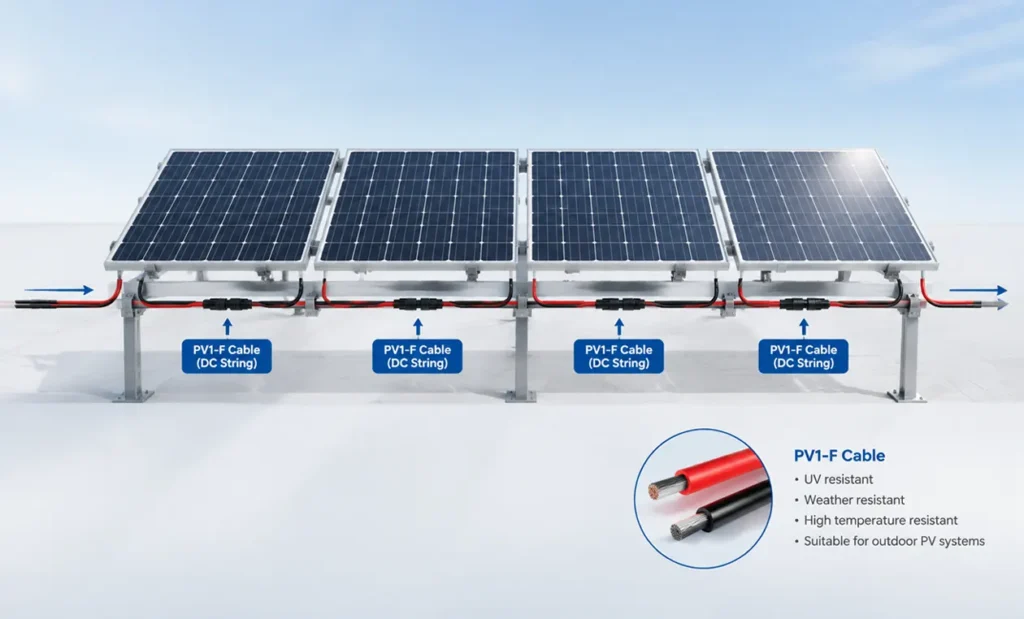
PV1-F solar cable is a specialized, single-core, flexible copper conductor insulated and sheathed with electron-beam cross-linked copolymers, specifically engineered for photovoltaic power systems [2]. Operating primarily on the DC side of solar installations—connecting solar panels to string combiners and inverters—it handles high voltage and severe environmental stress. Complying with standards established by the International Electrotechnical Commission [3]and regional codes such as EN 50618 and IEC 62930, PV1-F cables withstand continuous operating temperatures up to 120°C and extreme UV exposure, ozone, and acid rain, ensuring a minimum operational lifespan of 25 years under harsh outdoor conditions.
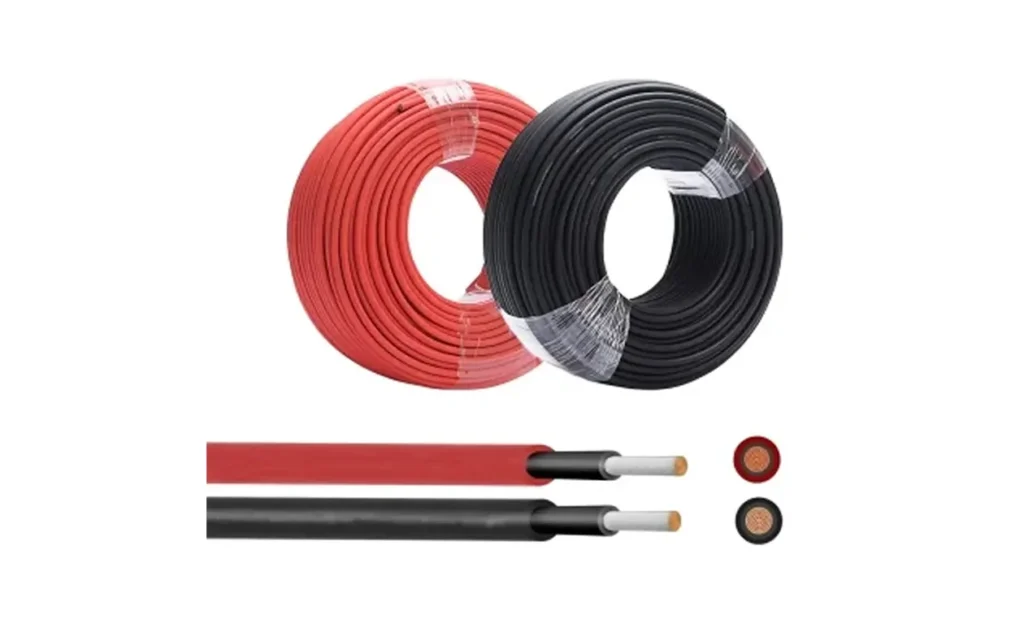
Technical Specification Matrix for PV1-F Solar Cables
| Parameter | Technical Specification / Value | Compliance / Standard |
| Conductor Material | Tinned Annealed Copper (Class 5 flexible) | IEC 60228 [1] |
| Insulation / Sheath | Electron-Beam Cross-Linked Polyolefin (LSZH) | EN 50618 / IEC 62930 |
| Rated Voltage (U_0/U) | AC: 0.6/1.0\text{ kV} / DC: 1.5\text{ kV} (conductor-to-earth) | EN 50618 |
| Maximum Conductor Temperature | +120^{\circ}\text{C} (for 20,000 hours) | IEC 60216 |
| Operating Temperature Range | -40^{\circ}\text{C} to +90^{\circ}\text{C} | EN 50618 |
| Flame Retardancy | Vertical flame spread test passed | IEC 60332-1-2 |
| Expected Lifespan | \geq 25\text{ years} | Accelerated Weathering Tests |
Why PV1-F Is Required for Photovoltaic DC Strings
Photovoltaic DC strings experience distinct electrical and environmental stresses that standard PVC or conventional building wires cannot withstand:
- High DC Voltage Tolerance: Modern utility and commercial solar arrays operate at DC voltages up to 1500\text{V}. PV1-F cables are specifically rated for 1.5\text{ kV} DC, preventing dielectric breakdown and insulation failure.
- Extreme Environmental Resilience: Outdoor cable runs face relentless ultraviolet (UV) radiation, ozone, moisture, and thermal cycling. The electron-beam cross-linking process creates a durable molecular network that resists melting, cracking, and thermal deformation.
- Low Smoke Zero Halogen (LSZH) Safety: PV1-F utilizes halogen-free compounds, ensuring that in the event of a fire, toxic or corrosive acid gases are not released, safeguarding personnel and sensitive electronic infrastructure.
Material Composition and Construction Standards
The structural design of a compliant PV1-F cable relies on high-grade materials to guarantee long-term performance:
- Tinned Annealed Copper Conductor: Provides high electrical conductivity while preventing copper oxidation and corrosion when exposed to moisture. The flexibility of Class 5 stranded copper facilitates tight bending radii inside junction boxes and cable trays.
- Cross-Linked Polyolefin Insulation: Acts as the primary dielectric barrier, offering exceptional resistance to high temperatures, short-circuit currents, and mechanical compression.
- UV and Ozone Resistant Outer Sheath: Protects against mechanical abrasion, chemical solvents, oils, and weathering degradation, meeting stringent global photovoltaic installation standards.
References
[1] Wikipedia. IEC 60228[EB/OL]. 2023-05-15.
[2] Wikipedia. Photovoltaic system[EB/OL]. 2026-03-01.
[3] Wikipedia. International Electrotechnical Commission[EB/OL]. 2026-04-09.