

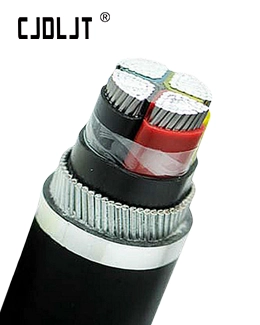
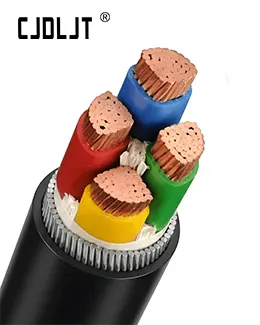
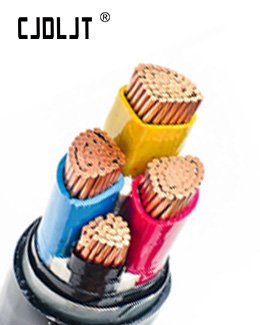
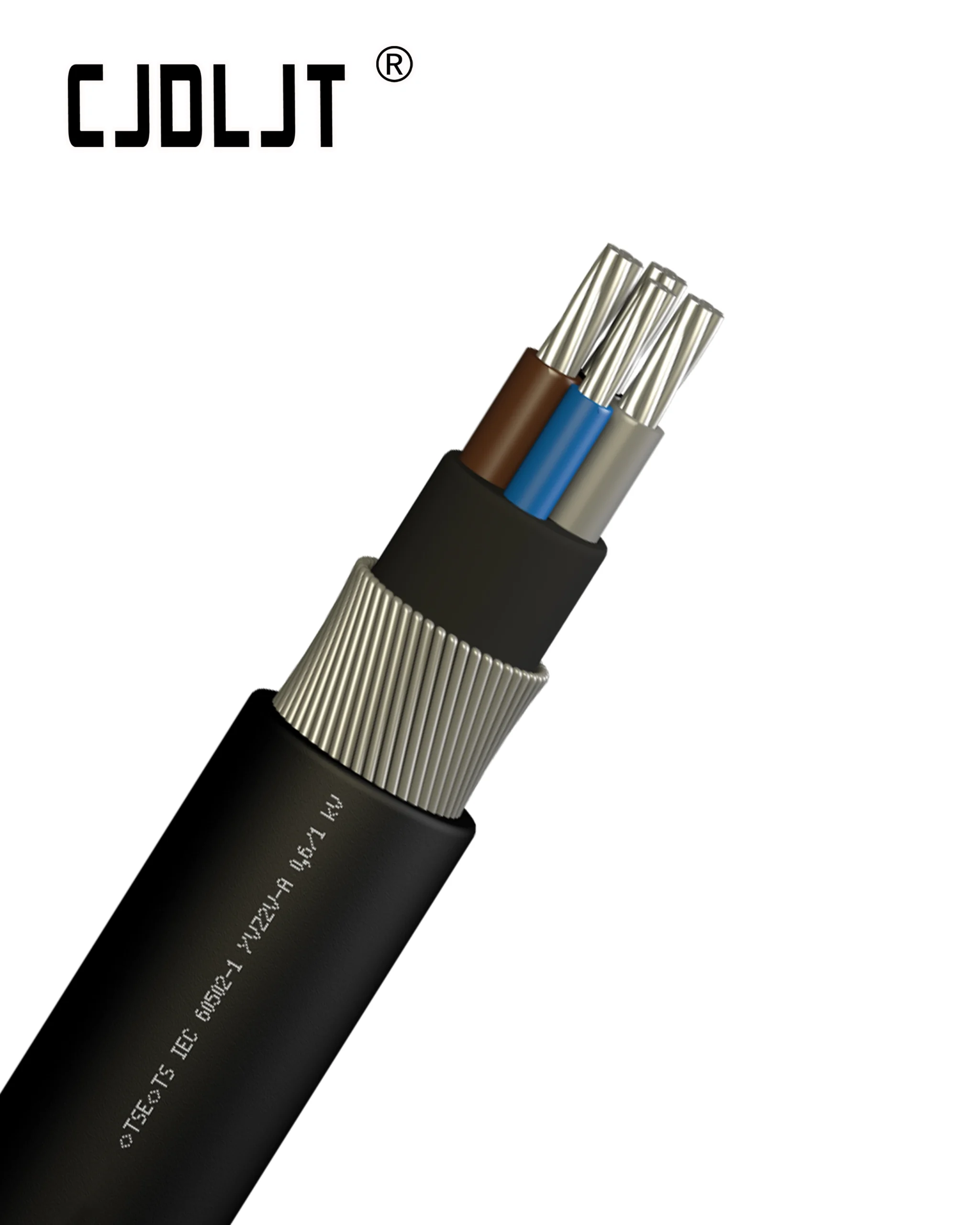

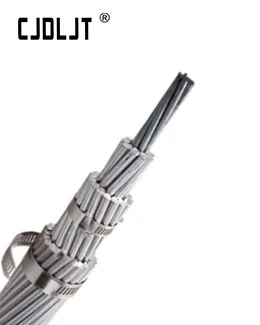
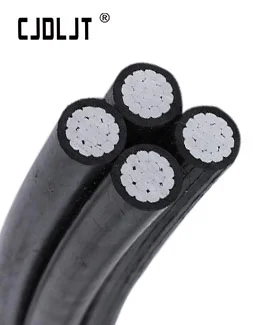
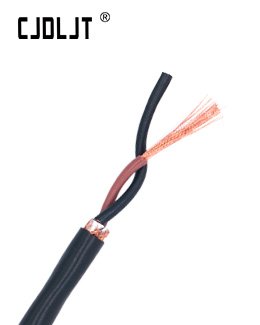

Copper Conductors Deliver Higher Conductivity and Compactness; Aluminium Offers Lower Cost and Weight
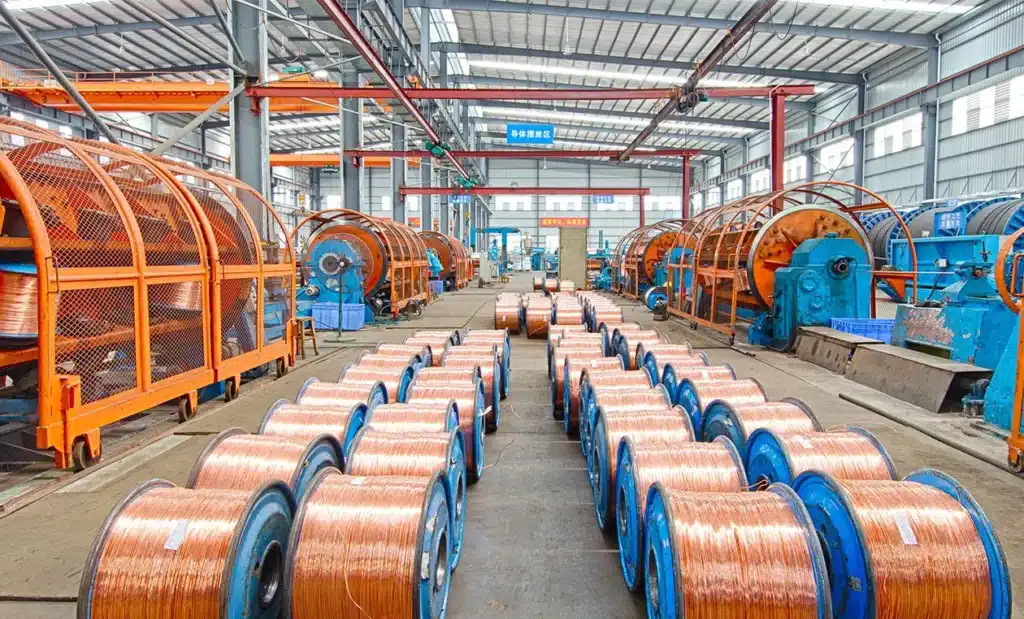
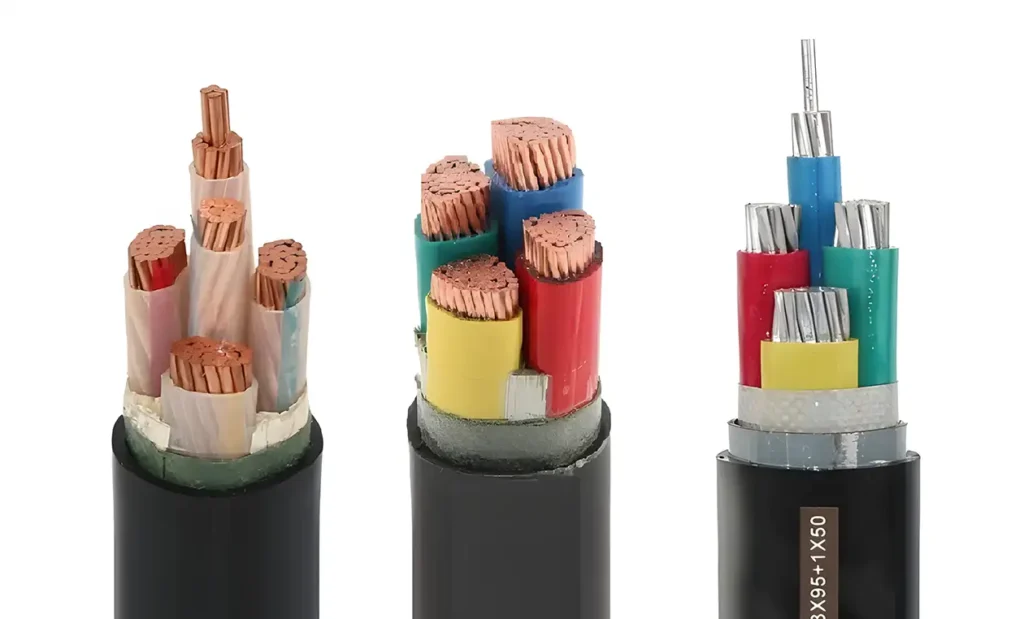
Annealed copper conductors provide approximately 61% higher electrical conductivity than aluminium, enabling smaller cross-sections for the same current-carrying capacity in low-voltage power cables rated 0.6/1 kV. Aluminium conductors, typically of grade 1350 or equivalent, reduce material cost and cable weight significantly and are widely used in larger sizes for fixed installations. Both materials are fully compliant with IEC 60502-1 and BS 5467 when correctly applied. Selection depends on load current, installation method, jointing reliability, and total installed cost. Copper remains preferred for most industrial and commercial circuits requiring high reliability and compact dimensions; aluminium is favoured for long feeder runs and cost-sensitive projects.
Technical Comparison Matrix: Copper vs Aluminium Conductors
| Parameter | Annealed Copper | Aluminium (1350 grade or equivalent) | Standard / Notes |
|---|---|---|---|
| Electrical conductivity (IACS) | 100% | 61% | IEC 60228 |
| Resistivity at 20°C | 0.017241 Ω·mm²/m | 0.028264 Ω·mm²/m | IEC 60228 |
| Continuous operating temperature | 90°C (with XLPE) / 70°C (with PVC) | Same as copper for equivalent insulation | IEC 60502-1 |
| Density | 8.89 g/cm³ | 2.70 g/cm³ | — |
| Weight advantage | Baseline | Approximately 50% lighter for same resistance | Practical comparison |
| Tensile strength | Higher | Lower | IEC 60228 |
| Flexibility / bending | Excellent | Good (requires larger bending radius) | Installation practice |
| Jointing & termination reliability | Excellent; easy to connect | Requires specialised connectors & technique | IEC 61238 / manufacturer guidelines |
| Corrosion resistance | Very good | Good (forms protective oxide layer) | Environmental dependent |
| Thermal expansion coefficient | Lower | Higher | Design consideration for joints |
| Typical cost (material) | Higher | Significantly lower | Market dependent |
| Preferred cross-section range | All sizes, especially ≤ 240 mm² | Larger sizes (≥ 95 mm² or 120 mm²) | Application practice |
Conductor Classification According to IEC 60228
Both copper and aluminium conductors used in LV power cables are classified by IEC 60228:
- Class 1: Solid conductors (mainly small sizes)
- Class 2: Stranded conductors (most common for power cables)
- Class 5: Flexible stranded conductors (for flexible cables, less common in fixed LV power)
Annealed copper is the standard for Class 1 and Class 2 conductors. Aluminium conductors are normally hard-drawn or annealed according to the required mechanical properties and are predominantly used in Class 2 stranded form for power distribution.
Current-Carrying Capacity Implications
Because copper has higher conductivity, a copper conductor of a given cross-section carries more current than an aluminium conductor of the same size under identical installation conditions. Approximate equivalence rules commonly applied in practice:
- An aluminium conductor typically needs to be 1.5 to 1.6 times larger in cross-section to match the current-carrying capacity of a copper conductor.
- Example: 95 mm² copper ≈ 150 mm² aluminium for similar ampacity under the same installation method (subject to exact tables in IEC 60364 or national wiring regulations).
Current ratings are ultimately determined by the insulation temperature limit (90°C for XLPE, 70°C for PVC), ambient temperature, grouping factors, and installation method, not solely by conductor material.
Mechanical and Installation Differences
Copper advantages:
- Higher tensile strength and better resistance to mechanical fatigue
- Superior flexibility and smaller minimum bending radius
- Easier and more reliable termination with standard lugs and connectors
- Lower risk of creep under sustained pressure at joints
Aluminium advantages:
- Substantially lower weight, reducing support structure costs and easing handling of large cables
- Lower material cost, especially significant in large feeder cables
- Adequate mechanical performance for fixed installations when correctly designed
Aluminium requires careful attention to:
- Use of compatible bi-metallic or aluminium-rated connectors
- Proper torque application to compensate for higher thermal expansion and creep
- Prevention of galvanic corrosion when connected to copper components
Jointing and Termination Reliability
Copper terminations are straightforward and highly reliable with standard compression or mechanical lugs. Aluminium terminations demand greater process control. Recommended practices include:
- Use of aluminium-compatible compression lugs or shear-bolt connectors
- Application of oxide-inhibiting compound
- Correct preparation of the conductor surface
- Adherence to manufacturer torque values
Poor jointing remains the most common cause of failures in aluminium conductor systems. When executed correctly in accordance with IEC 61238 and manufacturer instructions, aluminium joints perform reliably over the service life of the cable.
Economic and Application Selection Guide
Prefer copper conductors when:
- Space is limited and compact cable size is required
- High reliability and simple termination are priorities
- Circuits are industrial, commercial, or critical
- Conductor sizes are moderate (typically up to 240 mm²)
- Frequent alterations or future modifications are expected
Prefer aluminium conductors when:
- Long cable runs or large cross-sections are required (feeders, main distribution)
- Total installed cost is a primary driver
- Weight reduction benefits installation and support structures
- The installation is fixed and terminations can be properly engineered
- Ambient conditions and load profiles are well defined
Standards Compliance
- IEC 60228: Conductors of insulated cables — defines classes, dimensions, and resistance values for both copper and aluminium.
- IEC 60502-1: Power cables with extruded insulation for rated voltages from 1 kV to 30 kV — covers complete cable construction using either conductor material.
- BS 5467: Armoured cables with thermosetting insulation — commonly specifies both copper and aluminium options.
- National wiring regulations (IEC 60364 series, BS 7671, etc.) provide current-carrying capacity tables differentiated by conductor material.
Both copper and aluminium conductors are fully accepted under international standards for low-voltage power cables. The optimal choice is determined by a balanced evaluation of electrical performance, mechanical requirements, jointing practicality, weight, and life-cycle cost for the specific installation.
References
[1] Wikipedia contributors. List of IEC standards [EB/OL]. 2026-03-29.
[2] Wikipedia contributors. Electrical cable [EB/OL]. 2026-03-29.
[3] Wikipedia contributors. Polyvinyl chloride [EB/OL]. 2026-03-29.