



1. Longer Cable Length Increases Voltage Drop
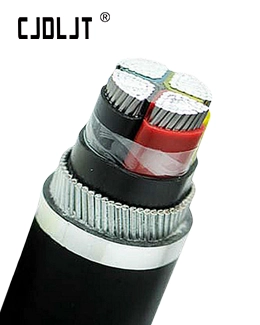
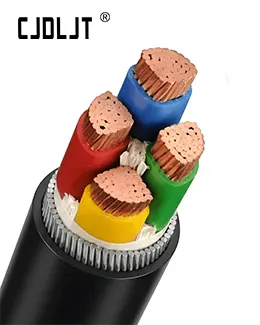
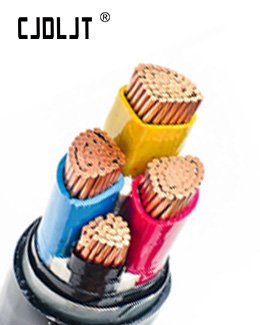
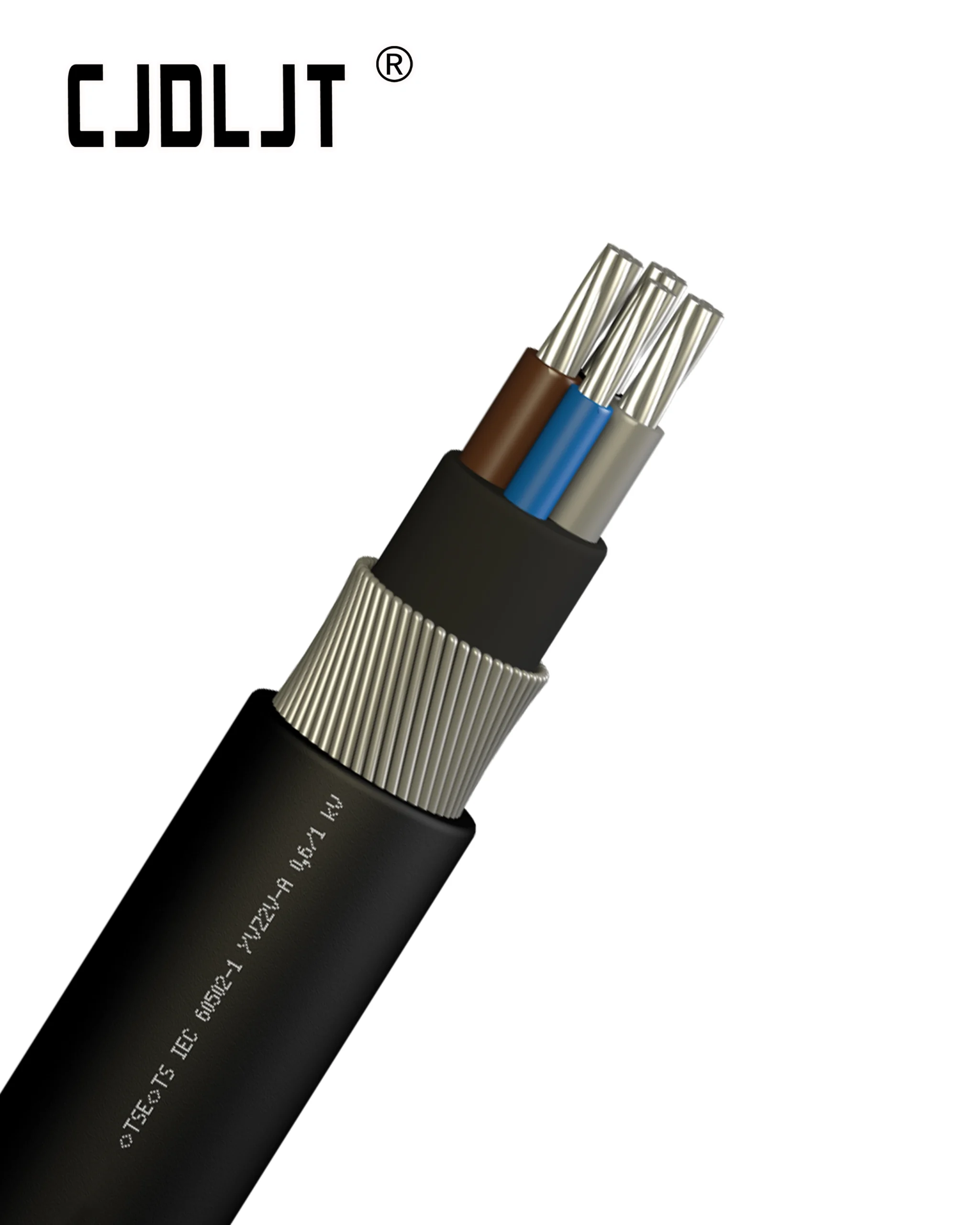
Cable length directly affects voltage drop in low-voltage power distribution because electrical current must travel through the resistance and impedance of the cable conductors. As cable length increases, the total conductor resistance increases, resulting in a greater voltage drop between the power source and the connected load. For the same conductor size, load current and installation conditions, a longer cable generally produces a greater voltage drop. Excessive voltage drop can reduce the voltage available to electrical equipment, affect motor starting performance and increase power losses. Therefore, cable length must be considered alongside load current, conductor cross-section, power factor and electrical system configuration when selecting low-voltage power cables.
2. How Cable Length Influences Voltage Drop
Voltage drop depends on cable length, load current, conductor resistance, reactance and power factor. For a simplified calculation, the following relationships apply.
| Parameter | Effect on Voltage Drop |
|---|---|
| Cable length | Longer cable increases voltage drop |
| Load current | Higher current increases voltage drop |
| Conductor cross-section | Larger cross-section generally reduces resistance and voltage drop |
| Conductor resistance | Higher resistance increases voltage drop |
| Power factor | Influences the resistive and reactive components of voltage drop |
| Electrical system | Single-phase and three-phase systems use different calculation coefficients |
For a balanced three-phase circuit, the approximate voltage-drop equation is:
AV = V3IL(Rcosφ + X sinφ)
Where:
- AV = line-to-line voltage drop (V)
- I = load current (A)
- L= one-way cable length (km)
- R = conductor AC resistance (O/km)
- X = cable reactance (Q/km)
- cos = load power factor
For a single-phase two-wire circuit, the corresponding coefficient is generally 2, accounting for the outgoing and return conductors.
The calculation should use conductor resistance and reactance appropriate to the cable construction, operating temperature and installation conditions.
3. Why Cable Length Matters in Practical Distribution Systems
In low-voltage distribution systems, longer cable routes can create significant voltage drop, particularly when supplying motors, industrial equipment or loads operating at relatively high current. For example, a three-phase circuit supplying a 40 A load through a 100 m cable may experience approximately 4 V of voltage drop under the specific conditions of the calculation below. This represents about 2% of a 200 V supply. The actual result depends on conductor size, resistance, reactance and power factor.
| Calculation Parameter | Example Value |
|---|---|
| Electrical system | Three-phase, three-wire |
| Rated voltage | 200 V |
| Load current | 40 A |
| Cable length | 100 m |
| Power factor | 0.85 |
| Cable | 600 V CVT, 3-core × 38 mm² |
| Conductor resistance | 0.626 Ω/km |
| Cable reactance | 0.0955 Ω/km |
| Calculated voltage drop | Approximately 4.0 V |
| Voltage drop percentage | Approximately 2.0% |
This is a reference calculation from the cited technical source, not a universal rating for 38 mm² cables. Different cable constructions and operating conditions will produce different results.
4. How to Reduce Voltage Drop in Long Cable Routes
When voltage drop exceeds the project’s allowable limit, engineers can evaluate several practical measures:
- Increase conductor cross-section: A larger conductor generally reduces electrical resistance and voltage drop.
- Reduce cable length: Locate distribution equipment closer to the load where practical.
- Review load current: Confirm the actual operating current and avoid unnecessary loading.
- Check power factor: For AC circuits, the reactive component can influence voltage drop, especially in larger cables.
- Evaluate the distribution arrangement: For long routes, consider whether a different distribution voltage or system configuration is more appropriate.
Cable selection must also satisfy ampacity, short-circuit withstand, installation conditions and applicable electrical regulations. Reducing voltage drop alone does not establish that the cable is correctly sized.
5. Engineering Recommendation
Cable length should be calculated as part of the initial low-voltage cable selection process. Engineers should determine the load current, one-way route length, conductor material, cross-section, power factor, cable resistance and reactance before calculating voltage drop.
For a fixed load and conductor size, increasing cable length increases voltage drop. If the calculated drop is too high, increasing conductor cross-section or revising the distribution arrangement may be necessary.
Use the applicable project requirements and electrical installation standards to establish the permitted voltage drop. The final cable specification should satisfy both voltage-drop and current-carrying-capacity requirements, with appropriate consideration of operating temperature and installation conditions.
References
[1] Wikipedia contributors. Voltage drop [EB/OL]. 2026-03-29.
[2] Wikipedia contributors. IEC 60228 [EB/OL]. 2026-03-29.
[3] Wikipedia contributors. Three-phase electric power [EB/OL]. 2026-03-29.