

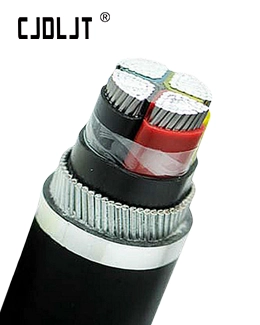
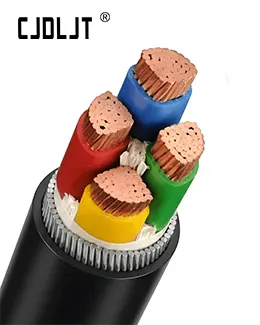
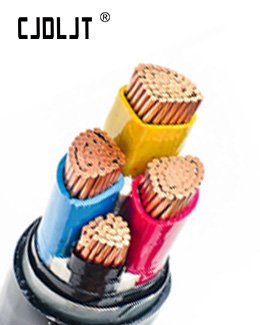
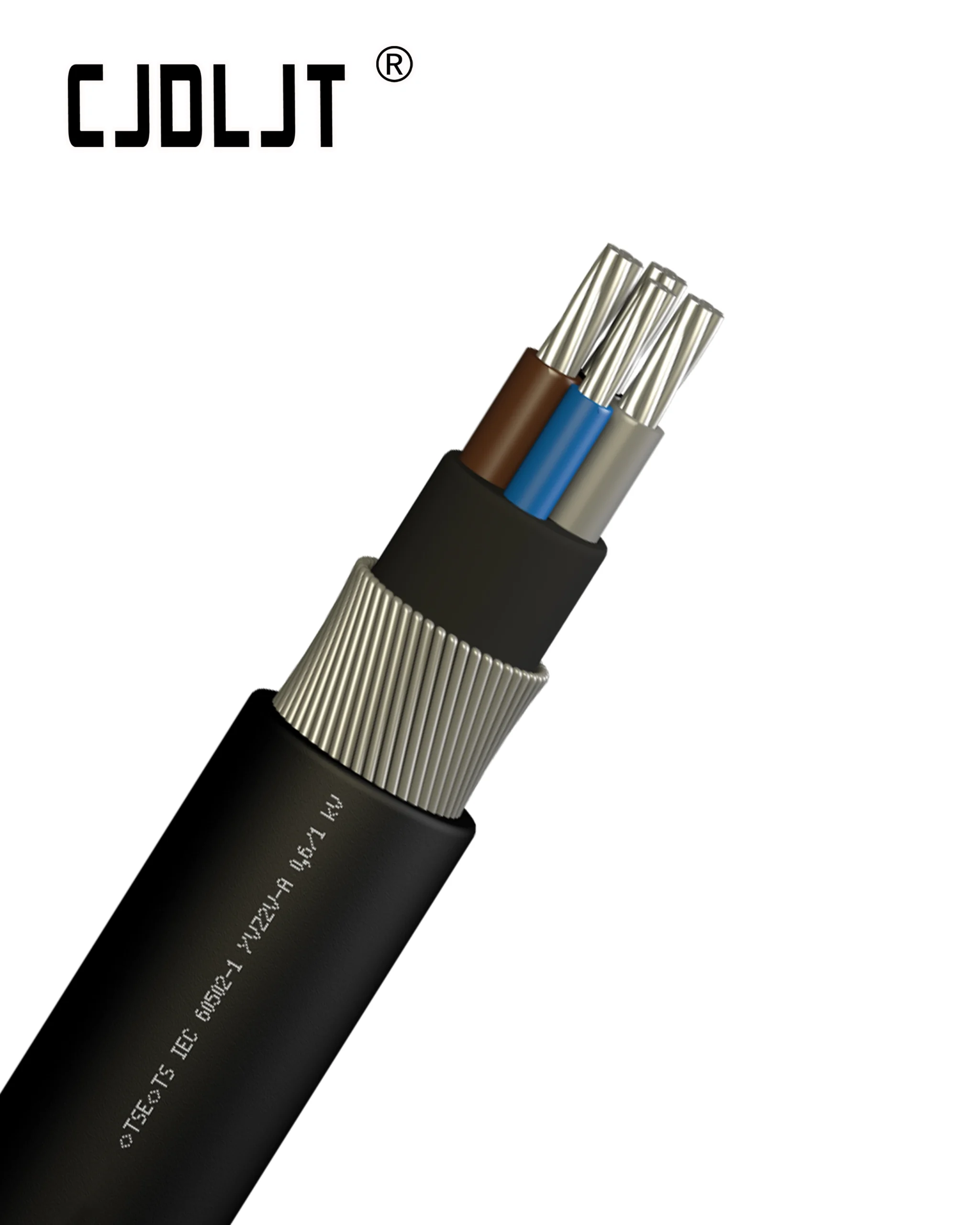


- SWA or STA: Choose Armour According to Mechanical Protection Requirements
Steel Wire Armoured (SWA) and Steel Tape Armoured (STA) cables are designed to provide mechanical protection in different installation environments. SWA cables are generally preferred for installations requiring greater mechanical protection, including direct burial, industrial sites and applications exposed to external mechanical stress. STA cables are commonly selected for fixed installations where protection against moderate mechanical damage is required, particularly in underground cable routes and buildings. However, armour selection should not be based on the installation location alone. Engineers must also consider cable construction, installation method, expected impact or crushing forces, bending requirements and applicable project standards. The final selection should match the actual mechanical risks and electrical installation requirements.
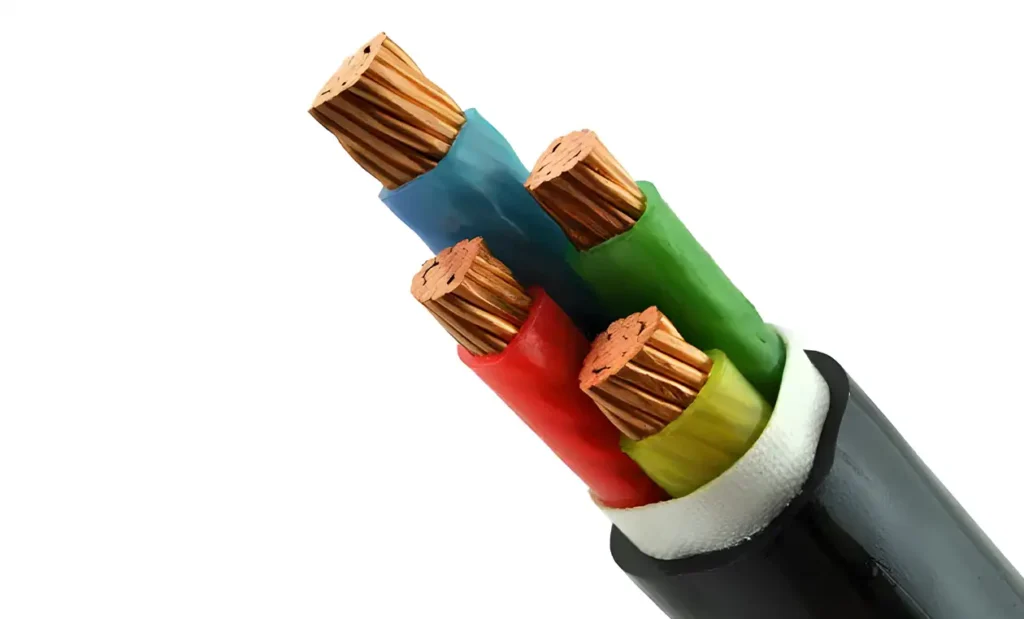
- Key Differences Between SWA and STA Armoured Cables
| Parameter | SWA Cable | STA Cable |
| Armour material | Galvanized steel wires | Steel tapes |
| Armour structure | Helically applied steel wires | Overlapping or helically applied steel tapes |
| Mechanical protection | Generally better resistance to tensile stress and certain mechanical impacts | Provides protection against mechanical damage and crushing |
| Tensile performance | Better suited to applications involving higher pulling forces, subject to cable design | Not generally intended for significant tensile loading |
| Flexibility | Relatively more flexible than comparable tape-armoured construction | Generally less flexible |
| Typical application | Industrial installations, outdoor routes and direct-buried installations | Fixed underground and indoor installations |
| Installation consideration | Check pulling tension, bending radius and armour continuity | Check crushing risk, bending radius and tape integrity |
The comparison is general. Actual mechanical performance depends on armour dimensions, cable diameter, construction, manufacturing quality and applicable product standards.
- Selecting SWA and STA Cables for Different Installation Conditions
The choice between SWA and STA should be based on the dominant mechanical risk along the cable route.
- Direct burial: SWA is often a suitable choice where the cable may experience pulling forces, ground movement or mechanical impact during installation and service. STA may also be suitable for buried installations when the project specification and soil conditions permit it, provided adequate external protection is available.
- Industrial installations: SWA is generally preferable in areas where cables may be exposed to mechanical impact, handling damage or installation tension.
- Building installations: STA can be considered for fixed cable routes where space, bending requirements and mechanical protection needs are compatible with its construction.
- Cable trenches and underground ducts: Both constructions may be considered. The decision depends on pulling tension, crushing risks, cable spacing and the degree of protection provided by the trench or duct.
- Vertical or long-distance cable routes: SWA may offer advantages where mechanical tensile loads are significant, but the cable must be designed and installed with appropriate support. Armour should not automatically be treated as a substitute for a designed cable-support system.
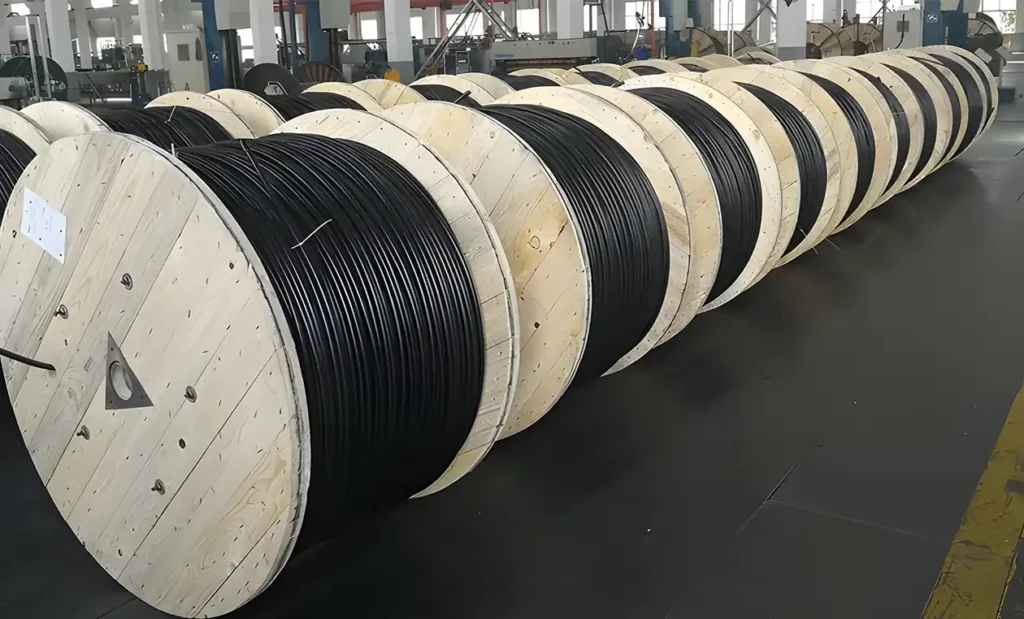
- Important Factors Before Ordering Armoured Cables
Selecting the correct armour is only one part of underground and industrial cable engineering. Buyers and engineers should also verify:
- Conductor material and size: Copper or aluminium conductors must meet the required current-carrying capacity and voltage-drop limits [2].
- Insulation and sheath: PVC, XLPE and other materials should be selected according to operating temperature, moisture exposure, chemical conditions and fire-performance requirements.
- Armour dimensions: Steel wire or steel tape thickness and dimensions must match the specified cable construction.
- Electrical protection: Verify armour continuity, earthing arrangements and the calculated earth-fault protection requirements.
- Installation conditions: Confirm minimum bending radius, pulling tension, burial depth and external mechanical protection.
A cable’s armour type alone does not establish its suitability for direct burial, corrosive environments or every outdoor application.
- Engineering Recommendation
For most cable selection projects, the practical decision is to identify whether the installation is dominated by axial tensile stress or radial mechanical pressure.
- Choose SWA when cable pulling tension, vertical installation or mechanical handling loads are the main concerns.
- Choose STA when protection against radial crushing and external pressure is the main consideration, and installation tension is controlled.
- For direct-buried cables, evaluate soil conditions, burial depth, external impact risks and additional mechanical protection before selecting either construction.
- For single-core AC cables, do not automatically specify steel armour. Magnetic armour can introduce additional losses and heating, so the electrical design must be checked.
For projects involving either construction, IEC 60502-1:2021 provides relevant requirements for extruded-insulation power cables rated 1 kV and 3 kV [1]. The actual armour construction and project-specific requirements must also be confirmed.
The key principle: SWA is generally the stronger choice for tensile loading, while STA is generally suited to radial pressure protection. The correct selection depends on the actual installation stresses, not simply whether the cable is installed indoors or underground.
References
[1] Wikipedia contributors. IEC 60502 [EB/OL]. 2026-03-29.
[2] Wikipedia contributors. Electrical cable [EB/OL]. 2026-03-29.