

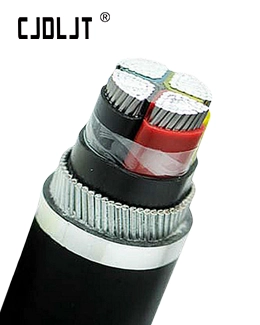
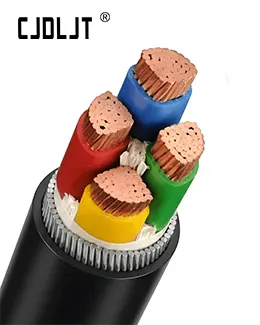
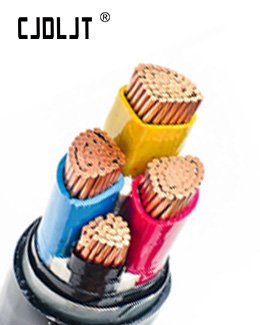
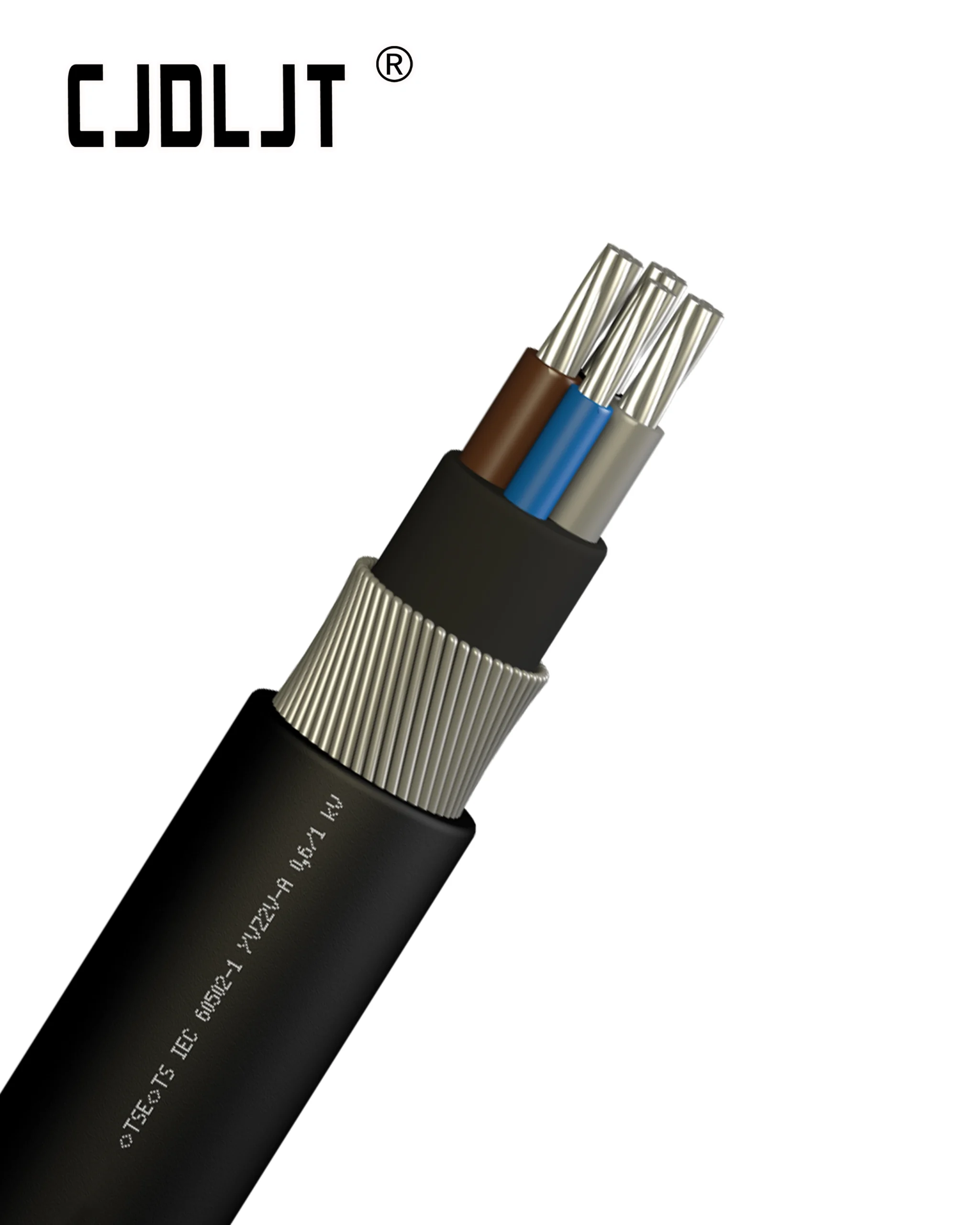


Low Smoke Zero Halogen (LSZH) LV power cables rated 0.6/1 kV are specified in high-rise buildings and public infrastructure because they simultaneously limit flame propagation, maintain high light transmittance during fire, and eliminate halogen acid gas emission. These properties directly support life-safety objectives in vertical risers, escape routes and high-occupancy areas. Conventional flame-retardant PVC cables meet basic flame tests but generate dense smoke and corrosive HCl, which impair evacuation visibility and damage equipment. LSZH constructions complying with IEC 61034, IEC 60754 and IEC 60332 are therefore required by most modern building and fire codes for permanent power distribution in these environments.
Key Performance Requirements for High-Rise and Public Buildings
High-rise buildings and public infrastructure (airports, hospitals, railway stations, shopping centres, schools and government buildings) share three critical constraints:
- Long vertical cable runs in risers and shafts that can act as chimneys.
- High occupant density and extended evacuation times.
- Presence of sensitive electrical and electronic systems that must remain functional or at least undamaged by corrosive fire effluent.
LSZH LV cables address all three constraints through controlled combustion behaviour while retaining standard electrical performance under IEC 60502-1.
Technical Parameter Matrix for LSZH LV Cables in These Applications
| Parameter | Typical LSZH Requirement | Conventional FR-PVC Performance | Governing Standard |
|---|---|---|---|
| Rated voltage | 0.6/1 kV | 0.6/1 kV | IEC 60502-1 |
| Continuous conductor temperature | 70 °C or 90 °C (compound dependent) | 70 °C | IEC 60502-1 |
| Smoke density (light transmittance) | ≥ 60 % (commonly ≥ 80 %) | Often < 20–40 % | IEC 61034-2 |
| Halogen acid gas emission | ≤ 0.5 % (typically < 0.1 %) | High (frequently > 15 %) | IEC 60754-1 |
| Acidity / conductivity of gases | pH ≥ 4.3, conductivity ≤ 10 µS/mm | Highly acidic and conductive | IEC 60754-2 |
| Single cable flame test | Pass | Pass | IEC 60332-1 |
| Bunched cable flame test | Category A, B or C as specified | Category A, B or C as specified | IEC 60332-3 |
| Corrosivity of fire effluent | Non-corrosive | Corrosive | IEC 60754-2 |
| Typical conductor | Annealed copper or aluminium | Annealed copper or aluminium | IEC 60228 |
Fire Safety Performance in Vertical Risers and Escape Routes
In high-rise buildings, power cables installed in vertical risers must limit flame spread to prevent fire from transferring between floors. LSZH LV cables are designed to meet IEC 60332-3 bunched-cable categories (commonly Category A or B for high-rise risers). The mineral-filled LSZH compounds release water of hydration when heated, diluting flammable gases and forming a protective char. This behaviour, combined with correct packing density and support, restricts vertical flame propagation even under high fire load conditions typical of multi-storey shafts.
Smoke Density and Visibility for Evacuation
Evacuation from high-rise buildings and large public venues depends on maintained visibility. IEC 61034-2 measures smoke density in a 3 m cube; LSZH compounds are formulated to keep light transmittance at or above 60 % (many commercial compounds exceed 80 %). The resulting smoke is light-coloured and of low optical density. In contrast, FR-PVC generates dense black smoke that rapidly reduces visibility below safe levels, increasing the risk of disorientation in stairwells, corridors and large open public spaces.
Halogen-Free Combustion and Protection of Occupants and Equipment
LSZH materials contain no chlorine, bromine or other halogens. Consequently, combustion produces negligible acid gas (IEC 60754-1) and non-corrosive effluent (IEC 60754-2). This protects:
- Occupants from toxic and irritating halogen acids.
- Emergency lighting, fire-alarm systems, lifts and smoke-extraction equipment from rapid corrosion.
- Structural steel and reinforcement from long-term acid attack after a fire event.
In hospitals, airports and data-intensive public buildings, preservation of critical systems during and after a fire is a primary design objective that FR-PVC cannot satisfy.
Typical Cable Constructions Used
Common 0.6/1 kV LSZH LV cable constructions for high-rise and public infrastructure include:
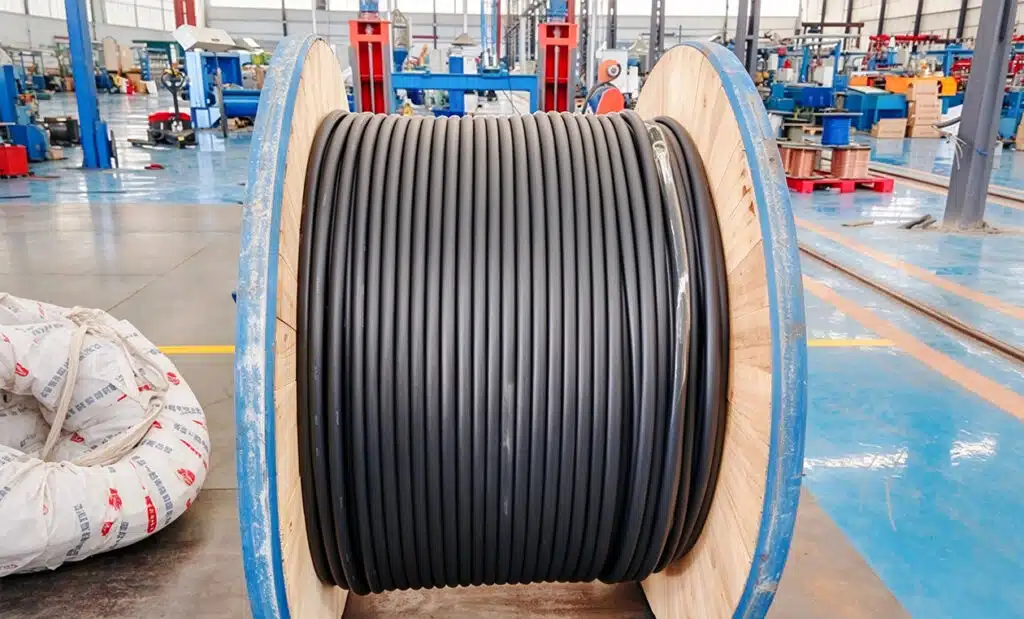
- Single-core and multi-core cables with XLPE or equivalent insulation and LSZH sheath.
- Armoured versions (galvanised steel wire armour or steel tape) for mechanical protection in basements, plant rooms and external routes.
- Flexible Class 5 conductors where frequent movement or vibration occurs.
- Reduced-halogen or enhanced low-smoke variants where local codes impose stricter limits than the base IEC values.
All constructions remain fully compliant with the dimensional, electrical and marking requirements of IEC 60502-1.
Relevant Standards and Regulatory Drivers
- IEC 60502-1 — Construction, dimensions and electrical requirements for LV power cables.
- IEC 60332-1 / IEC 60332-3 — Flame propagation (single and bunched cables).
- IEC 61034-1/2 — Measurement of smoke density.
- IEC 60754-1/2 — Halogen acid gas emission and acidity/conductivity.
- National and regional building/fire codes increasingly reference these IEC tests and mandate LSZH performance for escape routes, risers and public assembly areas.
Specification Checklist for High-Rise and Public Infrastructure Projects
- Cable type: 0.6/1 kV LSZH insulated and sheathed power cable
- Conductor: annealed copper or aluminium, Class 1 or Class 2 (or Class 5 if required)
- Insulation temperature rating: 70 °C or 90 °C continuous
- Smoke density: IEC 61034-2, minimum light transmittance stated in the project specification
- Halogen acid gas: IEC 60754-1 ≤ 0.5 % and IEC 60754-2 acidity/conductivity limits
- Flame propagation: IEC 60332-1 and IEC 60332-3 (Category A, B or C as required by riser design)
- Armour: SWA or STA where mechanical protection is needed
- Marking: clear identification of LSZH performance and relevant IEC standards
LSZH LV power cables are the technically appropriate solution for permanent power distribution in high-rise buildings and public infrastructure whenever life safety, evacuation visibility and protection of critical systems are design priorities.