



Operational Risks of Substituting LSZH 318-B H05Z1Z1-F with Standard PVC Flexible Cable
Substituting BS EN 50525-3-11 LSZH 318-B (H05Z1Z1-F) flexible cable with standard PVC (Polyvinyl Chloride) flexible cable introduces severe life-safety, regulatory, and mechanical risks. [1] LSZH (Low Smoke Zero Halogen) cables are engineered specifically for public structures and confined spaces where thermal events pose immediate toxic hazards. Standard PVC cables release dense, acidic halogen gases when combusted, degrading life safety and accelerating structural corrosion. Additionally, standard PVC cables typically operate at a maximum continuous conductor temperature of 70°C, whereas H05Z1Z1-F LSZH compounds are rated for 90°C, creating immediate thermal overload risks if circuit breaker settings rely on the higher LSZH current-carrying capacity.
Technical Parameter Comparison Matrix
The matrix below compares key technical parameters between standard PVC flexible cable and LSZH 318-B (H05Z1Z1-F) under IEC 60332, IEC 60754, and IEC 61034 testing frameworks. [2]
| Technical Parameter | Standard PVC Flexible Cable (H05VV-F) | LSZH Flexible Cable (318-B / H05Z1Z1-F) | Operational Impact of Substitution |
| Rated Voltage () | 300/500 V | 300/500 V | Identical voltage rating; no dielectric gain. |
| Max Conductor Temp (Operating) | 70°C | 90°C | Risk of insulation softening and thermal breakdown under high loads. |
| Acid Gas Emissions (IEC 60754-1/2) | 15% – 25% HCl released | < 0.5% Halogen (pH ≥ 4.3, Conductivity < 10 μS/mm) | Severe respiratory toxicity and circuit board corrosion during fires. |
| Smoke Density / Light Transmittance (IEC 61034-2) | < 20% – 30% Light Transmittance | > 60% Light Transmittance | Complete loss of exit sign visibility and spatial awareness during evacuation. |
| Flame Retardancy Standard | IEC 60332-1-2 | IEC 60332-1-2 / IEC 60332-3 (Category dependent) | Increased vertical flame spread risk along public cable runs. |
| CPR Reaction to Fire Class (EN 50575) | Class Eca / Fca | Class Cca / B2ca (Low Smoke, Zero Droplets) | Fails building regulation compliance in public assembly zones. [3] |
Fire Safety and Toxicological Hazards
When exposed to direct flame, PVC insulation and sheathing thermally decompose, generating high concentrations of Hydrogen Chloride (HCl) gas.
- Corrosive Damage to Equipment: HCl gas reacts with atmospheric moisture to form hydrochloric acid. This acidic vapor coats sensitive electrical contacts, switchgear, and microelectronics, causing permanent corrosion and post-fire equipment failure across the entire installation.
- Toxic Gas Hazard: In enclosed spaces, burning PVC releases toxic halides that cause severe lung damage, rapid asphyxiation, and disorientation.
- Obscuration of Escape Routes: Standard PVC yields thick, dense black smoke. In contrast, H05Z1Z1-F utilizes thermoplastic LSZH compounds that maintain over 60% light transmittance under IEC 61034-2 testing, preserving visibility for emergency personnel and evacuees.
Thermal and Current-Carrying Limitations
- Operating Temperature Mismatch: Standard PVC flexible cable is limited to a continuous operating temperature of 70°C. H05Z1Z1-F features cross-linked or enhanced thermoplastic formulations rated up to 90°C.
- Ampacity Degradation: Replacing H05Z1Z1-F with H05VV-F without re-calculating circuit protection causes thermal overload. Over-current conditions will exceed the thermal boundary of the PVC insulation, accelerating dielectric degradation, sheath degradation, and short-circuit risks.
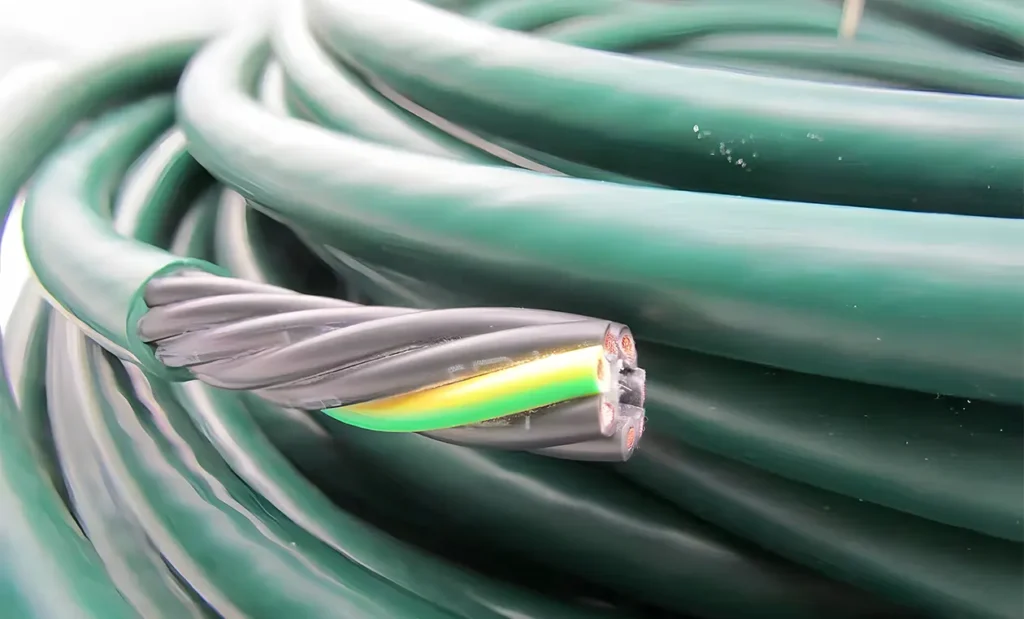
CJDL CABLE Engineering Insight: For public buildings and confined evacuation routes, LSZH 318-B (H05Z1Z1-F) remains the appropriate choice — PVC substitution at a 70°C versus 90°C conductor rating risks thermal overload, while <0.5% halogen emission and >60% light transmittance per IEC 60754-2 and IEC 61034-2 protect both occupants and sensitive equipment during a fire event. All LSZH cables supplied by CJDL CABLE are manufactured and routinely tested to BS EN 50525-3-11 and EN 50575 CPR requirements.
References
[1] Wikipedia. Low smoke zero halogen [EB/OL]. 2026-09-23.
[2] IEC. IEC 60754-1:2011 Test on gases evolved during combustion of materials from cables [EB/OL]. 2026-09-23.
[3] Motis. EN 50575 EU Cable Testing and CPR Classification [EB/OL]. 2026-09-23.