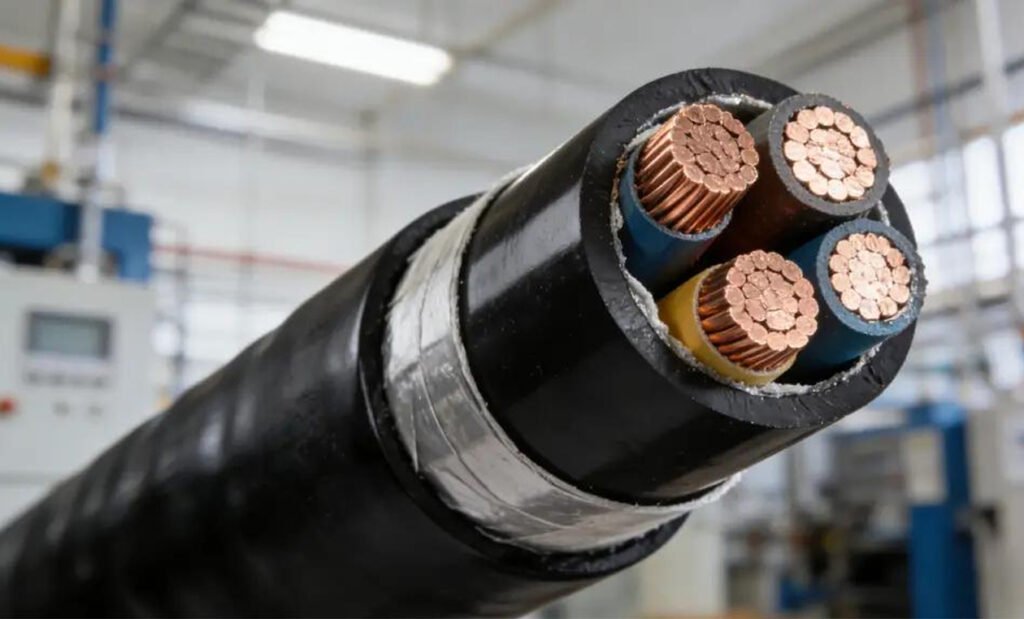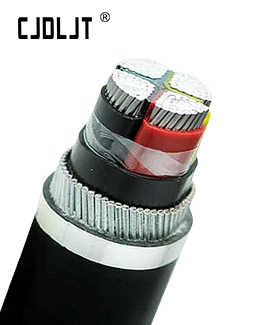
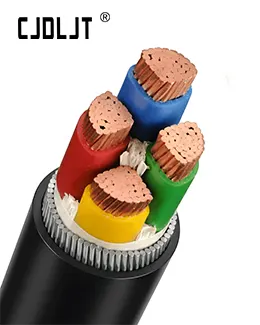
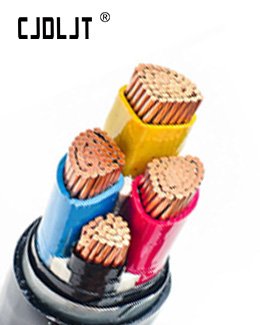
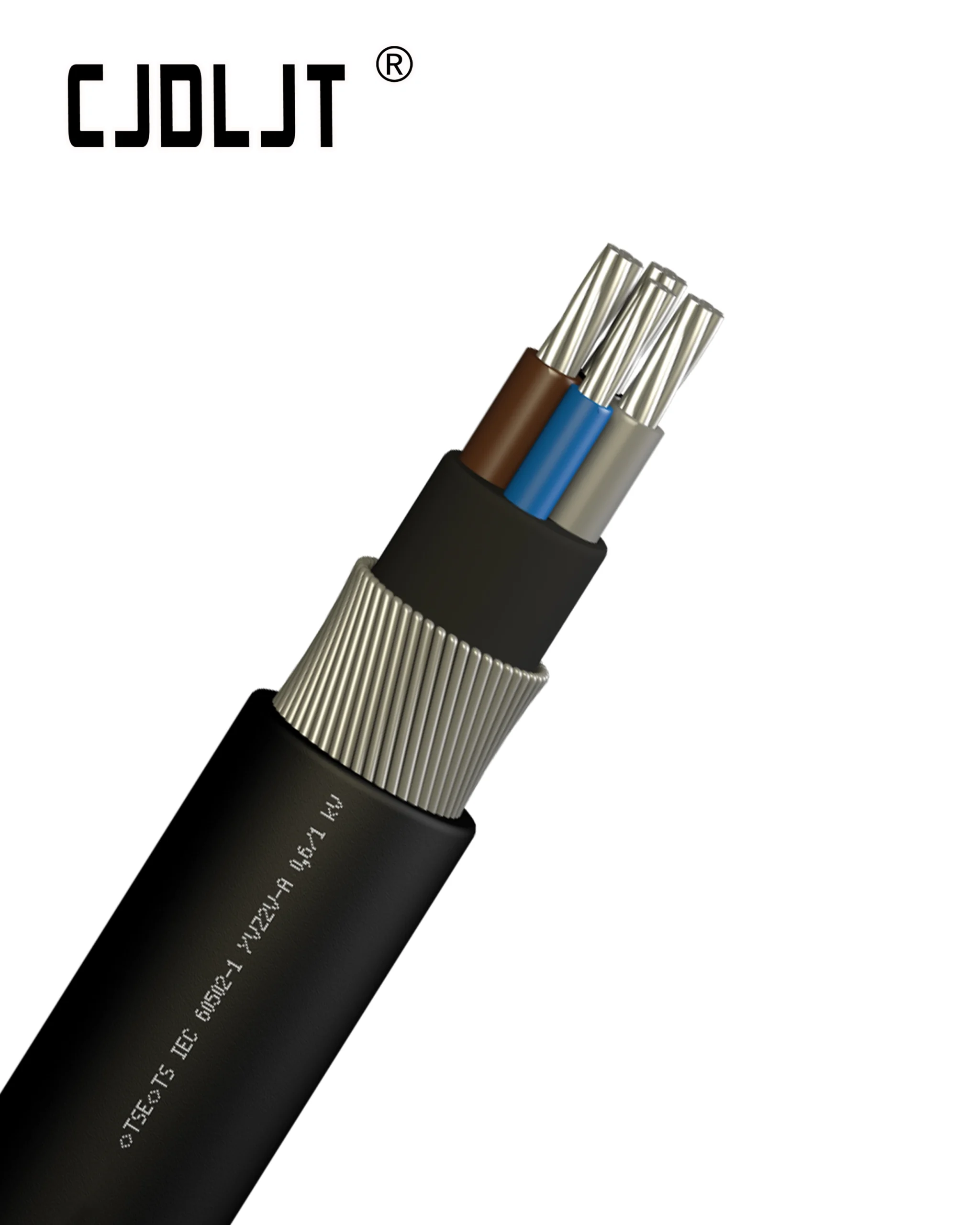


Typical Application Scenarios for N2XY Cables
N2XY cables are primarily engineered for fixed installations in low-voltage power supply and distribution systems operating at rated voltages of 0.6/1 kV. Unlike NA2XY cables which utilize aluminum, N2XY cables feature annealed copper conductors, offering higher conductivity and superior flexibility. They are ideally suited for industrial plants, commercial buildings, power stations, and local energy networks where robust electrical performance and thermal resistance are required.
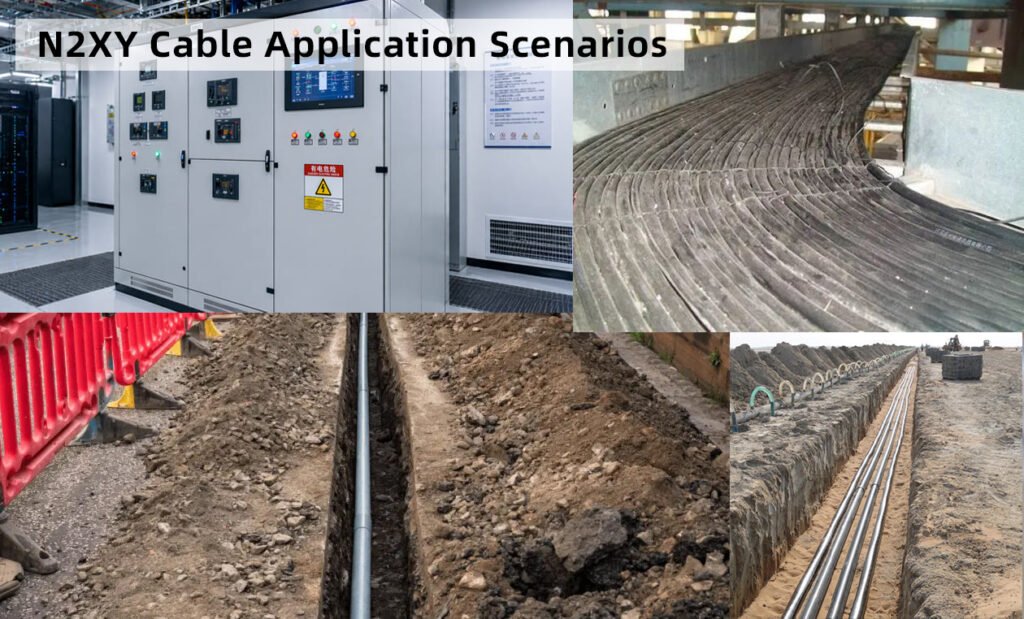
Technical Suitability and Environmental Matrix
The application range of N2XY cables is determined by their material properties: Cross-linked Polyethylene (XLPE) insulation provides high thermal capacity (+90 ℃), while the Polyvinyl Chloride (PVC) outer sheath provides mechanical and environmental protection.
| Application Environment | Suitability Status | Operational Conditions / Constraints |
| Indoor Cable Trays / Conduits | Fully Suitable | Excellent for vertical risers and cable runs; requires compliance with fire safety regulations. |
| Direct Burial (Underground) | Suitable | Can be buried directly in earth; requires additional mechanical protection (e.g., cable ducts or conduits) if subjected to high mechanical stress or heavy vehicular traffic, as it is unarmored. |
| Outdoor / Open Air | Suitable | UV-stabilized PVC sheath allows for outdoor deployment; must be protected from direct, extreme solar radiation if ambient limits are exceeded. |
| Water (Submerged) | Restricted | Can withstand intermittent dampness or standing water in drainage ducts, but is not rated for continuous, pressurized submarine submersion. |
| Hazardous Areas (Ex) | Restricted | Permissible only when installed within approved explosion-proof conduit systems or secondary containment, due to lack of steel wire/tape armor. |
Technical Demarcation: N2XY vs. NA2XY vs. Armored Alternatives
Understanding where to deploy N2XY versus alternative configurations prevents structural failures or cost overruns.
- N2XY vs. NA2XY: Choose N2XY (Copper) over NA2XY (Aluminum) when space is constrained in cable trays, as copper has a higher current-carrying capacity per cross-sectional area, allowing for smaller cable diameters and tighter routing.
- N2XY vs. N2XBY / N2XRY: N2XY lacks an armor layer. For applications inside concrete, beneath highways, or in deep trenches where physical impacts are expected, armored variants utilizing galvanized steel tape (Z) or steel wire (R) must be specified to satisfy IEC 60502-1 mechanical protection benchmarks.