



ACCC Conductors Minimize Sag in Long-Span Power Lines
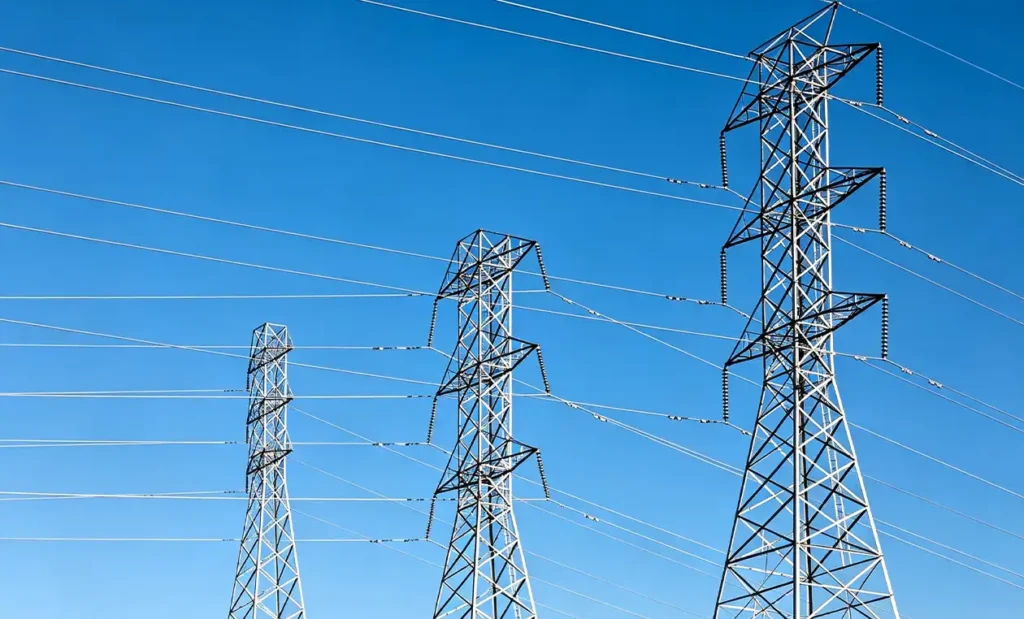
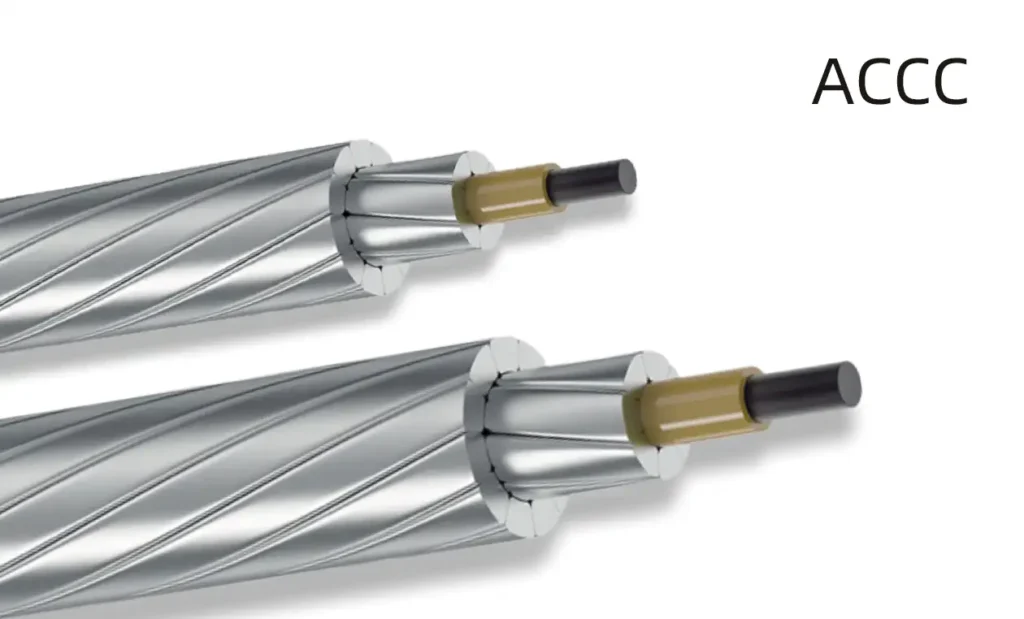
ACCC (Aluminum Conductor Composite Core) overhead cables deliver the lowest sag performance for long-span power distribution and transmission networks. By replacing traditional galvanized steel core wires with a high-strength, carbon and glass fiber composite core, ACCC conductors achieve a coefficient of thermal expansion (CTE) of approximately 1.6 × 10⁻⁶/°C—roughly 10% that of steel (11.5 × 10⁻⁶/°C). Combined with trapezoidal shaped 1350-O aluminum strands (ACCC/TW) that maximize cross-sectional aluminum area, ACCC operates up to 180°C to 200°C with minimal thermal elongation, drastically reducing mid-span sag while maintaining high tensile strength and ampacity over extended river or valley crossings.
Technical Parameter Comparison Matrix
The table below compares key engineering parameters for overhead aluminium conductors evaluated for long-span distribution lines according to ASTM B881, IEC 61089, and ASTM B987 standards:
| Conductor Type | Core Construction | Coefficient of Thermal Expansion (CTE) | Max Operating Temp (°C) | Relative Tensile Strength | Thermal Sag at Rated Load | Primary Application |
| AAC (All Aluminum) | None (1350-H19 AL) | ~23.0 × 10⁻⁶/°C | 75°C – 85°C | Low | High | Short distribution spans |
| AAAC (6201 Alloy) | None (Al-Mg-Si Alloy) | ~23.0 × 10⁻⁶/°C | 75°C – 90°C | Medium-High | Moderate-High | Coastal / Medium distribution |
| ACSR (Steel Reinforced) | Galvanized Steel Wire | ~11.5 × 10⁻⁶/°C (core) | 100°C | High | Moderate | Standard transmission/distribution |
| AACSR (Alloy Steel Reinf.) | High-Strength Steel | ~11.5 × 10⁻⁶/°C (core) | 100°C | Very High | Low-Moderate | Severe mechanical loading spans |
| ACCC (Composite Core) | Carbon/Glass Hybrid Core | ~1.6 × 10⁻⁶/°C | 180°C – 200°C | Ultra-High | Lowest | Long-span & HTLS reconductoring |
Key Mechanical and Thermal Factors Governing Span Sag
1. Thermal Elongation and Kneepoint Shift
Thermal sag occurs when conductor temperature rises due to high current throughput (I²R losses) or ambient solar radiation. In standard ACSR, as the temperature exceeds the “kneepoint” (~100°C), the aluminium strands expand faster than the steel core, shifting the total mechanical load onto the steel. In ACCC, the carbon-fiber composite core carries the load across all temperature ranges with almost zero thermal expansion, eliminating high-temperature sag.
2. Strength-to-Weight Ratio and Modulus of Elasticity
- Core Elastic Modulus (E): Composite cores provide an elastic modulus exceeding 110 GPa to 140 GPa depending on carbon fiber volume fraction, delivering structural rigidity without dead-weight penalties.
- Weight Reduction: The density of carbon composite (~1.9 g/cm³) is roughly 25% the weight of steel (~7.8 g/cm³), reducing the initial static tension sag under heavy conductor self-weight.