

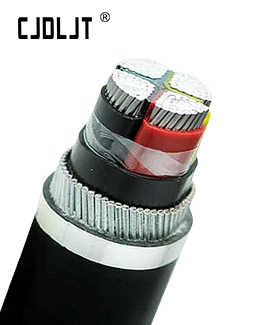
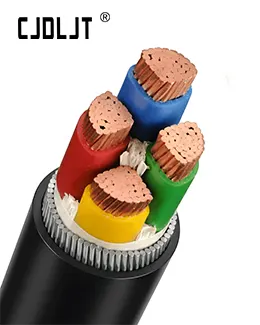
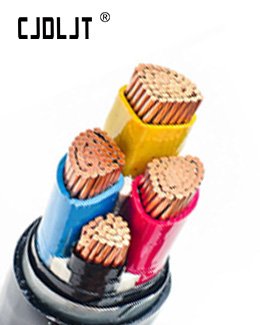
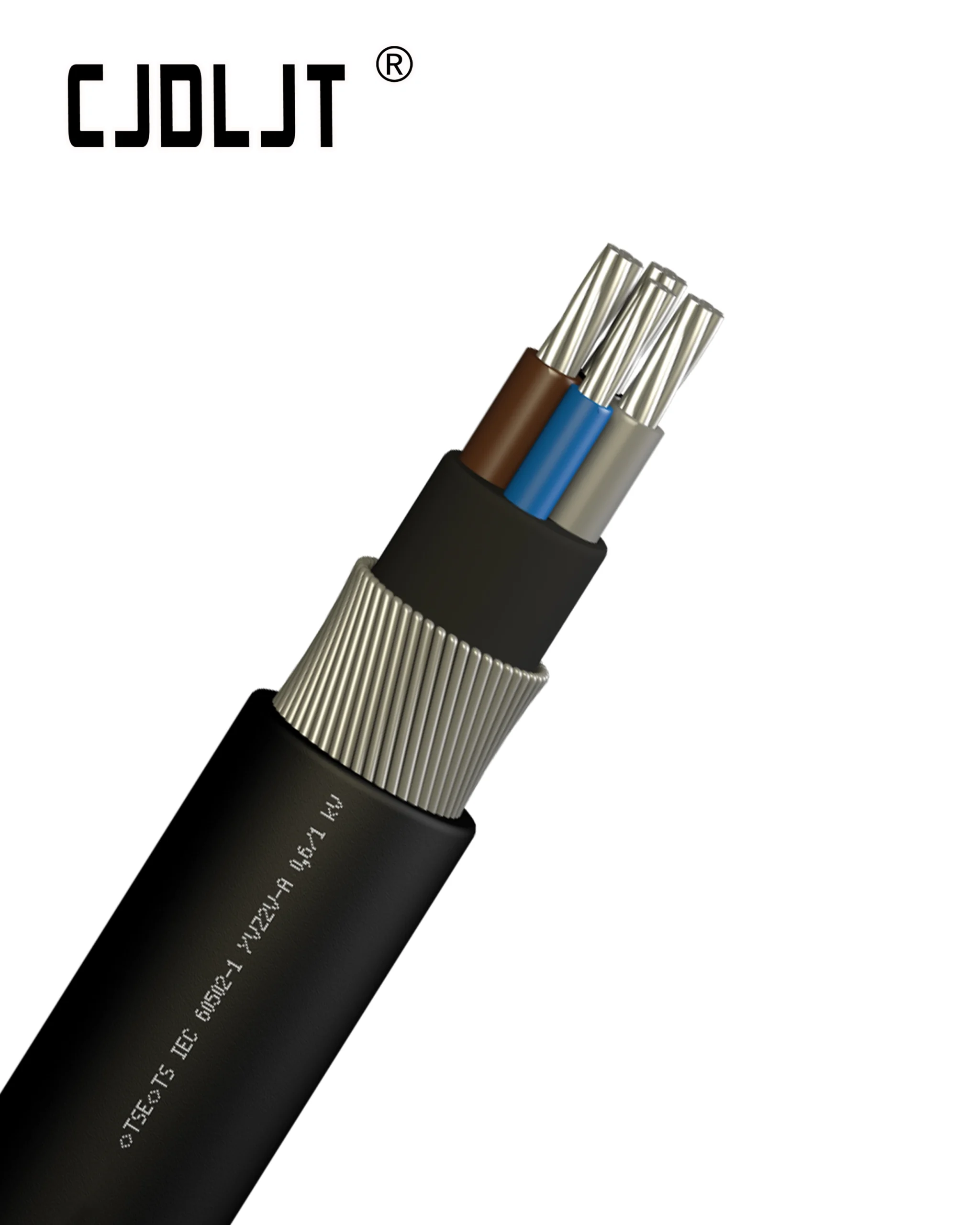


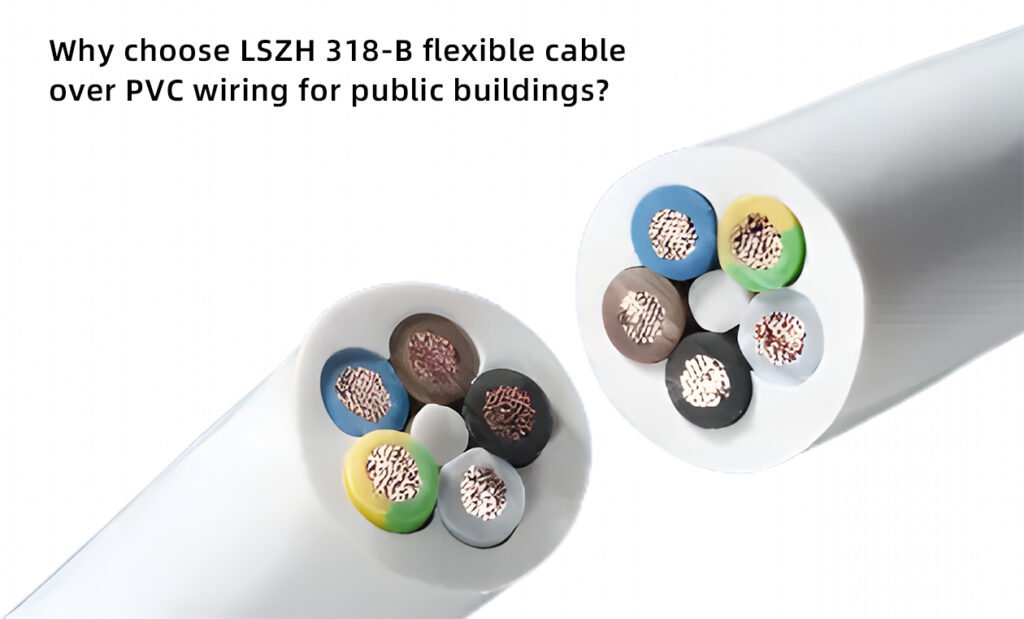
Selecting Low Smoke Zero Halogen (LSZH) 318-B flexible cable over standard Polyvinyl Chloride (PVC) wiring in public buildings is a critical safety directive governed by international fire regulations. In a fire scenario, standard PVC sheathing undergoes thermal decomposition, releasing dense black smoke and highly toxic, corrosive hydrogen chloride (HCl) gas.
In contrast, the 318-B cable—a light-duty flexible harmonized cable rated at 300/500V—is constructed with thermoset or thermoplastic LSZH materials. When subjected to flame, it produces minimal smoke and zero halogen acid gases, preserving visibility for emergency evacuation and preventing toxic inhalation, which is the leading cause of casualties in public facility fires.
Technical Performance Matrix
The following data matrix outlines the core material, electrical, and life safety parameter differences between LSZH 318-B and standard PVC (318-Y) flexible cables under global standards like BS EN 50525-3-11 and IEC 60332.
| Technical Parameter | LSZH 318-B Cable | Standard PVC 318-Y Cable | Regulatory / Test Standard |
| Harmonized Code | H05Z1Z1-F | H05VV-F | BS EN 50525 Series |
| Rated Voltage (U₀/U) | 300/500 V | 300/500 V | IEC 60227 / 60502 |
| Halogen Acid Gas Emission | 0.5% Maximum (Zero Halogen) | ~25% to 30% HCl Gas | IEC 60754-1 / BS EN 60754-1 |
| Smoke Density / Transmittance | Minimum 60% Light Transmittance | Critical visibility drop (<20%) | IEC 61034-2 / BS EN 61034-2 |
| Max Operating Temperature | 70°C (Up to 90°C for specialized variants) | 70°C | British / European Standards |
| Corrosivity of Gases | Non-corrosive (pH ≥ 4.3, Conductivity ≤ 10 μS/mm) | Highly Corrosive | IEC 60754-2 |
| Flame Propagation | Self-extinguishing | Flame Retardant (but propagates via dripping) | IEC 60332-1-2 |
4 Core Reasons to Specify 318-B LSZH in Public Buildings
1. Minimization of Toxic Gas Inhalation
Standard PVC contains halogens (chlorine). When burned, it releases toxic fumes that can overcome building occupants within minutes. 318-B LSZH cables utilize polyolefin-based compounds filled with hydrated minerals (like aluminum trihydrate). When exposed to flame, these compounds release water vapor instead of deadly acid gases, significantly reducing toxicity risks in high-occupancy spaces like hospitals, airports, and schools.
2. Preservation of Evacuation Visibility
Dense black smoke generated by burning PVC obscures emergency exit signs and clogs building ventilation networks. Under the IEC 61034-2 smoke density test, burning 318-B LSZH cable must maintain a minimum 60% light transmittance. This clear path visibility is essential for orderly evacuations and allows emergency personnel to execute search-and-rescue operations effectively.
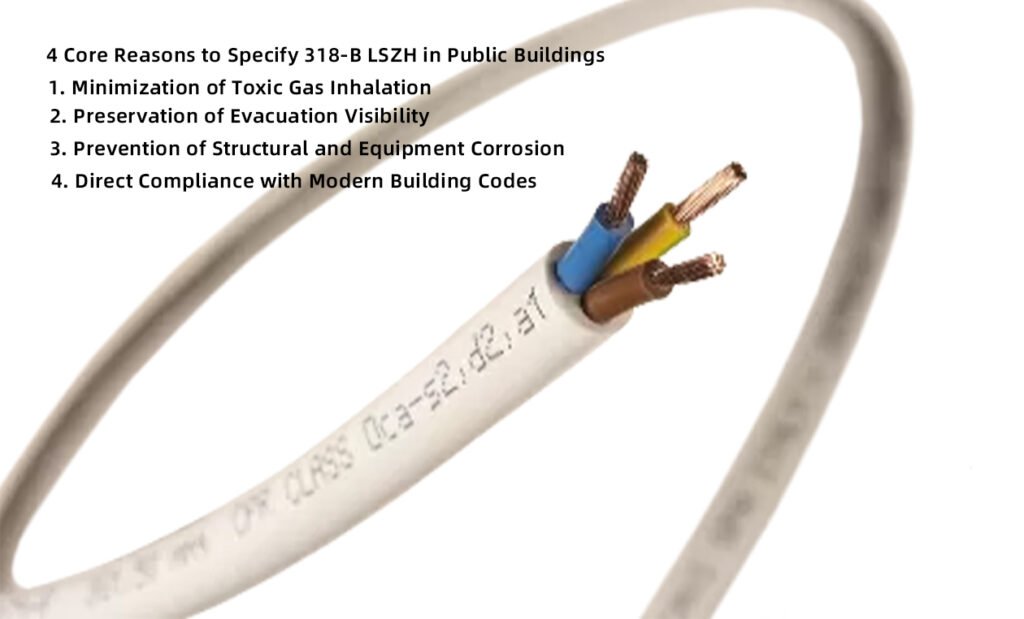
3. Prevention of Structural and Equipment Corrosion
When PVC burns, the liberated chlorine gas combines with atmospheric moisture or water from fire sprinklers to form hydrochloric acid. This acid deposits onto exposed surfaces, aggressively corroding metal structures, concrete reinforcement bars, and sensitive electronic IT infrastructure (such as server rooms or control centers). The zero-halogen nature of the 318-B cable eliminates this secondary post-fire acid damage.
4. Direct Compliance with Modern Building Codes
Modern structural and installation codes (such as the UK IET Wiring Regulations BS 7671 or European Construction Products Regulation – CPR) strictly mandate the use of LSZH materials along defined escape routes and inside public buildings. Utilizing 318-B flexible cable for internal pendants, lighting fixtures, and office equipment connections ensures the property satisfies statutory insurance and fire-safety compliance criteria.