



Copper vs. Aluminum Conductors: Conductivity, Weight, and Cost
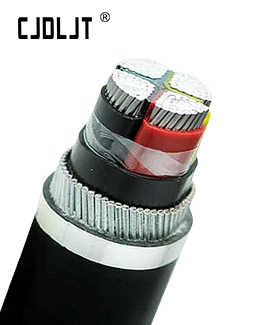
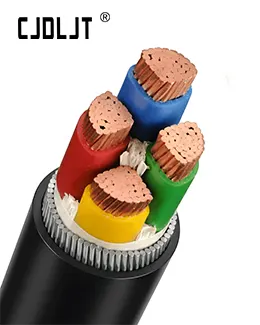
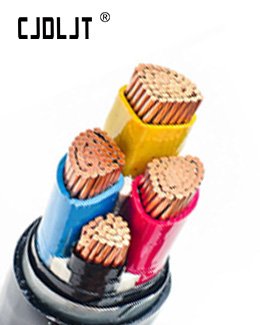
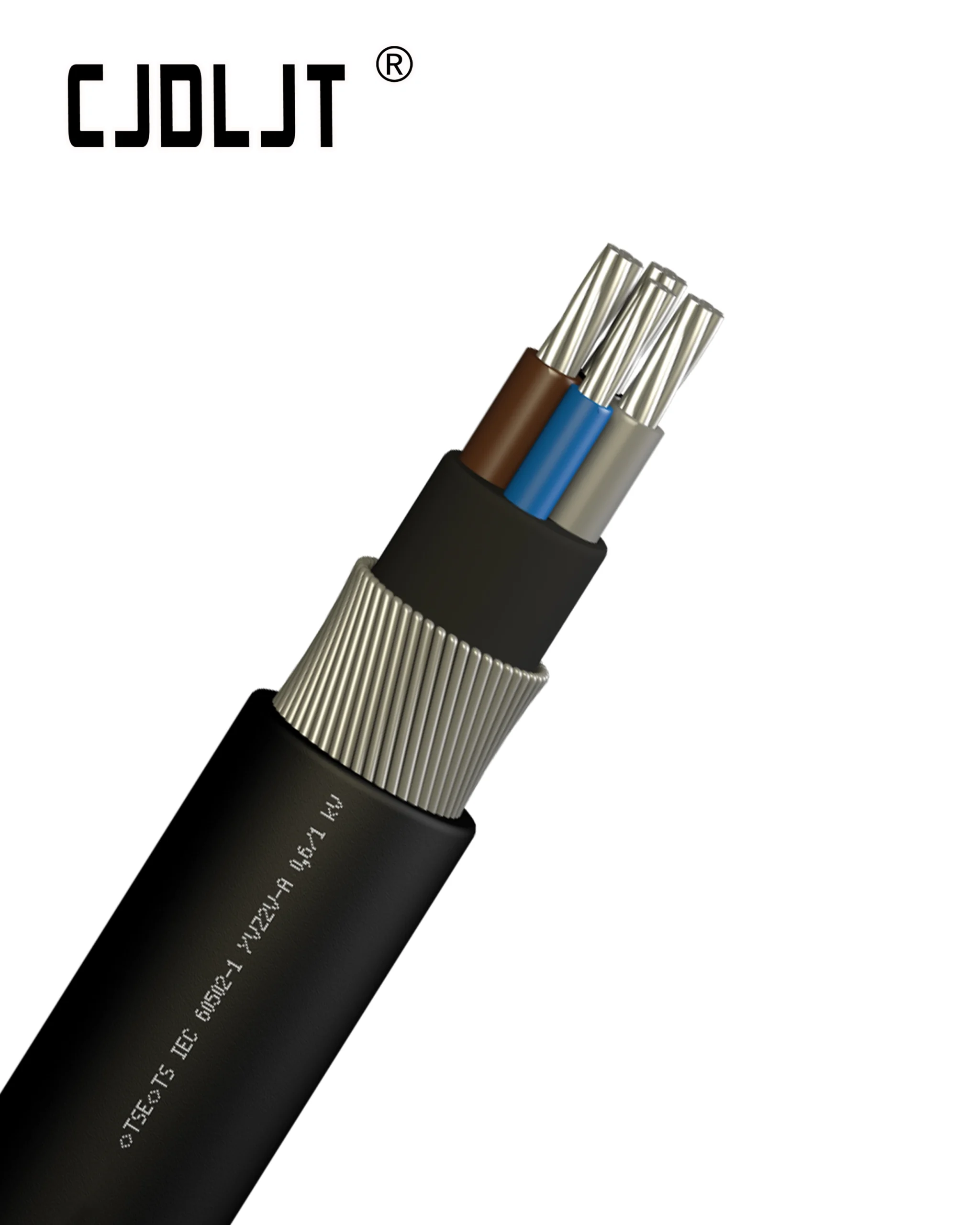
The selection between copper (Cu) and aluminum (Al) conductors in electrical cable manufacturing is governed by the trade-offs between electrical conductivity, mechanical mass, and material economics. According to IEC 60228, copper offers a higher reference conductivity ( IACS), allowing for smaller cross-sectional areas () for a given current rating (). Aluminum provides approximately of copper’s conductivity, necessitating a larger conductor size to match the equivalent current-carrying capacity. However, aluminum’s lower density reduces total cable weight by roughly compared to an equivalent-ampacity copper alternative, significantly impacting structural loading and installation tensile stress.
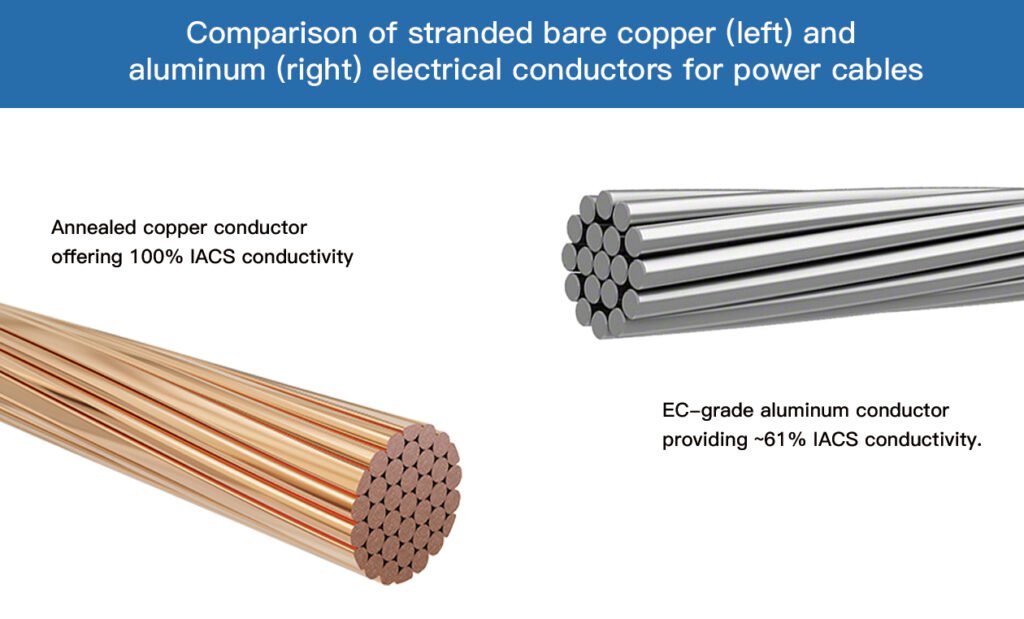
Technical Parameter Matrix: Cu vs. Al Conductors
The following structured data matrix compares the core physical, electrical, and economic properties of electrical-grade Annealed Copper (E-Cu) and EC-Grade Aluminum (Al-1350) conductors used in power distribution cables (rated from up to ).
| Technical Parameter | Annealed Copper (Cu) | EC-Grade Aluminum (Al) | Engineering Impact / Signficance |
| Electrical Conductivity (% IACS) | Determines required cross-sectional area. | ||
| DC Resistivity at 20°C () | Higher resistivity increases ohmic losses. | ||
| Density () | Impacts structural load and cable pulling tension. | ||
| Tensile Strength () | 200 – 250 | 70 – 90 | Affects maximum span length and installation pull force. |
| Coefficient of Thermal Expansion () | Higher expansion requires specialized compression lugs. | ||
| Raw Material Cost Index (Baseline: Cu = 100) | Primary driver of initial capital expenditure (CAPEX). | ||
| Equivalent Cross-Section Ratio (for Ampacity) | 1.0 | Determines overall cable diameter and conduit size. |
Core Characteristics of Copper Conductors
High Conductivity and Space Efficiency
Annealed copper is the global benchmark for electrical conductivity. Its low volumetric resistivity enables minimal cross-sectional areas for high-current applications. This space efficiency makes copper the mandatory choice in constrained environments, such as dense cable trays, riser shafts, and indoor switchgear installations.
Mechanical Robustness and Terminations
- Tensile Properties: High tensile strength allows for longer vertical cable runs and reduces the risk of necking during high-stress installations.
- Creep Resistance: Copper exhibits low mechanical creep, maintaining stable contact pressure in mechanical screw terminals over extended thermal cycles, which reduces the risk of localized overheating.
Core Characteristics of Aluminum Conductors
Mass Reduction and Structural Load Mitigation
Aluminum’s low density () yields significant weight reductions. An aluminum cable engineered for equivalent ampacity weighs approximately 50% less than its copper counterpart. This mass reduction simplifies handling, reduces logistics costs, and lowers the dead-load demands on cable trays, support structures, and overhead spans.
Macro-Economics and Cost Efficiency
The primary advantage of aluminum is its low raw-material cost index and reduced price volatility compared to copper. Even when accounting for the increased volume of insulation, bedding, and armor (such as Steel Wire Armor – SWA or Aluminum Wire Armor – AWA) required for the larger outer diameter, aluminum conductors deliver substantial total CAPEX savings in large-scale utility, industrial, and renewable energy (photovoltaic/wind) balance-of-plant grounding and distribution grids.