



AAC vs. AAAC vs. ACSR: Tensile Strength Comparison
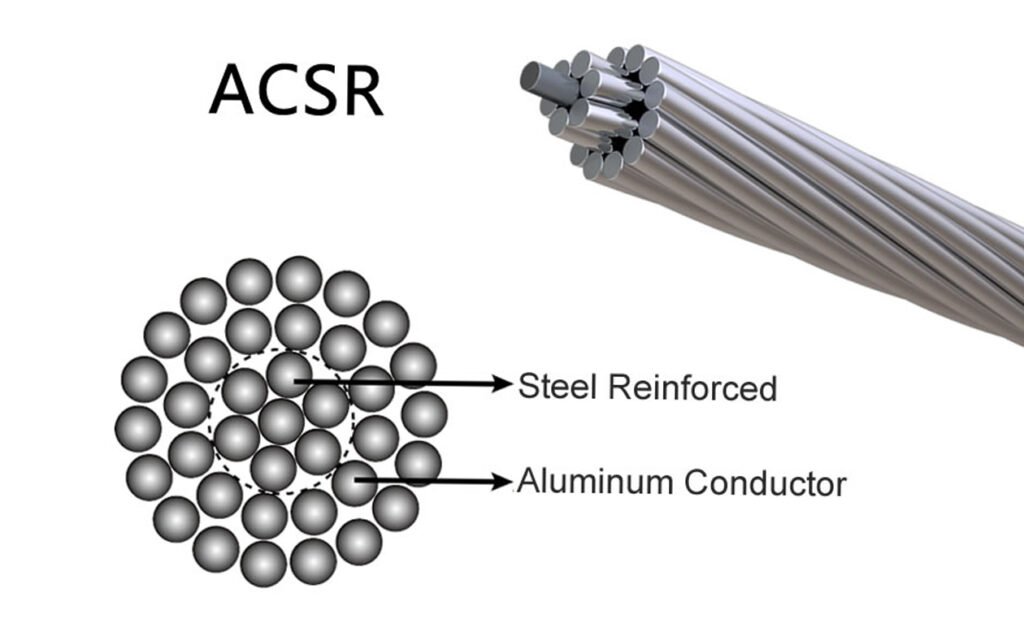
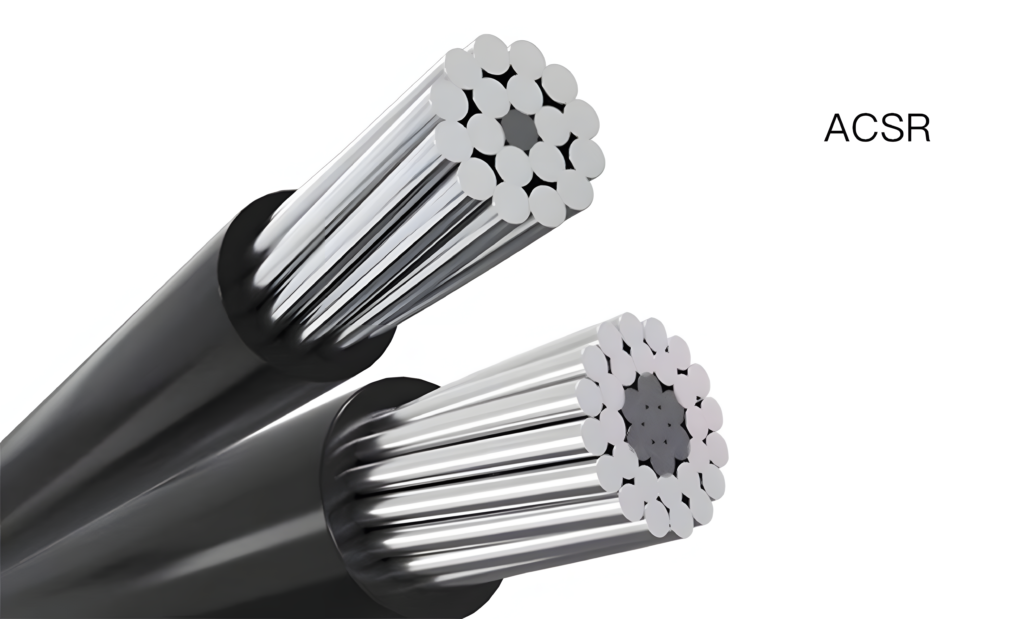
Among standard uninsulated overhead conductors, ACSR (Aluminum Conductor Steel Reinforced) delivers the highest tensile strength. While all-aluminum variants sacrifice mechanical ruggedness for lower weight, ACSR utilizes a high-strength galvanized or alloyed steel core wrapped in concentric layers of hard-drawn EC-grade aluminum strands. This composite architecture separates mechanical and electrical demands: the steel core bears the mechanical tensile load, while the surrounding aluminum carries the current. This high strength-to-weight ratio allows ACSR to withstand high wind, ice loading, and extreme sag tension across longer spans.
Technical Parameter Matrix
The table below outlines the mechanical and electrical trade-offs across standard bare overhead conductors, adhering to IEC 61089 and ASTM B232 standards.
| Conductor Type | Core Material | Outer Layer Material | Tensile Strength (MPa) | Strength-to-Weight Ratio | Electrical Conductivity (% IACS) | Primary Application Scenario |
| AAC (All Aluminum Conductor) | None | 1350-H19 Aluminum | 160 – 200 | Low | ~61% | Short spans, urban distribution, coastal areas |
| AAAC (All Aluminum Alloy Conductor) | None | 6201-T81 Al-Mg-Si Alloy | 295 – 325 | High | ~53% | Medium-to-long spans, corrosive environments |
| ACSR (Aluminum Conductor Steel Reinforced) | Galvanized / Mischmetal Steel | 1350-H19 Aluminum | Core: 1240 – 1410 Overall: Varied by stranding | Very High | ~61% (Aluminum layer) | Long-span transmission, high-load grids, crossing terrain |
| ACSS (Aluminum Conductor Steel Supported) | High-Strength / Ultra-Strength Steel | Annealed 1350-O Aluminum | Core: 1310 – 1450 Overall: High (Core-dependent) | Very High | ~63% (Annealed layer) | High-temperature, low-sag reconductoring lines |
Factors Influencing Conductor Mechanical Performance
Steel Core Geometry and Stranding Ratios
The tensile capacity of an ACSR conductor depends on its stranding configuration (e.g., 6 Al / 1 Steel, 26 Al / 7 Steel, or 54 Al / 7 Steel). Increasing the steel cross-sectional area relative to the aluminum area drastically boosts the rated breaking strength, though it increases total weight and inductive reactance.
Material Hardening and Tempering
- 1350-H19 Aluminum: Used in AAC and ACSR, this material is cold-worked to a full-hard temper to maximize its mechanical limits before stranding.
- 6201-T81 Aluminum Alloy: Used in AAAC, this material undergoes solution heat-treating and artificial aging, achieving a tensile yield strength nearly double that of 1350-H19 aluminum while retaining high conductivity.