



Critical Criteria for LSZH vs. PVC Cable Selection
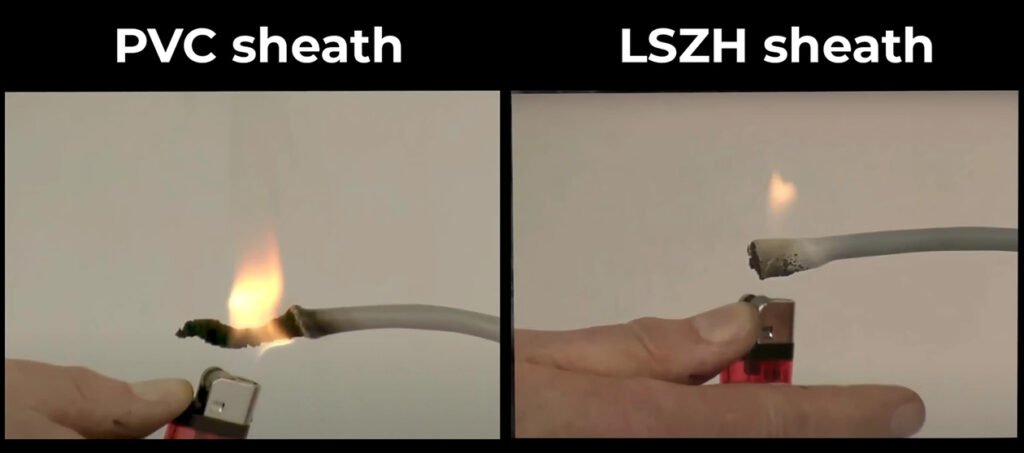
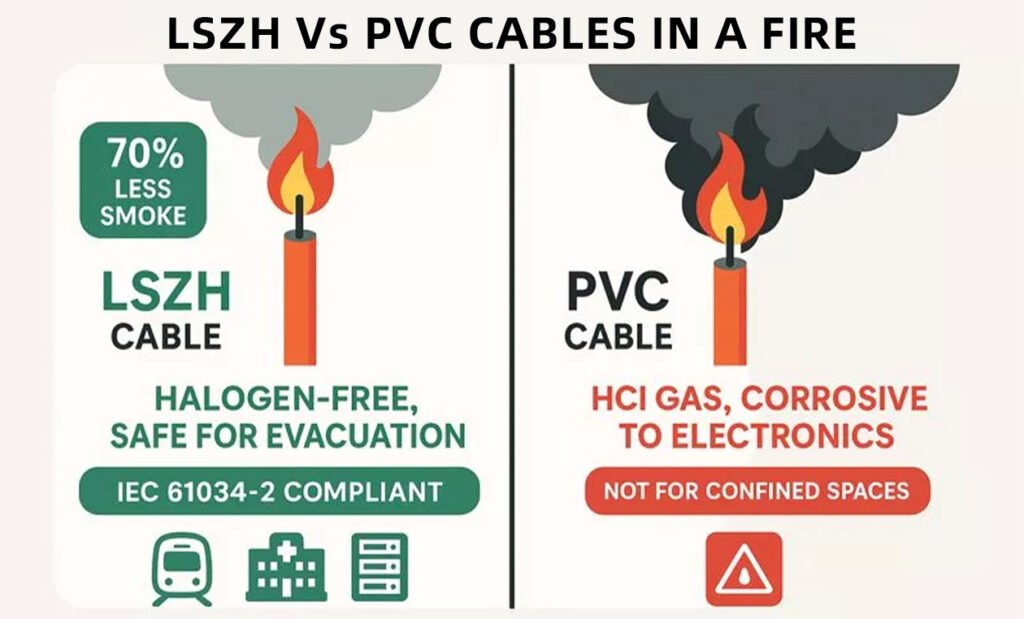
The decision to choose between LSZH (Low Smoke Zero Halogen) and PVC (Polyvinyl Chloride) cable jackets depends primarily on the installation environment, life safety requirements, and local building codes, rather than electrical performance. While both jacket types can maintain identical data or power transmission specifications (e.g., Cat6A or 1kV power ratings), their physical behavior during a thermal event is diametrically opposed. PVC contains halogens (chlorine) that produce toxic, corrosive gases and dense smoke when burned, whereas LSZH is engineered from halogen-free polyolefins that emit minimal smoke and zero acidic byproducts.
Technical Performance and Combustion Matrix
The following matrix compares the raw material properties, safety metrics, and operational limitations under global standards like IEC 60754 and IEC 61034.
| Technical Parameter | LSZH (Low Smoke Zero Halogen) | PVC (Polyvinyl Chloride) | Standard Reference |
| Base Material Compound | Halogen-free Polyolefins / Thermoplastic | Polyvinyl Chloride with Plasticizers | Material Science |
| Halogen Gas Content | ≤0.5% Hydrogen Chloride (HCl) | ~25%-30% Hydrogen Chloride (HCl) | IEC 60754-1 / EN 50267 |
| Smoke Light Transmittance | ≥60% (High Visibility) | 20%-45% (Dense Black Smoke) | IEC 61034-2 |
| Combustion Byproducts | Water vapor, Carbon Dioxide (CO₂) | Hydrochloric Acid (HCl), Toxic Dioxins | Toxicity Analysis |
| Corrosive Risk to Electronics | Negligible | Critical (Acidic gas corrodes circuitry) | IEC 60754-2 |
| Relative Material Flexibility | Stiff, rigid tactile feel | High flexibility, easy manipulation | Physical Testing |
| Average Cost Variance | 15%-25% Premium | Baseline cost-effective | Market Index |
Independent LSZH Cable Performance & Application Specifications
Core Technical Features
- Zero Halogen & Low Smoke: Produces non-toxic, non-corrosive flue gas during combustion, ensuring evacuation visibility and protecting electrical equipment.
- High Temperature Resistance: Stable long-term operation at 90°C, with superior short-circuit heat resistance compared to standard PVC.
- Fire Safety Compliance: Fully meets global fire protection standards for public building electrical wiring.
Mandatory Application Scenarios
Underground tunnels, urban rail transit, high-rise building shaft wiring, public gathering buildings, and data center power distribution systems.
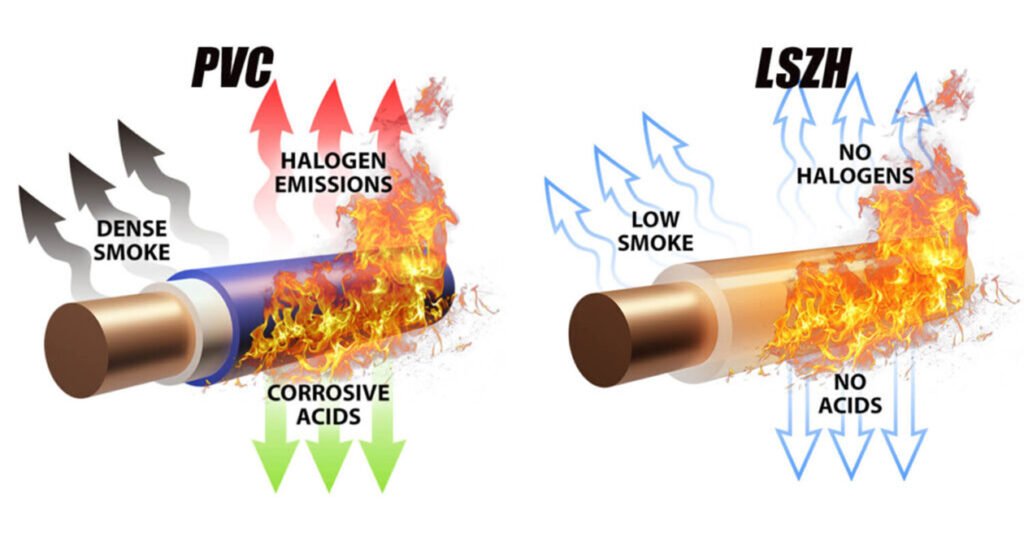
Independent PVC Cable Performance & Application Specifications
Core Technical Features
- High Flexibility: Allows tight bending installation, suitable for complex conduit and narrow-space wiring.
- Excellent UV Stability: Resists outdoor photo-oxidation aging without additional protective sheaths.
- Cost Efficiency: Low manufacturing cost with mature mass production and wide market availability.
Applicable Low-Risk Scenarios
Ordinary residential indoor wiring, open industrial plant circuits, outdoor low-voltage overhead lines, and non-civilian auxiliary electrical systems.
Critical Compliance & Exclusion Rules
- PVC Prohibition Rule: PVC insulated cables are strictly prohibited in enclosed public evacuation passages and underground manned facilities per IEC 60502 fire safety annex provisions.
- LSZH Restriction Rule: Ordinary LSZH cables lack UV resistance; non-stabilized LSZH models are forbidden for long-term direct outdoor exposure installation.
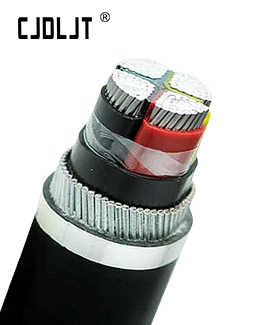
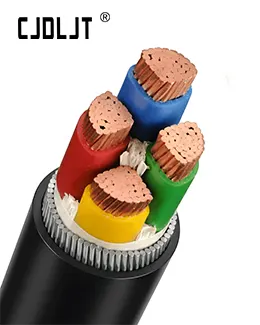
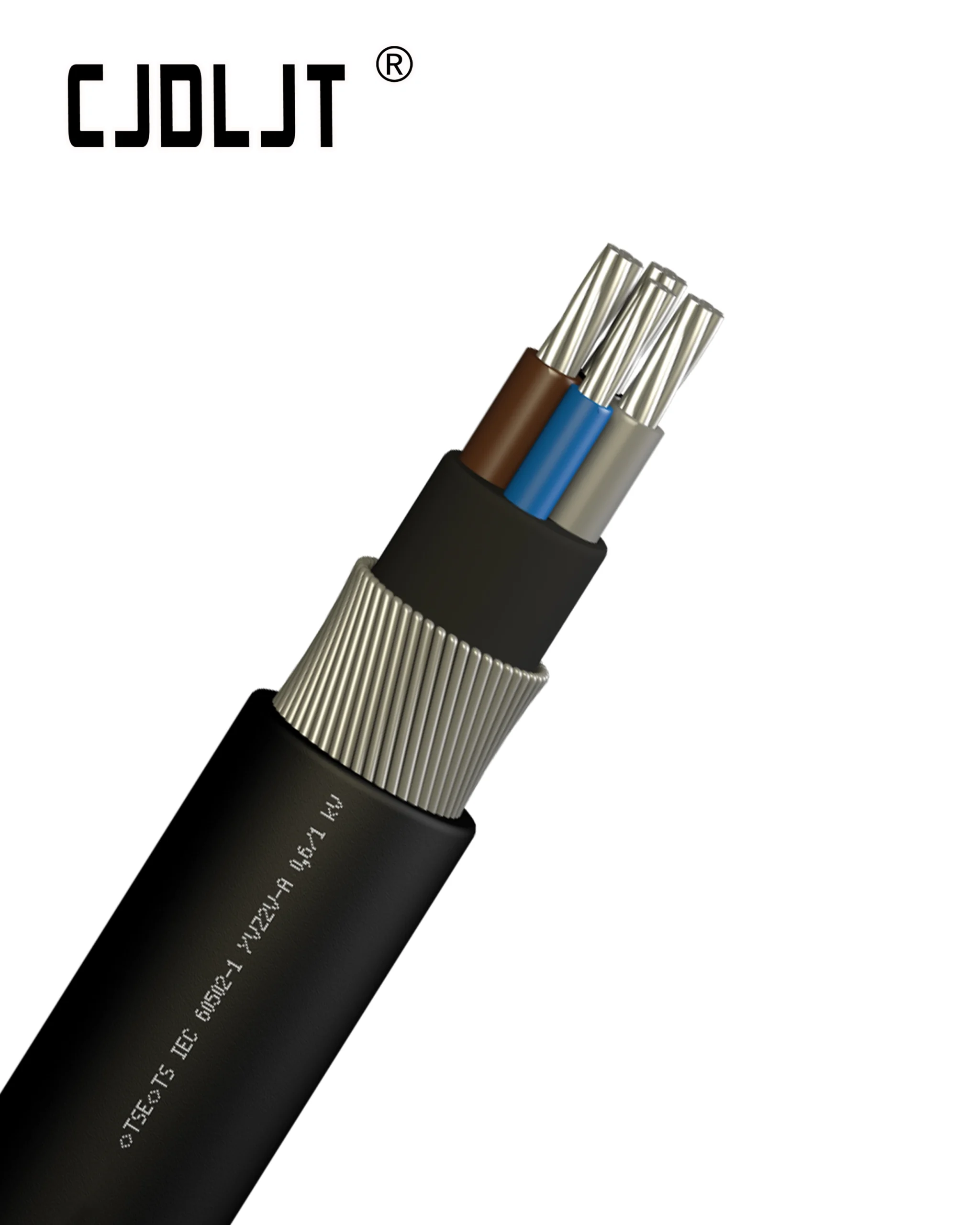
- Mechanical Protection Note: Neither LSZH nor PVC insulation replaces armored (SWA/AWA) cable structure for underground buried wiring with mechanical impact risks.