



Preventing Premature Corrosion of ACSR Conductors in Coastal Environments
To prevent premature corrosion of ACSR (Aluminum Conductor Steel Reinforced) conductors in salt-laden marine environments (ISO 9223 Category C4/C5), transmission engineers must mitigate galvanic corrosion between the galvanized steel core and outer EC-grade aluminum strands. In coastal zones, airborne sodium chloride (NaCl) acts as an aggressive electrolyte, accelerating the loss of zinc coating and degrading steel core integrity. Effective prevention requires deploying greased ACSR (IEC 61089 Case A/B/C) with high-temperature corrosion-inhibiting grease, upgrading to Class A or Class Heavy zinc/galvanized coatings, or replacing galvanized steel cores with Aluminum-Clad Steel (ACSR/AW) to eliminate direct bimetallic contact potentials.
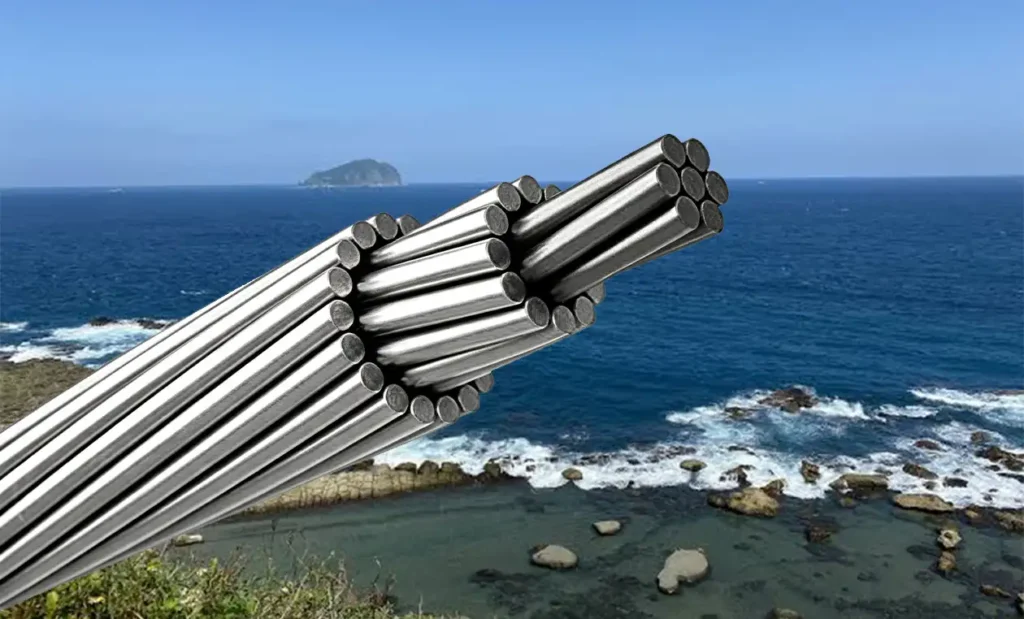
Corrosion Mitigation Matrix: ACSR Material & Coating Options
The matrix below compares material configurations for overhead line applications in severe coastal zones per IEC 61089, ASTM B232, and BS EN 50182:
| Conductor Variant | Core Material | Corrosion Protection Mechanism | Service Life Expectancy (C5 Marine) | Relevant International Standard |
| Standard ACSR | Class A Galvanized Steel | Sacrificial zinc coating (200–260 g/m²) | 10–15 Years | ASTM B232 / BS EN 50182 |
| Heavy-Galvanized ACSR | Class Heavy / Class C Steel | Extra-thick zinc coating (450 g/m²) | 18–22 Years | IEC 60888 / ASTM A475 |
| Greased ACSR (Type Core/Inner) | Class A Steel + Anti-Corrosion Grease | Hydrophobic, temperature-stable microcrystalline grease filling core voids | 25–30 Years | IEC 61089 (Case A/B/C) |
| ACSR/AW (Aluminized) | Aluminum-Clad Steel (ACS) | 10%–15% thick metallurgical aluminum cladding; eliminates bimetallic potential | 35–50 Years | ASTM B416 / IEC 61232 |
| AAAC (All-Aluminum Alloy) | Al-Mg-Si Alloy (5005/6201) | Homogeneous structure; zero bimetallic junction | 30–40 Years | IEC 61089 / ASTM B399 |
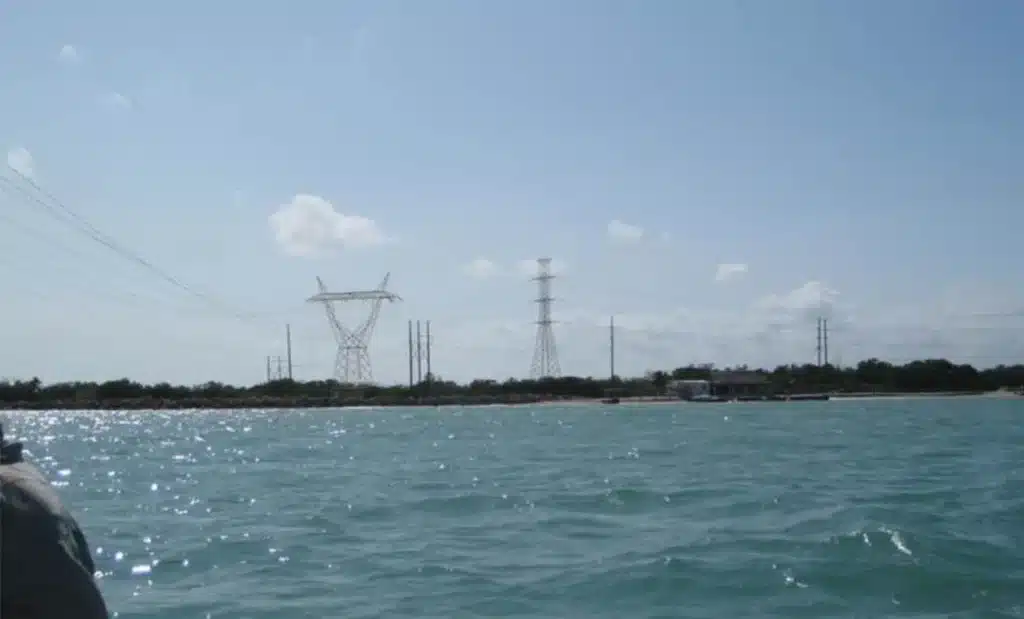
Technical Mechanism of Marine Corrosion in Overhead Lines
Coastal atmospheric environments combine high relative humidity (>75 %), cyclic wetting, and airborne salt spray. Bimetallic coupling creates a galvanic cell where the aluminum strands (≈ -0.85 V vs. SHE) act as an anode relative to the underlying steel core (≈ -0.44 V vs. SHE) once the protective zinc barrier dissolves.
- Pitting Corrosion: Chloride ions breach the passive aluminum oxide (Al₂O₃) film, causing localized pitting along outer strands.
- Internal Core Oxidation: Moisture and airborne salt ingress into inner interstitial voids, consuming the galvanizing layer and generating voluminous iron rust (Fe₂O₃), which exerts radial pressure and causes strand bird-caging.