



Service Life Comparison of AAAC and ACSR in Corrosive Environments
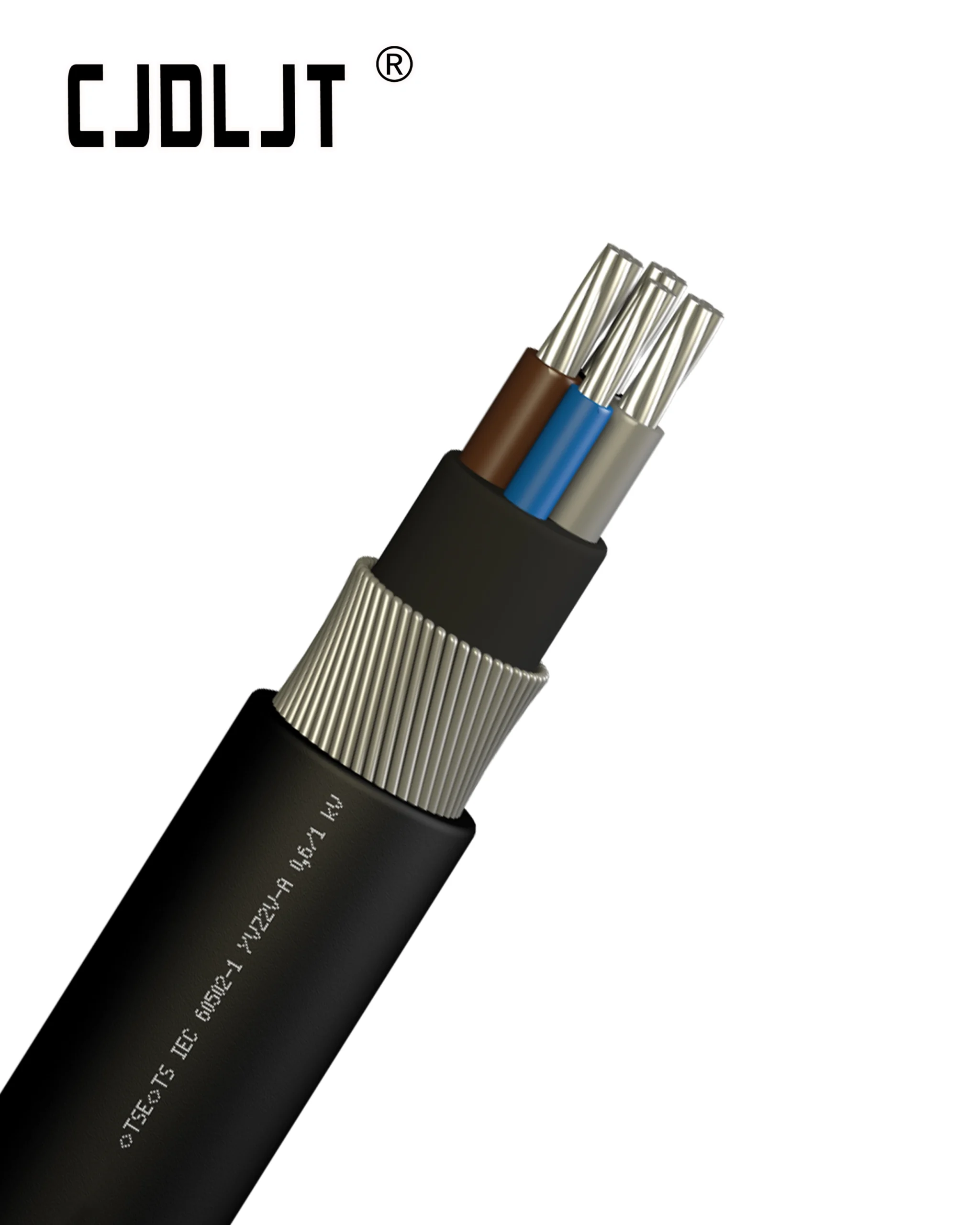
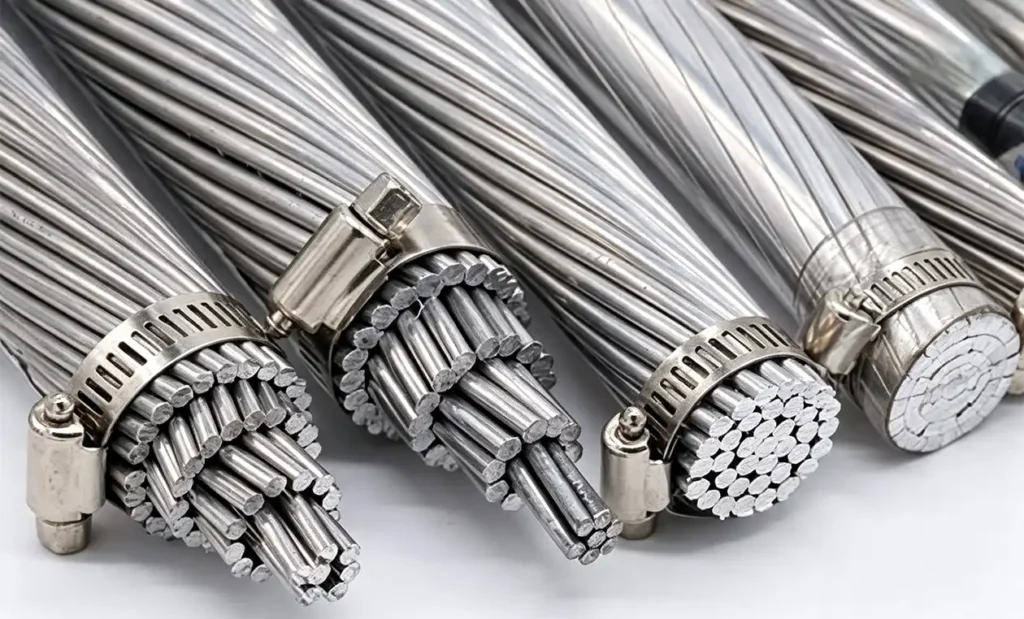
In highly corrosive coastal or industrial environments, All Aluminum Alloy Conductors (AAAC) deliver 2x to 3x longer service life—typically exceeding 40 years—compared to the 15 to 25-year lifespan of Aluminum Conductor Steel Reinforced (ACSR) cables. This longevity stems from the elimination of the galvanized steel core found in ACSR. ACSR cables suffer from severe galvanic corrosion between the dissimilar metals of the aluminum strands and the steel core when moisture and salt infiltrate. AAAC features a homogeneous aluminum-magnesium-silicon alloy construction (compliant with IEC 61089), offering intrinsic resistance to atmospheric oxidation and intergranular corrosion without requiring sacrificial steel reinforcement.
Technical Parameter Matrix: AAAC vs. ACSR
| Technical Parameter | AAAC (All Aluminum Alloy Conductor) | ACSR (Aluminum Conductor Steel Reinforced) |
| Conductor Material | Aluminum-Magnesium-Silicon Alloy (e.g., 6201-T81) | Hard-drawn Aluminum wires over Galvanized Steel Core |
| Corrosion Resistance | High: Homogeneous alloy prevents bimetallic galvanic action | Low to Moderate: Vulnerable to galvanic corrosion at steel-aluminum interface |
| Typical Service Life (Coastal/Industrial) | 40+ Years | 15 – 25 Years |
| Tensile Strength-to-Weight Ratio | High: Optimized mechanical strength without steel | Very High: Provided primarily by the high-tensile steel core |
| Governing Standards | IEC 61089, ASTM B398, BS 3242 | IEC 61089, ASTM B232, BS 215-2 |
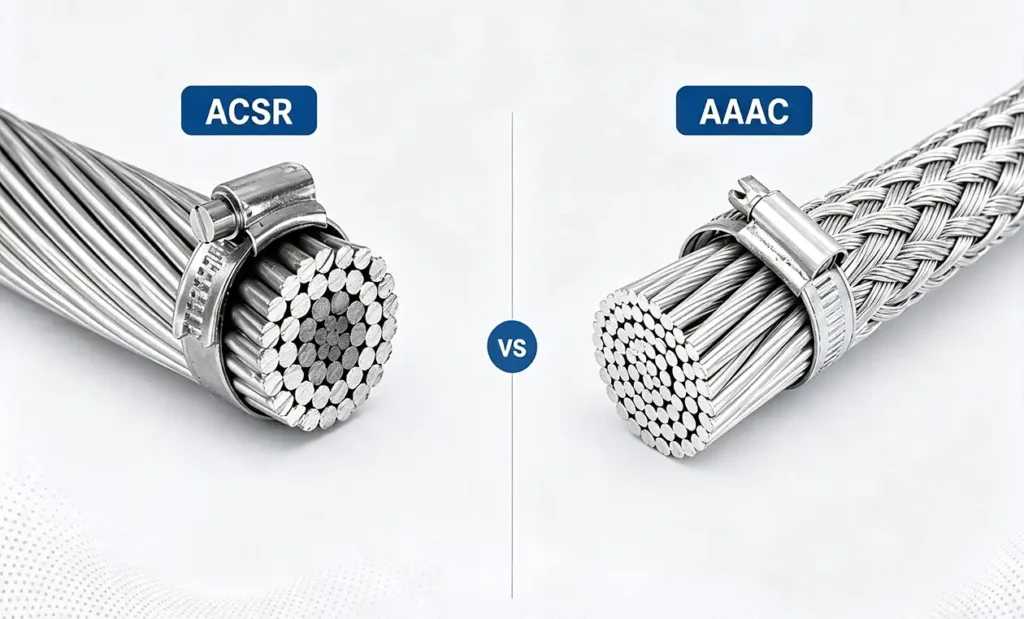
Corrosion Resistance Mechanisms and Failure Modes
AAAC Homogeneous Metallurgy
AAAC eliminates multi-metal interfaces entirely. Composed of heat-treated aluminum-magnesium-silicon alloys, the wire forms a passive, self-healing aluminum oxide (Al₂O₃) surface layer upon exposure to ambient oxygen. This passive film resists pitting and stress-corrosion cracking even in heavy marine salt-spray zones or chemical plant atmospheres, ensuring continuous mechanical integrity without internal degradation.
ACSR Bimetallic Vulnerability
ACSR relies on a central galvanized or zinc-5% aluminum-mischmetal alloy coated steel wire to bear high mechanical loads. In corrosive atmospheres, airborne chlorides and moisture penetrate the outer aluminum strands via capillary action. Once moisture reaches the core, the zinc coating sacrifices itself, followed by rapid galvanic corrosion of the underlying carbon steel. This results in “core bursting,” internal volume expansion, wire strand breakage, and catastrophic mechanical failure long before the aluminum outer layers wear out.