

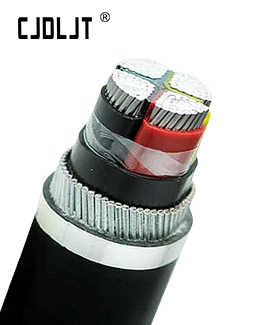
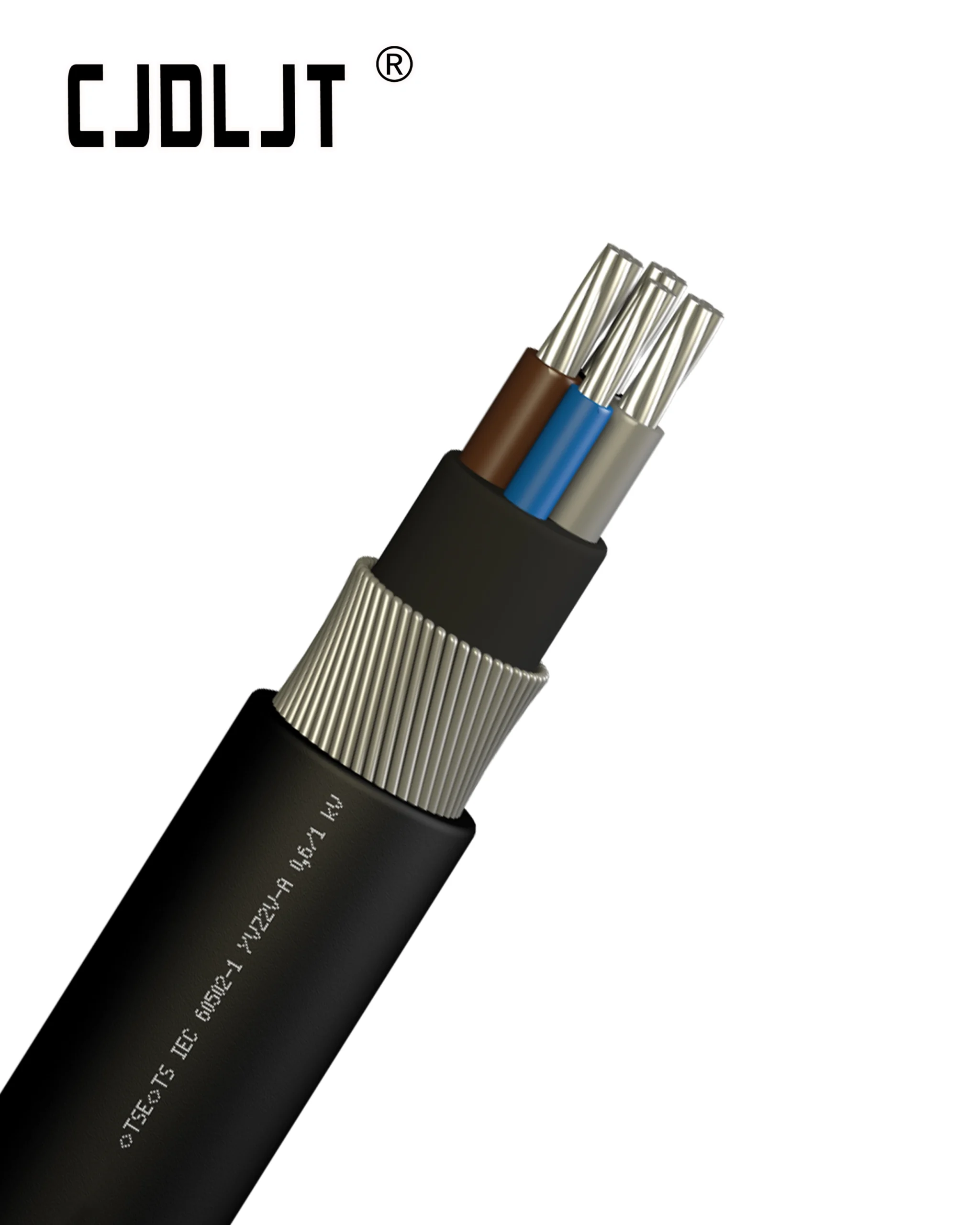


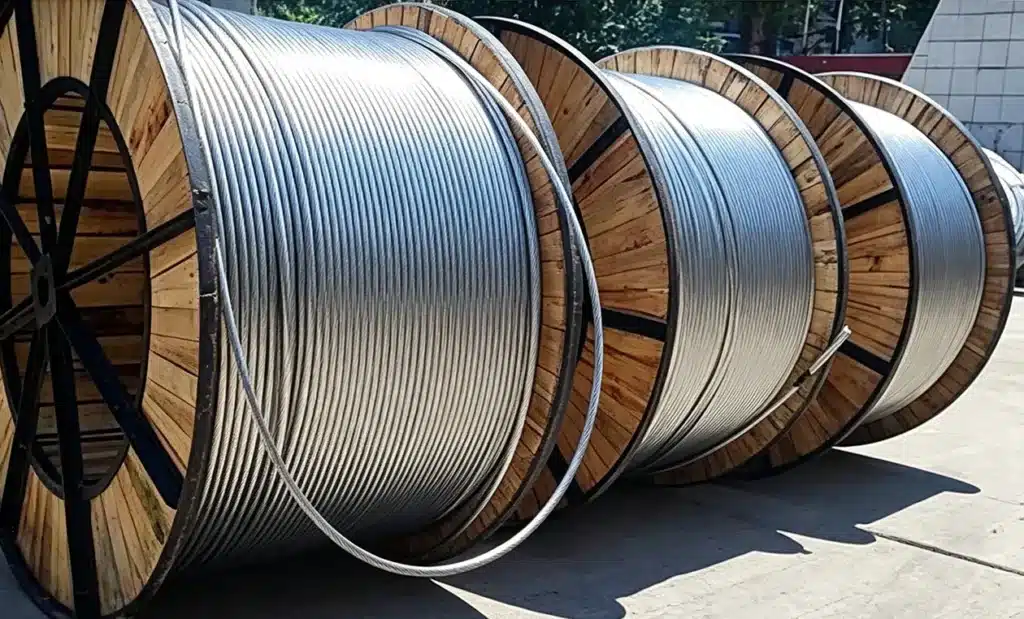
ACSR (Aluminum Conductor Steel Reinforced) and AAAC (All Aluminum Alloy Conductor) are the two most common bare conductors used in overhead power lines. The primary difference lies in their inner construction: ACSR combines outer EC-grade aluminum strands for electrical conductivity with a high-strength central steel core for mechanical tension. In contrast, AAAC is made entirely from a single high-strength heat-treated Aluminum-Magnesium-Silicon alloy (Grade 6201-T81). ACSR offers higher overall breaking strength for extreme long spans, while AAAC provides a lighter structure, zero magnetic power losses, better initial sag performance under ice/wind load, and complete immunity to internal steel-to-aluminum corrosion in harsh coastal environments.
Technical Comparison Matrix: ACSR vs AAAC
| Technical Parameter | ACSR (Steel Reinforced) | AAAC (All Aluminum Alloy) |
| Primary Standard | IEC 61089 / ASTM B232 / BS 215 | IEC 61089 / ASTM B399 / EN 50182 |
| Material Construction | 1350-H19 Aluminum + Galvanized Steel Core | Homogeneous 6201-T81 Al-Mg-Si Alloy |
| Electrical Conductivity | 61.0% IACS (Aluminum outer strands) | 52.5% – 53.5% IACS (Uniform across cross-section) |
| Magnetic Core Loss | Present (Inductive hysteresis in steel core) | 0% (Non-magnetic alloy construction) |
| Tensile Strength | 1,200 – 1,400 MPa (Steel Core wire) | 295 – 330 MPa (All alloy strands) |
| Expansion Coefficient (α) | 15.3 × 10⁻⁶ /°C – 19.8 × 10⁻⁶ /°C | 23.0 × 10⁻⁶ /°C |
| Continuous Working Temp. | 75°C (Standard) / 90°C (Emergency) | 75°C (Standard) / 90°C (Emergency) |
| Corrosion Resistance | Moderate (Risk of internal galvanic reaction) | High (Self-passivating aluminum oxide layer) |
| Weight-to-Strength Ratio | Lower (Steel core adds ~20–30% dead weight) | Higher (Lightweight high strength-to-weight ratio) |
Sag Performance and Structural Load Dynamics
Understanding how each conductor sags involves looking at two distinct operational conditions: thermal expansion from high electrical current and mechanical weight loading from ice or wind.
1. Thermal Sag Under High Electrical Load
- ACSR: Has a lower linear thermal expansion coefficient (α ≈ 17.8 × 10⁻⁶ /°C). When high current heats up the line, the outer aluminum strands expand, shifting the mechanical load onto the central steel core. Because steel resists stretching under heat, ACSR exhibits less thermal sag at high operating temperatures, making it a reliable choice for long river crossings or mountain valley spans.
- AAAC: Possesses a higher thermal expansion coefficient (α ≈ 23.0 × 10⁻⁶ /°C). As temperature rises, it expands more than ACSR, resulting in increased mid-span sag at elevated thermal loads unless initial installation tension is adjusted.
2. Mechanical Weight & Wind Sag
- ACSR: The central steel core adds 20% to 30% additional dead weight compared to an equivalent-diameter AAAC conductor. This extra weight increases static sag during normal operating temperatures.
- AAAC: Because it lacks a heavy steel core, AAAC features an exceptional strength-to-weight ratio. Under heavy wind or ice loading conditions (governed by ASCE 74 / NESC standards), its lighter mass reduces mechanical tension on utility poles and cross-arms.
Anti-Corrosion Mechanisms in Harsh Environments
Environment plays a massive role in conductor lifespan, especially in coastal (high salinity) or heavy industrial ($\text{SO}_2$ pollution) zones classified under ISO 9223 corrosivity categories C4/C5.
Galvanic Degradation in ACSR
In moist or saline air, seawater and pollutants seep into the gaps between the outer aluminum strands and the steel core. Because aluminum and steel are dissimilar metals, they form a galvanic battery cell. The outer aluminum acts as a sacrificial anode and corrodes rapidly from the inside out, leading to hidden structural weakening, surface flaking, and premature line failure.
Passivation Immunity in AAAC
AAAC eliminates galvanic corrosion completely because it contains no steel. Exposed to air, its 6201 aluminum alloy naturally forms a tough, self-healing aluminum oxide (Al₂O₃) protective layer. In salt spray testing (ASTM B117), AAAC demonstrates over 3 times lower pitting rates than ungreased ACSR, making it the standard choice for coastal island grids and marine transmission lines.
Total Lifecycle Cost: CAPEX vs. OPEX
Evaluating the true financial cost of ACSR versus AAAC requires looking beyond the price tag of the wire itself to consider total installed cost and long-term energy efficiency.
- Upfront Material Cost (Raw CAPEX): ACSR is typically 5% to 15% cheaper on raw material cost per kilometer. Galvanized steel wire is less expensive to manufacture than heat-treated 6201 aluminum alloy, giving ACSR an initial price advantage for simple purchasing budgets.
- Tower & Infrastructure Cost (Structural CAPEX): AAAC reduces overall structural costs. Because AAAC is significantly lighter, it exerts less tipping force (overturning moment) on utility poles. Engineers can specify lighter poles, smaller concrete foundations, or extend span distances by up to 10% without increasing pole height.
- Operational Energy Losses (OPEX): AAAC delivers 2% to 4% lower line losses over its operating lifespan. Alternating current (AC) passing through ACSR’s steel core creates magnetic hysteresis and eddy current losses. Because AAAC is completely non-magnetic, zero power is wasted heating up a steel core, resulting in major cumulative energy savings over a 30-year line lifespan.