

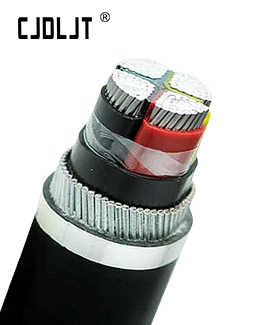
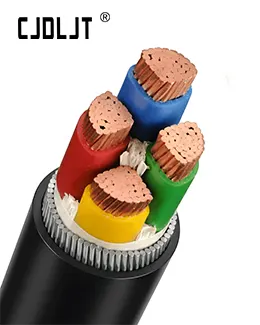
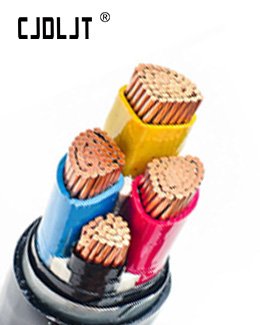
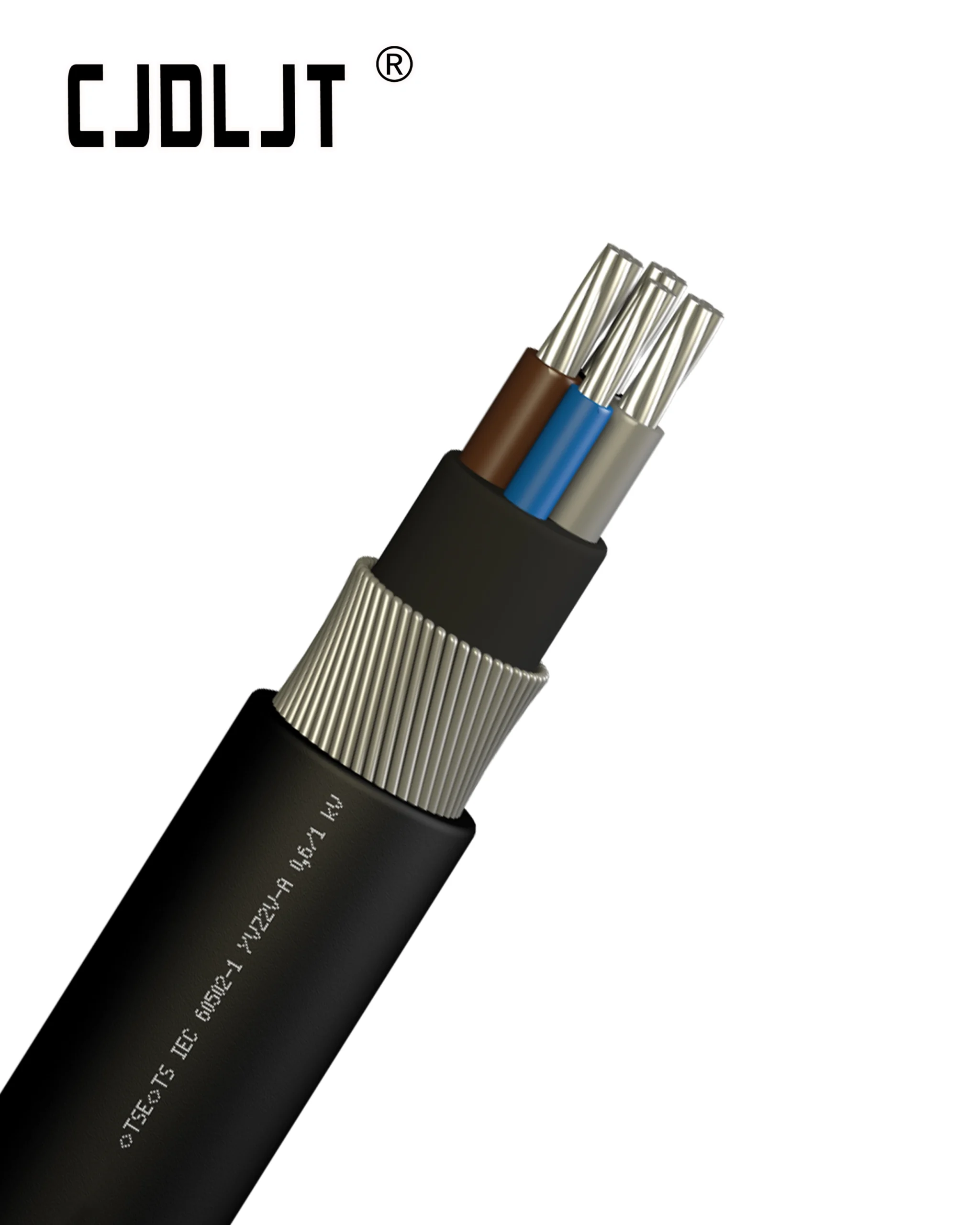

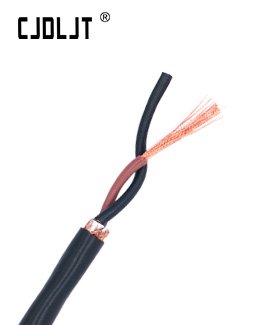

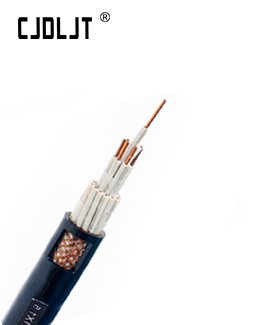
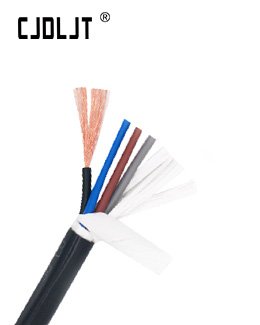
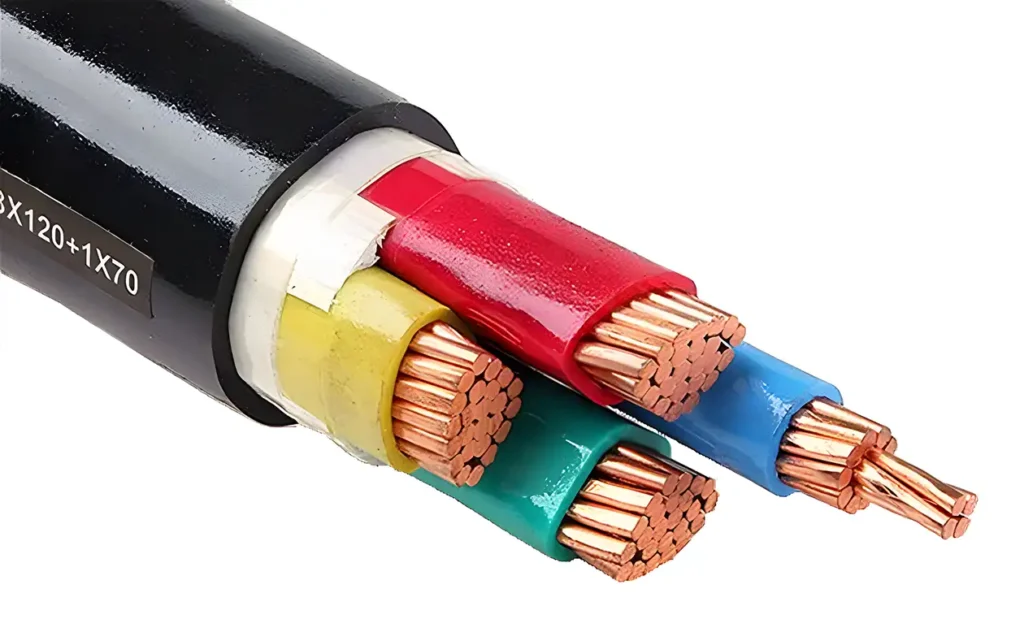
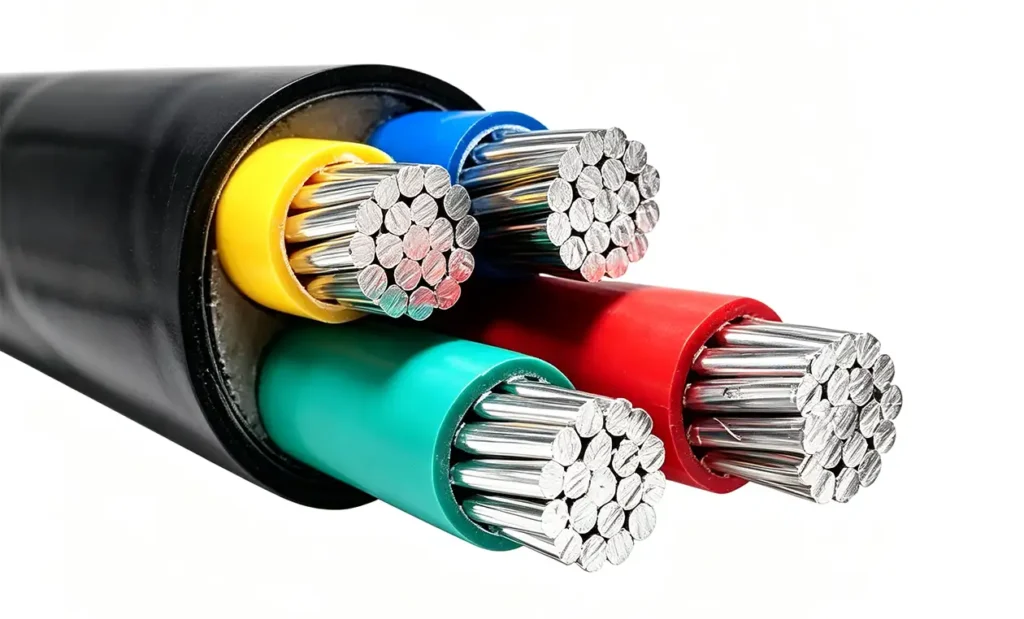
N2XY (copper conductor) and NA2XY (aluminium conductor) are unarmored, XLPE-insulated, PVC-sheathed power cables rated at 0.6/1 kV, manufactured according to IEC 60502-1[1] and VDE 0276-603 standards. The fundamental operational difference lies in conductor electrical conductivity: copper delivers higher conductivity ( vs. aluminium’s )[2], giving N2XY approximately 25–30% higher current-carrying capacity (ampacity) than NA2XY for equivalent cross-sectional areas. Conversely, NA2XY offers a 60–70% lower material cost and a 50% weight reduction per meter, making it the preferred choice for long-distance, high-cross-section direct burial or trunk distribution lines where space constraints are minimal.
Technical & Ampacity Comparison Matrix
The table below outlines key technical parameters, ampacity ratings in ground and air, and structural characteristics for standard low-voltage distribution configurations.
| Technical Parameter | N2XY (Copper Conductor) | NA2XY (Aluminium Conductor) | Standard Reference |
| Conductor Material | Plain Annealed Copper (Class 1 solid / Class 2 stranded) | Stranded Aluminium (Class 2) | IEC 60228[3] / VDE 0295 |
| Insulation Material | Cross-linked Polyethylene (XLPE) | Cross-linked Polyethylene (XLPE) | IEC 60502-1 |
| Outer Sheath | Polyvinyl Chloride (PVC), Type ST2 | Polyvinyl Chloride (PVC), Type ST2 | IEC 60502-1 |
| Rated Voltage () | 0.6/1 kV | 0.6/1 kV | IEC 60502-1 |
| Max. Operating Temp. | 90°C (Continuous) / 250°C (Short circuit ) | 90°C (Continuous) / 250°C (Short circuit ) | IEC 60502-1[1] |
| Ampacity (, Ground @ 20°C) | 313 A | 242 A | IEC 60364-5-52 |
| Ampacity (, Air @ 30°C) | 301 A | 232 A | IEC 60364-5-52 |
| Approx. Conductor Resistance ( @ 20°C) | IEC 60228[3] | ||
| Relative Weight Ratio | Baseline () | ~ lighter | Industry Standard |
| Relative Material Cost | Baseline () | ~ lower | Market Average |
Key Engineering Trade-offs: N2XY vs NA2XY
Electrical Performance & Cross-Section Upsizing
Because aluminium has a higher electrical resistivity than copper, specifying NA2XY to match the ampacity of N2XY requires stepping up the conductor cross-section by one to two standard sizes.
- Equivalent Load Requirement: An N2XY cable carrying approximately in ground requires an NA2XY cable size of () to maintain thermal equilibrium and acceptable voltage drop limits.
- Conduit and Tray Sizing: Larger cross-sections for NA2XY increase overall cable outer diameter (OD), requiring larger conduit sizes, wider cable trays, and larger bending radii during installation.
Mechanical Weight and Civil Installation Costs
Aluminium’s low density ( vs. copper’s )[4] gives NA2XY a significant structural advantage in long-run installations.
- Handling & Support: NA2XY reduces pulling tension demands and lighter support structures for elevated tray installations.
- Civil Overhead: Reduced cable mass minimizes labor costs and heavy equipment requirements for utility-scale solar farms, industrial grids, and municipal direct-burial infrastructure.
Termination and Contact Considerations
Aluminium conductors form a non-conductive oxide layer () upon exposure to air and exhibit higher creep rate under mechanical stress.
- Termination Hardware: NA2XY requires bi-metallic crimp lugs or mechanical shear-bolt connectors treated with antioxidant jointing compound to prevent galvanic corrosion and thermal oxidation at copper terminal buses.
- Copper Direct Connections: N2XY connects directly to standard brass/copper switchgear terminals using standard compression lugs without specialized surface preparation or creep compensation.
CJDL CABLE Engineering Insight
While N2XY copper remains preferred where space and ampacity per cross-section matter most, NA2XY delivers optimal cost efficiency for long-distance direct-burial and trunk lines — cutting material cost by 60–70% with 50% lighter weight per meter. CJDL recommends upsizing NA2XY one to two standard sizes, with bi-metallic lugs and antioxidant compound. Both types are manufactured and routinely tested to IEC 60502-1 and VDE 0276-603.
References
[1] Wikipedia. IEC 60502 [EB/OL]. 2026-09-08.
[2] Wikipedia. Electrical resistivity and conductivity [EB/OL]. 2026-09-08.
[3] Wikipedia. IEC 60228 [EB/OL]. 2026-09-08.
[4] Wikipedia. Aluminium [EB/OL]. 2026-09-08.