

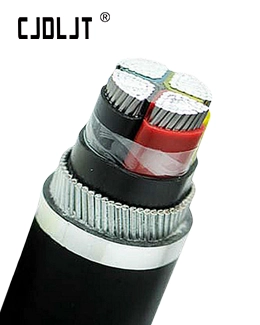
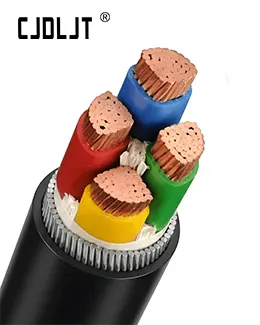
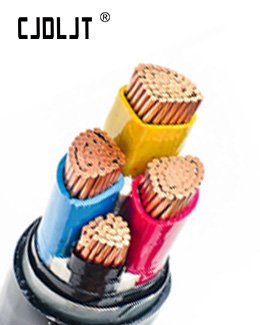
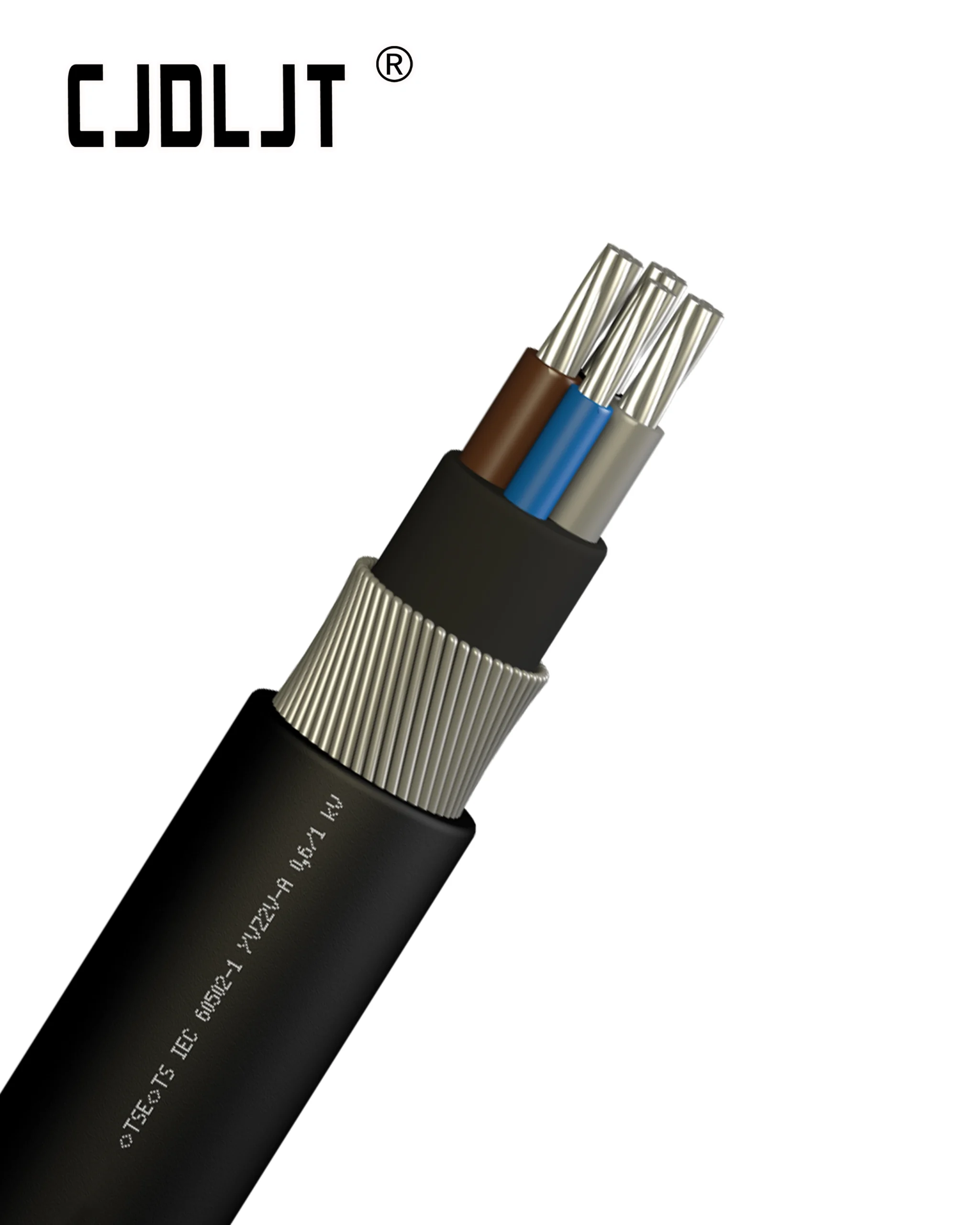


SWA Provides High Mechanical Protection for LV Power Distribution up to 1 kV
Steel Wire Armoured (SWA) low-voltage power cables incorporate a layer of galvanized steel wires applied helically over the bedding to deliver high resistance to mechanical impact, compression, and external damage. Designed primarily for voltages of 0.6/1 kV in accordance with IEC 60502-1 and BS 5467, SWA cables are the standard choice for underground, industrial, and outdoor fixed installations where cables are exposed to risk of crushing, rodent attack, or accidental impact. The armour also serves as an earth-fault path when properly bonded. Conductor options are annealed copper or aluminium; insulation is typically XLPE (preferred) or PVC.
Technical Comparison Matrix: SWA vs Non-Armoured LV Cables
| Parameter | SWA Cable | Non-Armoured Cable | Standard Reference |
|---|---|---|---|
| Mechanical impact resistance | High (steel wire armour) | Low to moderate | IEC 60502-1 / BS 5467 |
| Crush / compression resistance | Excellent | Limited | IEC 60502-1 |
| Suitable for direct burial | Yes | Generally no (requires additional protection) | IEC 60364 / BS 7671 |
| Rodent / termite resistance | High | Low | Application practice |
| Earth-fault path | Yes (armour can be used as CPC when bonded) | Requires separate CPC | IEC 60502-1 |
| Flexibility | Lower (stiffer due to armour) | Higher | Installation factor |
| Typical insulation | XLPE (preferred) or PVC | XLPE or PVC | IEC 60502-1 |
| Outer sheath options | PVC, PE, or LSZH | PVC, PE, or LSZH | IEC 60502-1 / BS 6724 |
| Relative cost | Higher | Lower | Market data |
| Preferred applications | Underground, industrial, outdoor, harsh environments | Indoor fixed wiring, protected routes | IEC 60364 |
Core Construction of SWA LV Power Cables
A typical multi-core SWA cable compliant with IEC 60502-1 or BS 5467 consists of the following layers (from inside to outside):
- Conductor: Class 1 (solid) or Class 2 (stranded) annealed copper or aluminium
- Insulation: XLPE (thermosetting, 90°C) or PVC (thermoplastic, 70°C)
- Core assembly: Insulated cores laid up with non-hygroscopic fillers
- Bedding / Inner covering: Extruded or taped layer providing a smooth surface for armour
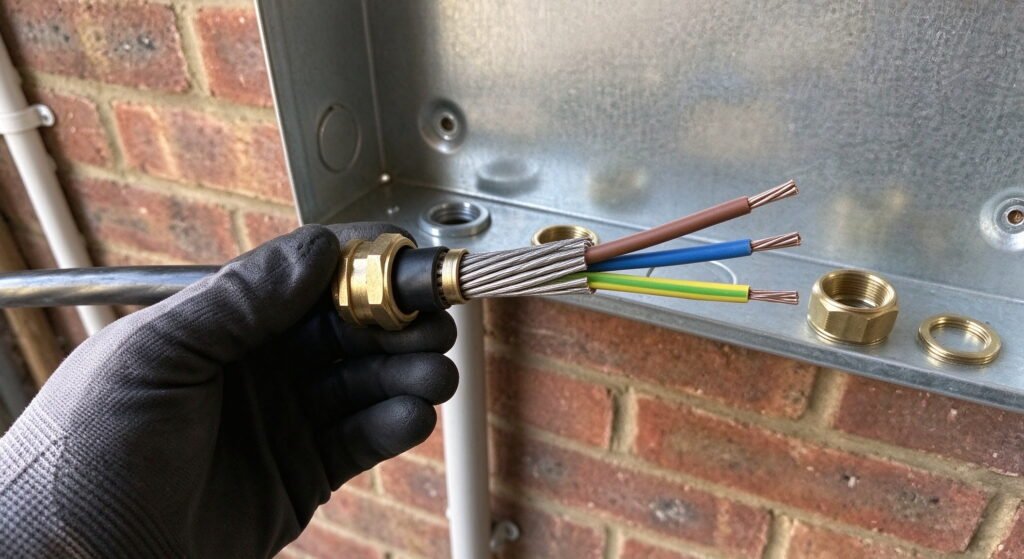
- Armour: Galvanized steel wires applied helically (single layer for most LV sizes)
- Outer sheath: Extruded PVC, polyethylene, or Low Smoke Zero Halogen (LSZH) compound
For single-core cables, aluminium wire armour (AWA) is normally used instead of steel to avoid magnetic losses and circulating currents.
Standards Governing SWA Cables
- IEC 60502-1: International standard for power cables with extruded insulation rated from 1 kV to 30 kV. Defines construction, materials, dimensional requirements, and type tests for SWA designs up to 1 kV.
- BS 5467: British standard specifically covering armoured cables with thermosetting insulation (primarily XLPE) for voltages up to 1 kV. Widely specified in the UK and many Commonwealth markets.
- BS 6724: Covers LSZH-sheathed versions of armoured cables with thermosetting insulation.
- IEC 60332 series: Flame propagation tests applicable to the complete cable.
- National wiring rules (e.g., BS 7671, IEC 60364) dictate installation methods, depth of burial, and protection requirements.
Mechanical Protection Performance
The galvanized steel wire armour provides:
- High resistance to external mechanical impact
- Excellent crush and compression strength
- Effective barrier against rodent and insect damage
- Additional tensile strength during pulling into ducts or trenches
Armour coverage and wire diameter are defined by the relevant standard according to cable diameter and number of cores. The armour must be properly terminated and bonded at both ends (or as required by the earthing system) to function as a protective conductor or to limit induced voltages.
Installation Considerations for SWA Cables
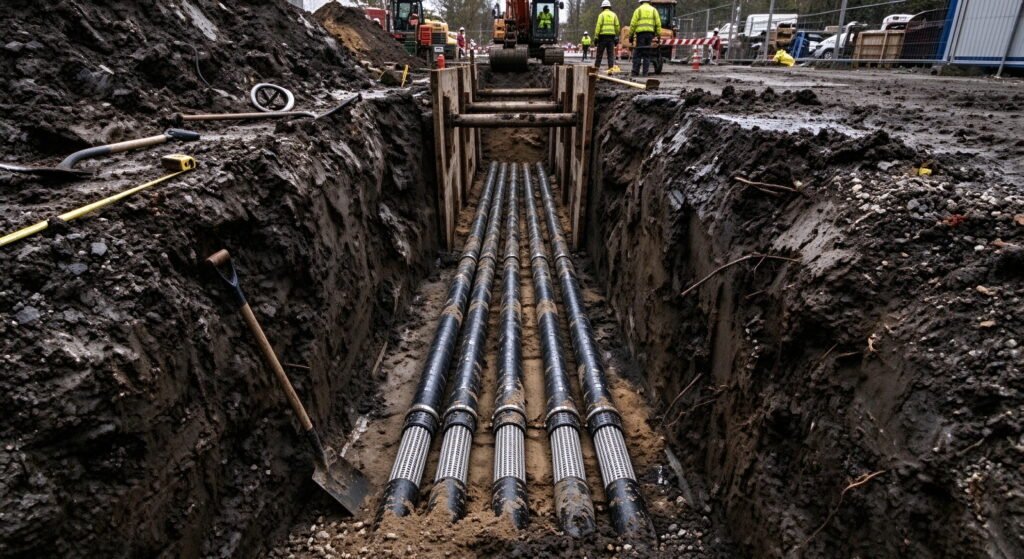
Direct burial:
- Suitable when installed at the correct depth with appropriate warning tape/marker
- Bedding and surround materials must not damage the outer sheath
In ducts or conduits:
- Pulling tension must respect the maximum allowable force for the armour and conductor
- Bending radius is larger than non-armoured cables (typically 12–15 × overall diameter)
Indoor industrial use:
- Preferred on cable tray, ladder, or cleats where mechanical risk exists
- Armour bonding and earthing must comply with the installation earthing system (TN-S, TN-C-S, etc.)
Termination:
- Requires armour glands (e.g., BW or CW type) that clamp the steel wires and provide earth continuity
- Correct gland selection is essential for both mechanical retention and electrical continuity
XLPE vs PVC Insulation in SWA Construction
Although the armour is independent of the insulation type, modern SWA cables predominantly use XLPE insulation because:
- Higher continuous operating temperature (90°C vs 70°C)
- Greater short-circuit withstand (250°C vs 160°C)
- Better long-term thermal aging performance
- Higher current-carrying capacity for the same conductor size
PVC-insulated SWA cables remain available for lower-duty or cost-sensitive applications.
Fire Performance Options
Standard SWA cables with PVC sheath meet basic flame-retardant requirements. For installations demanding low smoke and zero halogen performance (public buildings, tunnels, high-rise, data centres), LSZH bedding and outer sheath compounds are specified (BS 6724 or equivalent IEC 60502-1 LSZH designs). Smoke density and halogen acid gas emission are verified to IEC 61034 and IEC 60754.
Selection Guidelines
Specify SWA when:
- Cable is installed underground or in locations with mechanical risk
- Rodent or impact protection is required
- The armour is intended to serve as a circuit protective conductor
- The environment is industrial or outdoor
Consider non-armoured or alternative protection when:
- Installation is fully protected (indoor trunking, dedicated conduit)
- Maximum flexibility and lowest cost are priorities
- Magnetic losses on single-core circuits must be avoided (use AWA or non-magnetic armour)
SWA low-voltage power cables remain the benchmark solution for mechanically demanding 0.6/1 kV distribution circuits. Correct selection of insulation (preferably XLPE), sheath material, conductor metal, and compliance with IEC 60502-1 or BS 5467 ensures reliable long-term performance under the thermal, mechanical, and environmental conditions of the installation.