

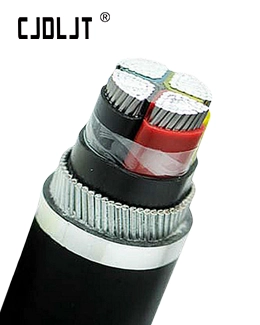
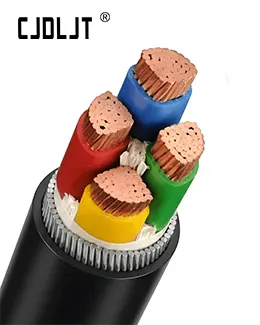
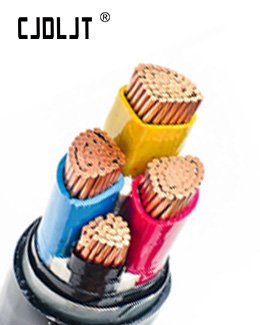
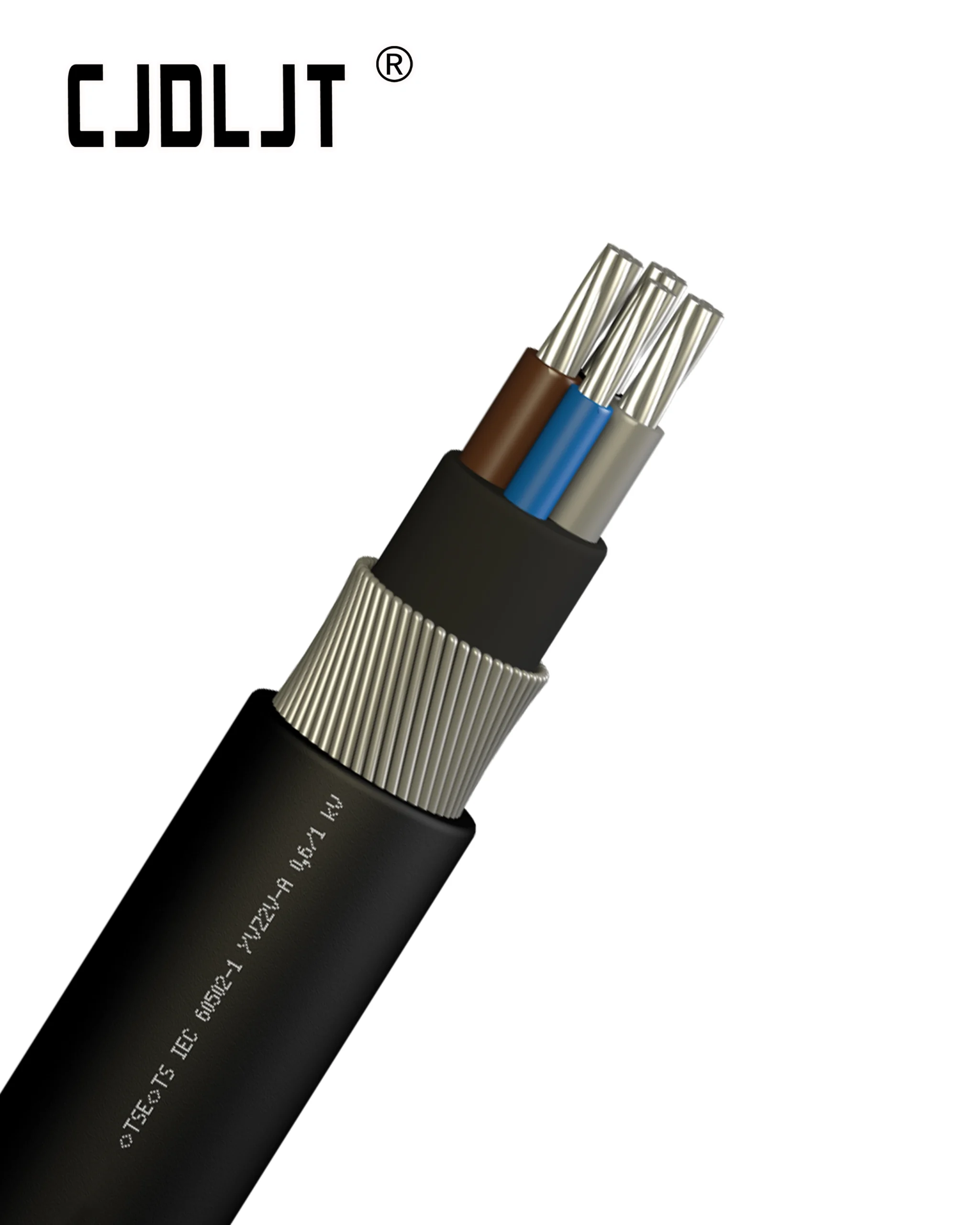

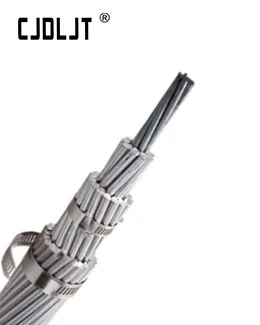
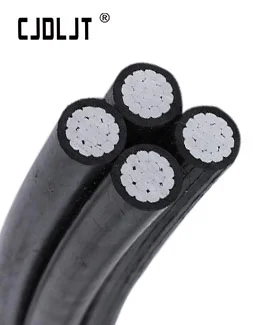
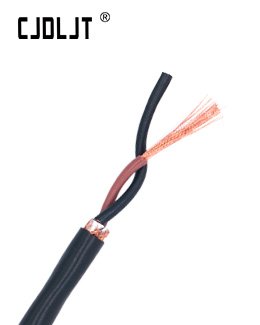

Low Voltage power cables are electrical conductors rated for continuous operation up to 1 kV (typically 0.6/1 kV). They transmit and distribute electrical power in industrial, commercial, and infrastructure applications. The core construction consists of annealed copper or aluminum conductors, polymeric insulation (XLPE or PVC), optional bedding, metallic armor (SWA or AWA), and an outer sheath (PVC or LSZH). They must comply with international standards such as IEC 60502-1, BS 5467, and VDE 0276 for voltage rating, current-carrying capacity, and short-circuit performance. Operating temperature limits are generally 70°C continuous for PVC and 90°C for XLPE, with short-circuit temperatures of 160°C (PVC) and 250°C (XLPE).
Structured Data Matrix: Insulation and Sheath Comparison
| Parameter | XLPE Insulation | PVC Insulation | LSZH Sheath | Standard PVC Sheath |
|---|---|---|---|---|
| Continuous Temperature | 90°C | 70°C | 90°C (with XLPE) | 70°C |
| Short-Circuit Temperature | 250°C | 160°C | 250°C | 160°C |
| Voltage Rating | 0.6/1 kV | 0.6/1 kV | 0.6/1 kV | 0.6/1 kV |
| Flame Retardant | Yes (with compounds) | Yes | Excellent (IEC 60332) | Yes (IEC 60332) |
| Smoke & Halogen | Low smoke | Contains halogen | Zero halogen, low smoke | High smoke, halogen |
| Typical Standards | IEC 60502-1, BS 5467 | IEC 60502-1, BS 5467 | IEC 60502-1, BS 6724 | IEC 60502-1, BS 5467 |
| Application Preference | Higher load, underground | General purpose | Public buildings, tunnels | Industrial outdoor |
Conductor Materials and Construction
Annealed copper is the preferred conductor for LV power cables due to its superior conductivity (IACS 100%) and flexibility. Aluminum is used where weight and cost reduction are priorities (approximately 61% conductivity of copper). Conductors are stranded (Class 2 per IEC 60228) for sizes above 10 mm² to improve flexibility and reduce skin effect. Cross-sectional areas typically range from 1.5 mm² to 630 mm² for multi-core and single-core designs. The conductor resistance at 20°C is strictly defined in IEC 60228 to ensure consistent current-carrying capacity.
Insulation Systems: XLPE vs PVC
XLPE (Cross-Linked Polyethylene) is the dominant insulation for modern LV cables. Cross-linking creates a thermoset material that withstands continuous 90°C operation and 250°C short-circuit conditions. It offers higher current-carrying capacity, better water-tree resistance, and longer service life compared with PVC. PVC insulation remains common for cost-sensitive or lower-temperature applications (70°C continuous). Both materials are extruded in single or multi-layer constructions and must pass dielectric strength and partial discharge tests per IEC 60502-1.
Armoring and Mechanical Protection
Steel Wire Armor (SWA) is the standard metallic protection for multi-core LV cables installed in direct burial or high-mechanical-stress environments. Aluminum Wire Armor (AWA) is used for single-core cables to avoid magnetic losses. Armor provides tensile strength, rodent protection, and a low-impedance earth path. Bedding (PVC or LSZH) separates the insulation from the armor to prevent damage during installation. Outer sheaths are typically PVC (black, UV-stabilized) or LSZH compounds compliant with IEC 60332, IEC 60754, and IEC 61034 for flame, halogen, and smoke performance.

Voltage Ratings, Current Capacity, and Installation
The standard rated voltage is 0.6/1 (1.2) kV, meaning 0.6 kV phase-to-earth and 1 kV phase-to-phase. Current-carrying capacity is calculated according to IEC 60364-5-52 or local codes, considering installation method (air, duct, buried), ambient temperature, and grouping factors. Derating is required above 30°C ambient or when cables are bundled. Minimum bending radius is typically 12 × overall diameter for single-core and 8 × for multi-core during installation, reducing to 6–8 × once installed.
Key Standards and Compliance
- IEC 60502-1: Power cables with extruded insulation for rated voltages 1 kV (Um = 1.2 kV) to 30 kV.
- BS 5467: Armoured cables with thermosetting insulation (XLPE) for 0.6/1 kV.
- BS 6724: LSZH armoured cables for the same voltage.
- VDE 0276: German requirements for power cables with extruded insulation.
These standards define conductor dimensions, insulation thickness, armor wire diameter, sheath thickness, routine tests (voltage withstand, conductor resistance), and type tests (flame, mechanical, thermal).
Typical Application Scenarios
- Industrial plants: SWA XLPE cables for motor feeds and distribution boards.
- Commercial buildings: LSZH multi-core cables for fire-safety compliance.
- Infrastructure: Direct-burial or duct installations for street lighting and utilities.
- Renewable energy: LV collector cables in solar and battery storage systems.
Summary of Critical Selection Parameters
Select XLPE insulation when higher continuous temperature or current density is required. Specify LSZH sheaths for occupied buildings or tunnels. Choose SWA armor for mechanical protection in outdoor or buried routes. Always verify compliance with the applicable IEC or national standard and confirm current-carrying capacity using the relevant installation method tables.