



AAAC is the Superior Overhead Aluminium Conductor for Coastal Projects
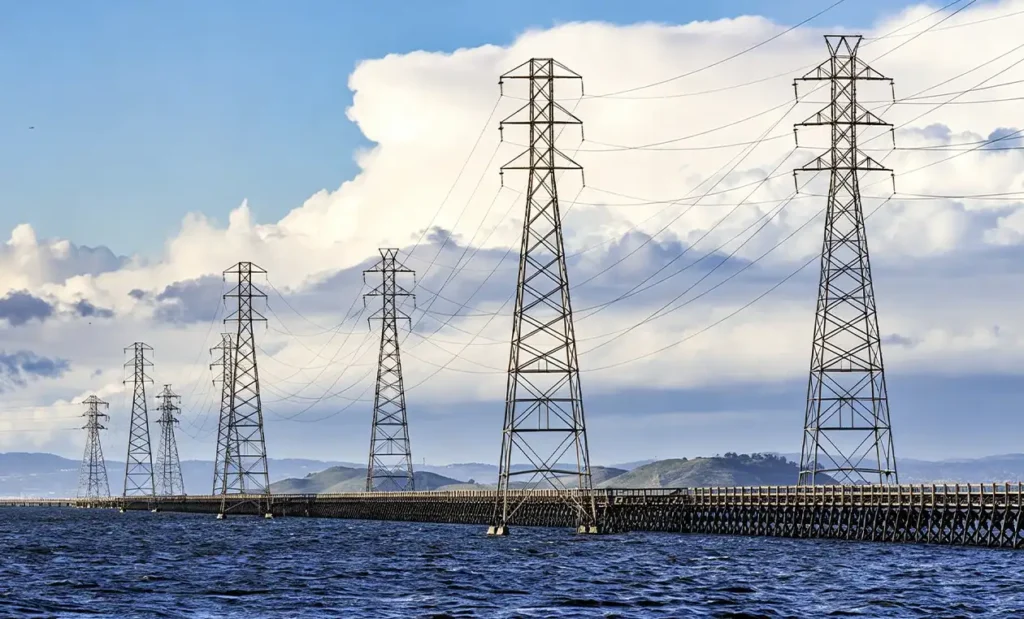
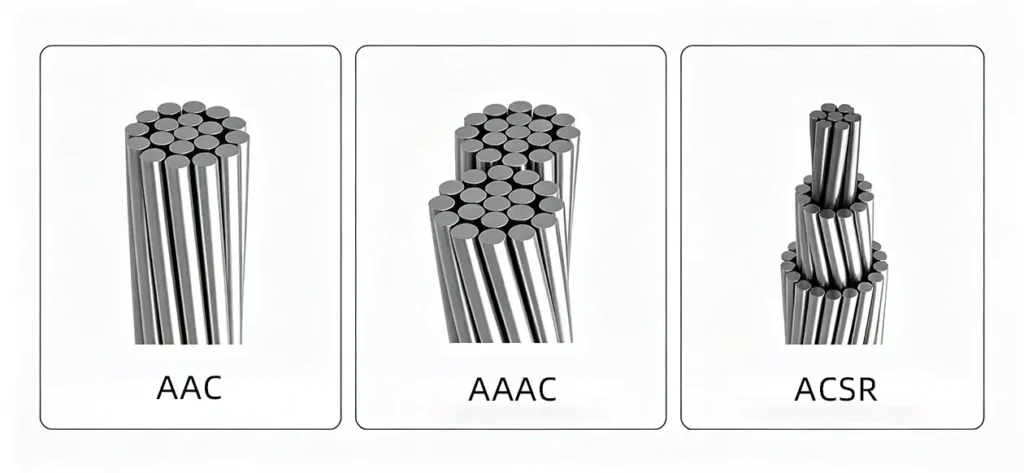
All Aluminium Alloy Conductor (AAAC) is the optimal choice for coastal overhead power transmission due to its high corrosion resistance, high strength-to-weight ratio, and absence of bi-metallic corrosion risk. Manufactured from heat-treated Aluminium-Magnesium-Silicon alloys (Alloy 6201-T81) per IEC 61089 or ASTM B399, AAAC provides mechanical strength comparable to Aluminium Conductor Steel Reinforced (ACSR) while eliminating galvanically vulnerable steel cores. All Aluminium Conductor (AAC) lacks the tensile strength required for long spans in high-wind coastal environments. Consequently, AAAC delivers optimal ampacity, reduced sag under coastal wind loading, and extended operating life in salt-spray atmospheres.
Technical Parameter Matrix: ACSR vs AAAC vs AAC
The following table compares key technical parameters relevant to marine and coastal installations:
| Technical Parameter | AAC (All Aluminium Conductor) | AAAC (All Aluminium Alloy Conductor) | ACSR (Aluminium Conductor Steel Reinforced) |
| Material Composition | EC Grade Aluminium (1350-H19) | Al-Mg-Si Alloy (Alloy 6201-T81) | 1350-H19 Al Strands / Galvanized Steel Core |
| Applicable Standards | IEC 61089, ASTM B231, BS 215-1 | IEC 61089, ASTM B399, BS 3242 | IEC 61089, ASTM B232, BS 215-2 |
| Corrosion Resistance (Salt Spray) | High (Homogeneous Al) | Very High (Corrosion-resistant Al alloy) | Low to Moderate (Bi-metallic core corrosion) |
| Tensile Strength | Low (~160–200 MPa) | High (~300–330 MPa) | Very High (Steel Core ~1200–1400 MPa) |
| Strength-to-Weight Ratio | Low | Highest | Moderate (Heavy steel core) |
| Electrical Conductivity (% IACS) | 61.2% | 52.5% to 53.5% | 61.0% (Aluminium portion) |
| Linear Expansion Coefficient | 23.0 × 10⁻⁶ /°C | 23.0 × 10⁻⁶ /°C | 11.5 to 19.3 × 10⁻⁶ /°C |
| Bi-Metallic Corrosion Risk | None | None | High (Zinc layer degrades → Steel rusts) |
| Recommended Span Length | Short Spans (< 100 m) | Medium–Long Spans (150–400 m) | Long Spans (> 300 m) |
Technical Analysis of Coastal Environmental Factors
Bi-Metallic Corrosion Mechanisms in ACSR
ACSR utilizes a galvanized steel core to carry mechanical tension surrounded by EC-grade aluminium strands. In coastal salt-laden atmospheres (high Cl⁻ concentration), airborne sea salt and ambient humidity establish an electrolyte solution between the aluminium strands and the zinc-coated steel core.
- Galvanic Potential: The potential difference between aluminium and steel causes rapid galvanic corrosion. Once the zinc coating galvanically degrades, internal steel rust causes volumetric expansion, leading to structural strand splitting and loss of tensile integrity.
- Greased Core Mitigation Limits: Applying high-temperature anti-corrosion grease over the steel core (IEC 61089 Class A or B greasing) delays moisture ingress but degrades under thermal cycling and UV exposure, offering limited long-term protection in marine environments.
Mechanical Integrity of AAAC in High-Wind Zones
Coastal regions experience high sustained wind loads and severe tropical weather.
- Tensile Strength: AAAC (Alloy 6201-T81) achieves a minimum tensile strength of 295–325 MPa, nearly double that of 1350-H19 AAC (160–200 MPa).
- Sag and Tension: Because AAAC lacks a dense steel core (density ≈ 2.70 g/cm³ vs steel’s 7.85 g/cm³), its overall weight is lower than ACSR for an equivalent current-carrying capacity. This high strength-to-weight ratio allows higher installed tension, reducing sag at maximum operating temperatures (85°C to 90°C).