



How to Choose the Right ACSR Conductor
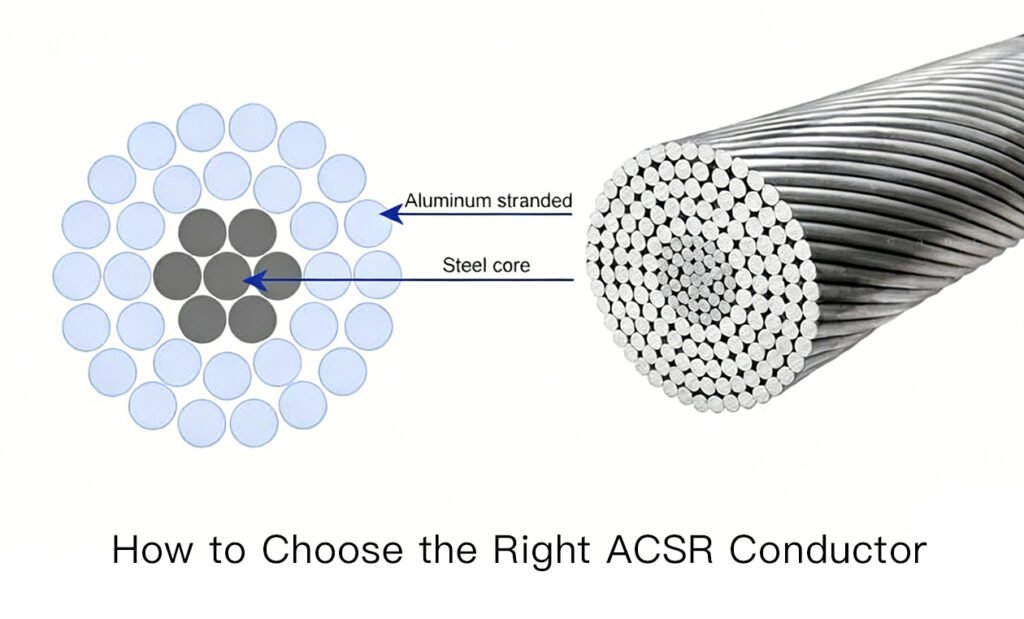
Choosing the right ACSR (Aluminum Conductor Steel Reinforced) conductor requires matching the electrical ampacity requirements, mechanical span loads, and environmental conditions of the transmission line with the correct aluminum-to-steel cross-sectional ratio. Engineered under standards like ASTM B232 or IEC 61089, selection focuses on balancing the current-carrying capacity of the outer 1350-H19 aluminum strands with the mechanical tensile strength provided by the inner galvanized steel core. Selecting the wrong code word or stranding ratio can lead to catastrophic thermal sag, excessive line losses, or structural failure under heavy ice and wind loading.
Technical Parameter Matrix: ACSR Stranding Configurations
ACSR conductors are classified by their aluminum-to-steel stranding configurations. The ratio profoundly alters the mechanical and electrical performance profile of the line.
| Stranding Ratio (Al/St) | Example Designation | Mechanical Tensile Strength | Electrical Ampacity | Primary Application Scenario |
| High Steel (e.g., 6/7, 12/7) | Turkey, Penguin | Highest | Lowest | Ultra-long spans, river crossings, mountainous terrain with high ice loading. |
| Standard (e.g., 26/7, 30/7) | Hawk, Dove | Balanced | Balanced | Standard cross-country transmission lines (110 kV to 500 kV) with moderate spans. |
| High Aluminum (e.g., 45/7, 54/7) | Rail, Cardinal | Medium | Highest | High-load urban/industrial corridors with short-to-medium spans where thermal capacity governs design. |
Core Selection Constraints
Voltage Drop and Resistance Considerations
For long-distance transmission lines, line impedance (R + jX) governs efficiency. A larger aluminum cross-sectional area directly minimizes I²R ohmic losses. If voltage drop exceeds 5% at the receiving end, engineers must size up to a larger circular mil (kcmil) conductor, regardless of whether the smaller conductor met the basic thermal ampacity threshold.
Corrosion Resistance and Core Coating Options
Standard ACSR utilizes Class A galvanized steel cores. However, for installations in coastal areas, high-pollution zones, or industrial corridors, standard galvanization will fail due to galvanic corrosion between the aluminum and steel. In these environments, specify ACSR/AW (Aluminum-Clad Steel Core) or Class C galvanization to significantly extend the operational lifespan of the asset.