


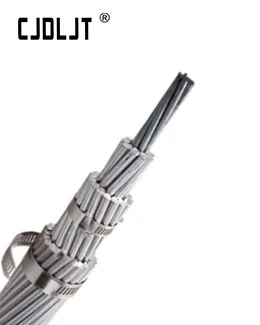

ACSR (Aluminum Conductor Steel‑Reinforced) conductors are the dominant choice for overhead transmission and distribution lines. Its composite‑stranded design combines galvanized steel core for mechanical strength and outer hard‑drawn aluminum strands for electrical conduction. Many design engineers estimate ampacity merely by total conductor cross‑section, ignoring how internal structural parameters alter AC resistance, heat dissipation and actual current‑carrying performance.
Environmental conditions such as wind speed and ambient temperature do affect ampacity, yet conductor‑built structural features set the fundamental upper limit of line load capacity. This blog breaks down key structural parameters of ACSR and their practical influences on overhead‑line ampacity for utility design and procurement reference.
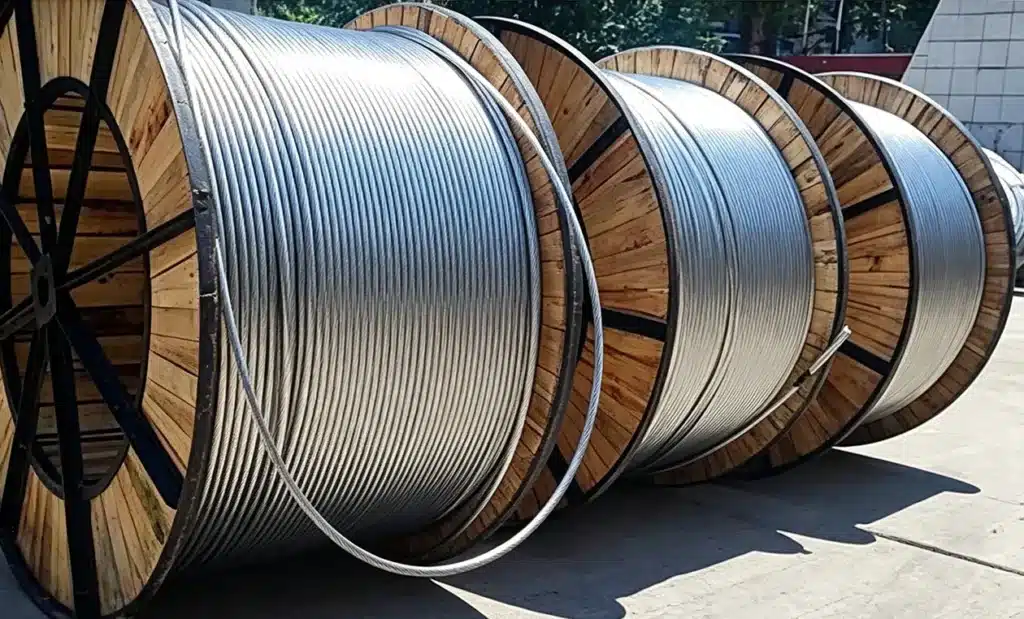
1. Aluminum‑to‑steel cross‑section ratio (Al/St ratio)
Steel strands undertake almost all mechanical tension but barely conduct electric current; nearly all current flows through aluminum layers. The aluminum‑to‑steel area ratio is the most critical structural parameter.
- High‑aluminum ratio: More aluminum cross‑section relative to steel core. It lowers overall AC resistance and delivers higher ampacity, suitable for urban trunk lines with medium‑short spans and heavy load demand.
- High‑steel ratio: Larger steel‑core proportion improves tensile strength for long‑span river‑valley crossings or ice‑heavy mountain routes. However, reduced aluminum area increases conductor resistance and cuts allowable carrying current under identical outer diameter.
| Stranding configuration | Al‑Steel Feature | Ampacity Performance | Typical Application |
|---|---|---|---|
| 26/7 | Balanced Al/St ratio | Moderate ampacity & tensile strength | General‑purpose overhead distribution & sub‑transmission |
| 54/7 | High aluminum proportion | High ampacity, medium tensile strength | High‑load transmission corridors with medium spans |
| 54/19 | High‑steel core | Limited ampacity, maximum tensile strength | River / valley long‑span crossing sections |
Practical reminder: Two ACSR conductors with equal outer diameter can have obvious ampacity gaps if their Al/St ratios differ. Never judge current capacity only by overall outer diameter.
2. Aluminum cross‑section area and single‑wire dimension
The effective conductive area directly determines DC resistance. Larger total aluminum cross‑section reduces resistive heat generation (I²R loss), which is the main heat source for overhead conductors.
For the same total aluminum area, different single‑wire diameters change stranding layers and AC loss: multi‑fine‑wire stranding enlarges strand interfaces and raises AC resistance caused by skin effect and hysteresis loss inside magnetic steel core; fewer thicker aluminum wires help restrain extra AC losses. Designers shall refer to standard‑published AC resistance values rather than calculating purely from theoretical DC resistance.
3. Stranding lay length and lay direction
ACSR adopts concentric helical stranding, with adjacent aluminum layers twisted in opposite directions. Lay length means the pitch of one full helical turn for each strand layer.
- Too‑short lay length increases strand contact points and stray AC losses; it also raises conductor manufacturing cost.
- Excessively long lay length risks strand loosening under vibration, which may increase contact resistance between strands in long‑term service.
Non‑standard lay parameters will deviate actual AC resistance from catalogue data, resulting in real‑world ampacity lower than theoretical calculation. Qualified ACSR strictly follows IEC or ASTM stranding lay specifications.
4. Overall outer diameter and surface condition
Outer diameter influences two ampacity‑related mechanisms: heat radiation and convective cooling.
- Larger‑diameter ACSR has bigger heat‑dissipation surface area. Under equal heat‑generation loss, it can dissipate more heat to ambient air and achieve higher allowable current.
- Surface smoothness, zinc residue and oxidation status change solar absorptivity and emissivity. A darker aged surface absorbs more solar heat, which indirectly reduces practical carrying capacity even if internal structure remains unchanged.
5. Steel‑core magnetic effect on AC resistance
The galvanized steel core is ferromagnetic. Under alternating‑current operating conditions, magnetic hysteresis and eddy loss are generated inside steel core, bringing extra heat rise that does not exist in all‑aluminum conductors (AAC).
Higher load current intensifies steel‑core magnetization and additional heat loss. This transformer‑like effect is determined by steel‑core size and stranding arrangement. Therefore, ACSR ampacity cannot be simply converted from AAC values with same aluminum cross‑section.