



AS/NZS 3560.1 ABC Cable UV Resistance
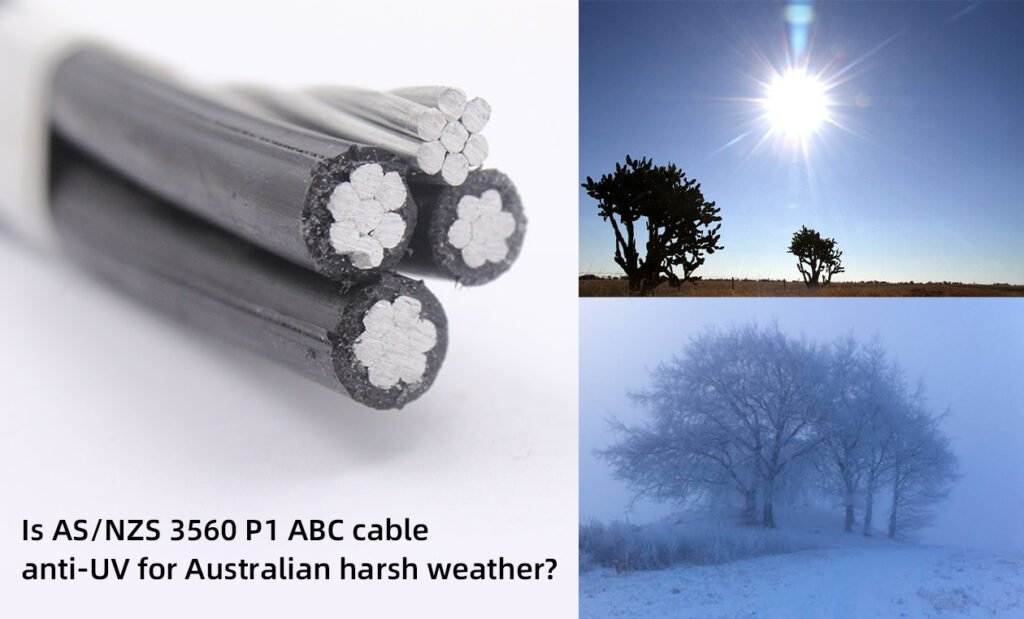
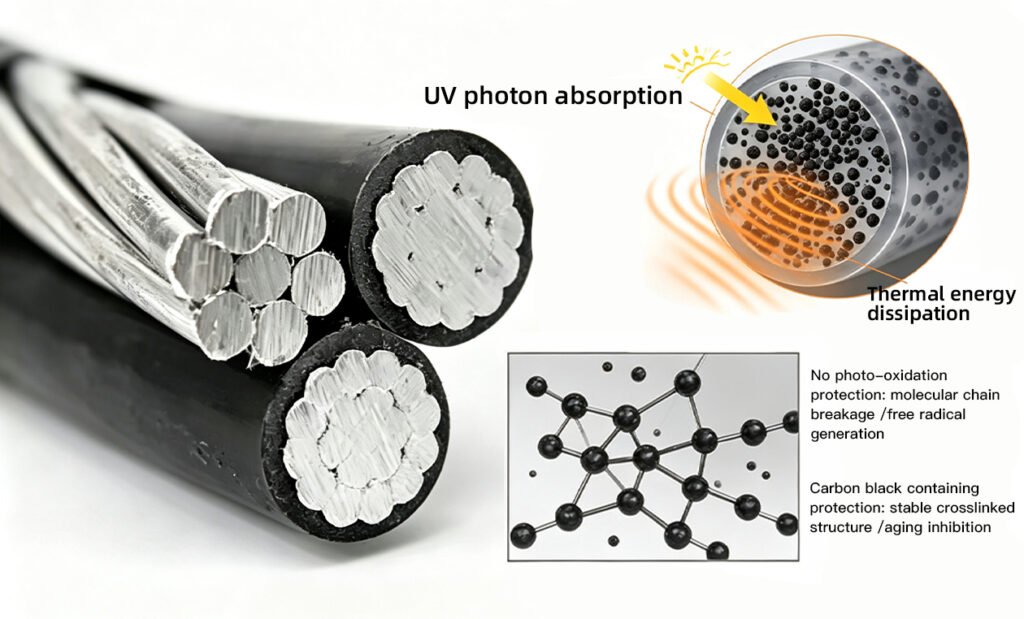
AS/NZS 3560.1 Aerial Bundled Cables (ABC) are engineered with comprehensive ultraviolet (UV) protection explicitly designed to withstand the high solar irradiance and extreme ambient temperatures of the Australian environment. The core protective mechanism relies on the integration of carbon black into the Cross-Linked Polyethylene (XLPE) insulation compound. According to AS/NZS 3560.1 and cross-referenced testing standards like ASTM D1603, the insulation must maintain a minimum carbon black content of 2.0% to 2.5% by weight. This specialized compound chemically absorbs and dissipates destructive UV radiation wavelengths before they can initiate polymer chain scission, preventing the embrittlement, cracking, and dielectric breakdown common in non-stabilized polymers exposed to intense sunlight.
Technical Parameter Matrix: UV & Environmental Durability
The following matrix contrasts the environmental, thermal, and material thresholds of AS/NZS 3560.1 compliant ABC cables against standard internal/underground distribution cables when subjected to prolonged atmospheric exposure.
| Parameter / Specification | AS/NZS 3560.1 ABC Cable | Standard Underground XLPE (IEC 60502-1) | Standard PVC Service Cable (AS/NZS 5000.1) |
| Primary Insulation Base | Carbon-Black Filled XLPE | Unfilled / Color-Pigmented XLPE | Polyvinyl Chloride (PVC) |
| Carbon Black Content (wt %) | ≥ 2.0% (Strict Compliance) | Variable (< 0.5% or non-stabilized) | N/A (Uses organic UV stabilizers) |
| UV Resistance Rating | Excellent (Designed for open atmospheric exposure) | Poor (Requires solar shielding/conduit) | Moderate (Prone to chalking over time) |
| Max. Continuous Conductor Temp. | 90°C | 90°C | 75°C |
| Max. Permissible Short-Circuit Temp. | 250°C (5-second duration) | 250°C | 160°C |
| Weathering / Crack Resistance | Passes AS/NZS 1660.5.1 accelerated weathering | Not evaluated for open-air weathering | Susceptible to plasticizer migration |
Accelerated Weathering and Aging Mechanisms
Photo-Oxidative Degradation Defenses
Unprotected polymers degrade outdoors via a process called photo-oxidation. UV light energy excites the molecular bonds within the polymer chain, generating free radicals that react with atmospheric oxygen to break down the material. The carbon black particles embedded in AS/NZS 3560.1 insulation function as highly efficient physical inner-filter pigments. They absorb the incoming photons and convert the harmful electromagnetic radiation into harmless thermal energy, which is then dissipated throughout the mass of the conductor.
Compatibility with High Thermal Amplitudes
The Australian climate subjects overhead lines to severe thermal cycles, ranging from freezing desert night temperatures to intense daytime radiant heat combined with I²R ohmic heating within the conductor core. Because the insulation is cross-linked (XLPE), it possesses a three-dimensional thermoset molecular structure that does not melt or deform at elevated temperatures. This cross-linked molecular network works synergistically with the carbon black additives, maintaining high tensile strength and preventing environmental stress cracking (ESC) even when operating continuously at its maximum rated thermal threshold of 90°C.