

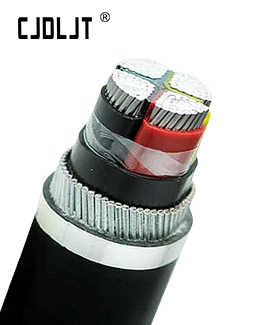
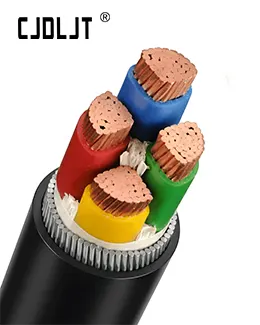
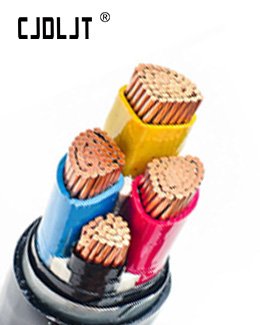
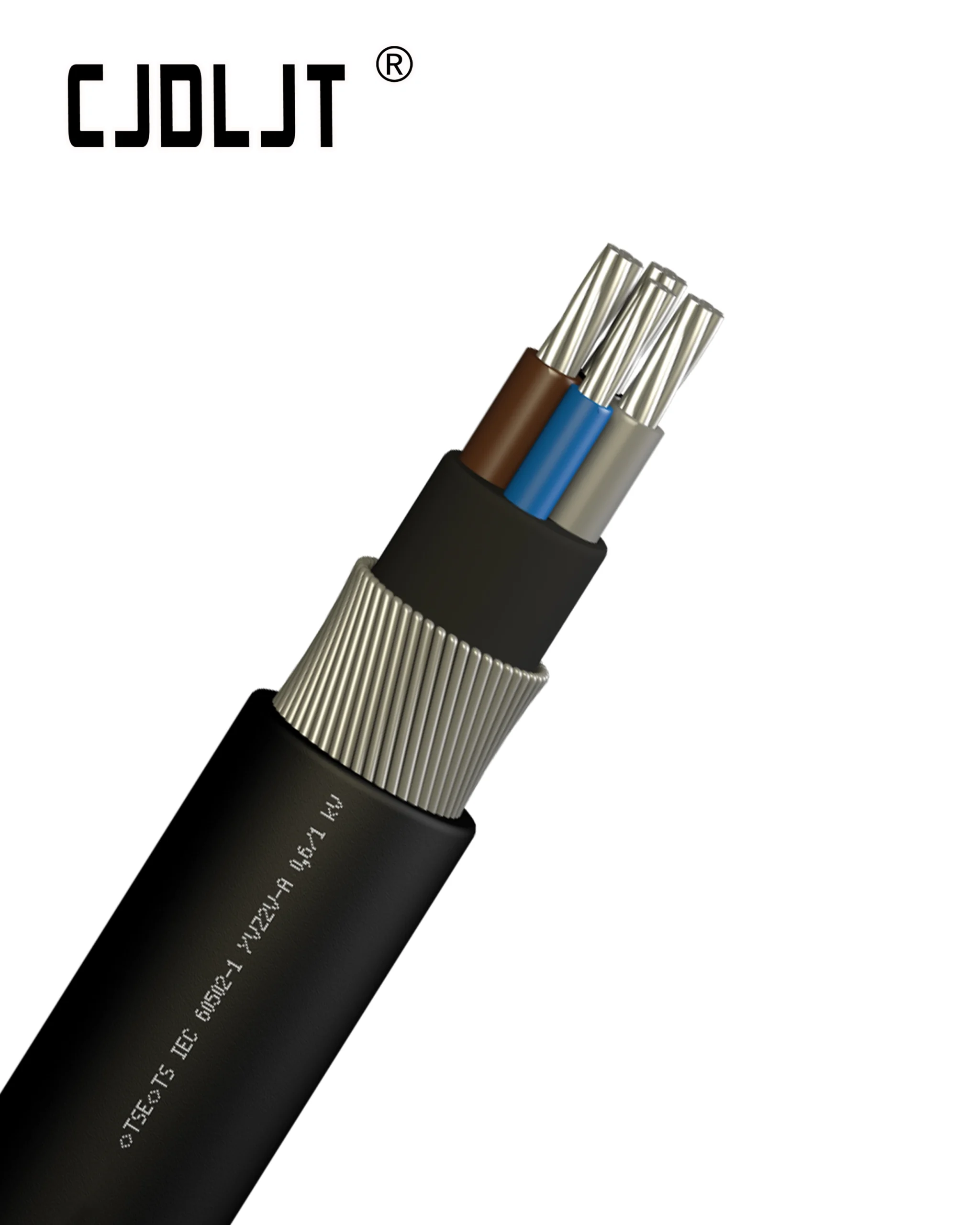


Effects of Crosslinking Degree on XLPE Cable Performance
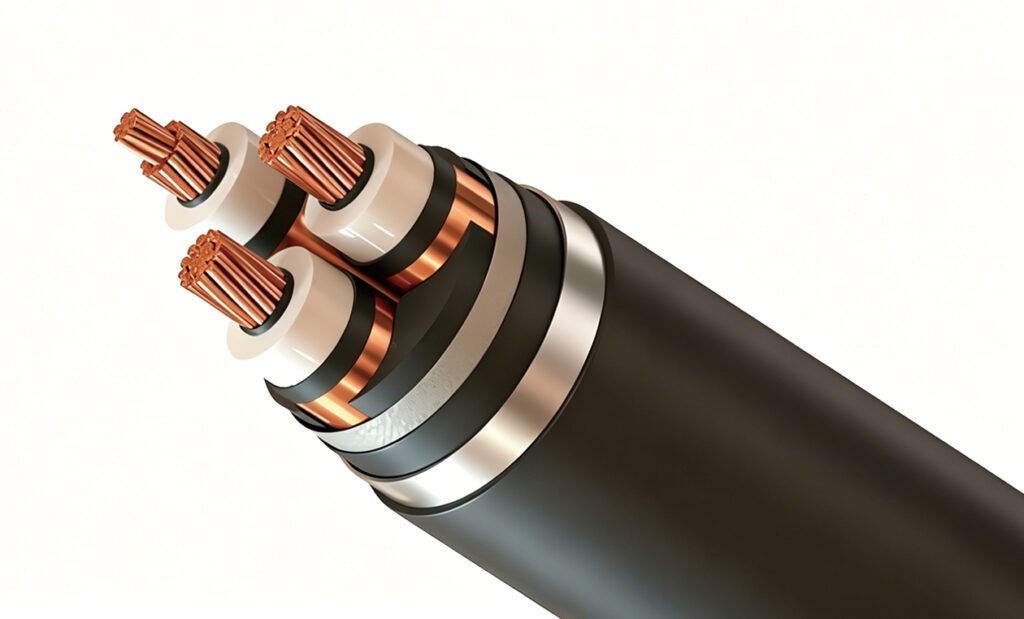
The crosslinking degree (gel content) of Cross-linked Polyethylene (XLPE) directly dictates a cable’s thermo-mechanical stability, electrical integrity, and operational lifespan. Quantified via solvent extraction (typically adhering to IEC 60502 and ASTM D2765), a crosslinking degree between 75% and 89% transforms the material from a thermoplastic to a thermoset network. This structural shift prevents macromolecular flow at elevated temperatures, raising the continuous operating limit from 70°C to 90°C, and short-circuit peak tolerance to 250°C. Insufficient crosslinking (<75%) risks thermal runaway and deformation under load, while over-crosslinking (>90%) induces severe embrittlement and micro-void formation.
Technical Parameter Matrix: Crosslinking Degree vs. Performance Metrics
The table below outlines how varying percentages of crosslinking gel content alter the physical, thermal, and electrical characteristics of the insulation layer.
| Crosslinking Degree (Gel Content %) | Thermomechanical Deformation (at 200°C, 0.2 MPa) | Tensile Strength (MPa) | Elongation at Break (%) | AC Breakdown Strength (kV/mm) | Primary Risk Factor / Application Status |
| < 70% (Under-crosslinked) | > 100% (Severe Sagging/Failure) | < 12.5 | > 500% | Decreased (< 30) | Thermal melt risk during overloads; non-compliant. |
| 75% – 82% (Optimum Standard) | ≤ 20% (Highly Stable) | 18.5 – 22.0 | 250% – 350% | Maximum (35 – 45) | Meets IEC 60502/BS 5467 specs; ideal balance. |
| 83% – 89% (High Crosslinking) | ≤ 10% (Excellent) | 22.0 – 25.0 | 200% – 250% | Stable (35 – 40) | Enhanced thermo-mechanical shear; ideal for high-stress MV/HV. |
| > 90% (Over-crosslinked) | ~ 0% (Rigid) | > 25.0 (Brittle) | < 150% (Poor) | Reduced due to micro-voids | Stress cracking during installation bending; premature aging. |
Core Mechanical & Thermal Impacts
Thermo-Mechanical Deformation Resistance
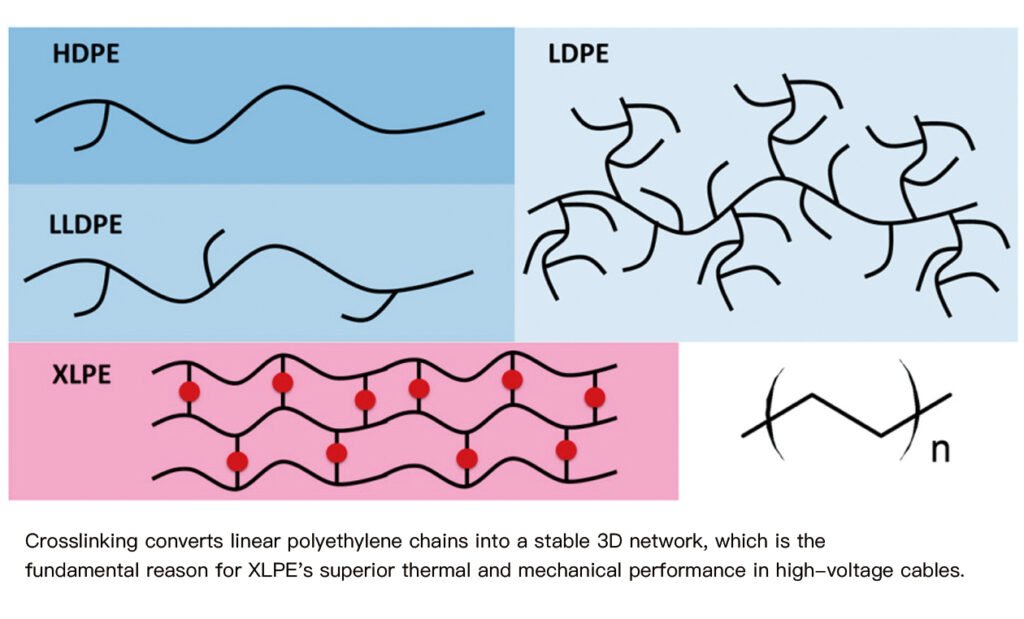
Uncrosslinked polyethylene consists of linear polymer chains held together by weak van der Waals forces, which liquefy rapidly above 105°C. The crosslinking process creates covalent C-C bonds that link these chains into a three-dimensional network. When the cable encounters an electrical short-circuit—raising conductor temperatures to 250°C—this network acts as a mechanical spring, preventing the conductor from migrating or cutting through the insulation jacket.
Tensile Properties and Flexural Elasticity
- Tensile Strength: Increases proportionally with the crosslinking degree, as more covalent bonds resist mechanical separation forces.
- Elongation at Break: Decreases as the crosslinking density rises. If the gel content exceeds 90%, the network becomes excessively rigid, dropping elongation below the 200% minimum standard limit specified in IEC 60502. This leads to structural micro-cracking when the cable is subjected to the minimum bending radius during installation.
Electrical Performance and Long-Term Aging Degradation
Dielectric Strength and Partial Discharge
The crosslinking degree heavily influences the microscopic homogeneity of the XLPE matrix. Optimum crosslinking (75%–89%) ensures a uniform amorphous-crystalline boundary phase, maintaining a high AC breakdown strength (35 kV/mm).
Critical Risk of Over-Crosslinking: When the gel content exceeds 90%, the crystallization kinetics of the polyethylene matrix are disrupted. This generates microscopic voids and localized mechanical stresses at the crystalline interfaces, accelerating electrical treeing and triggering premature partial discharge (PD) under high voltage stress.
Moisture Resistance and Water Treeing
Under-crosslinked boundaries (<75%) leave dense regions of unlinked amorphous polymer. In underground installations where moisture is present, these unlinked areas become micro-channels for water molecule migration under the influence of an electrical field. This accelerates water tree degradation, which reduces the dielectric properties of the Annealed Copper or Aluminum core assembly over time, ultimately causing premature dielectric insulation puncture.