

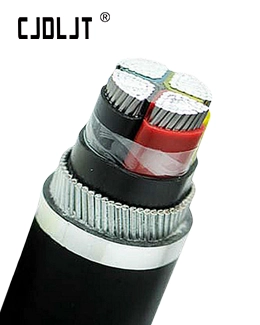
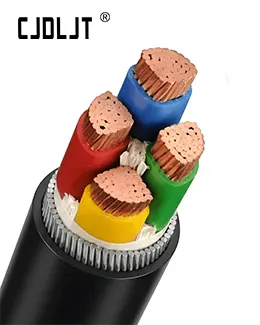
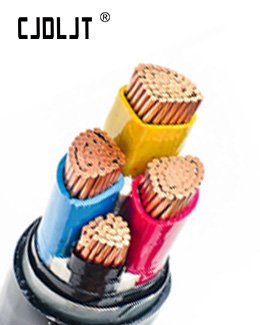
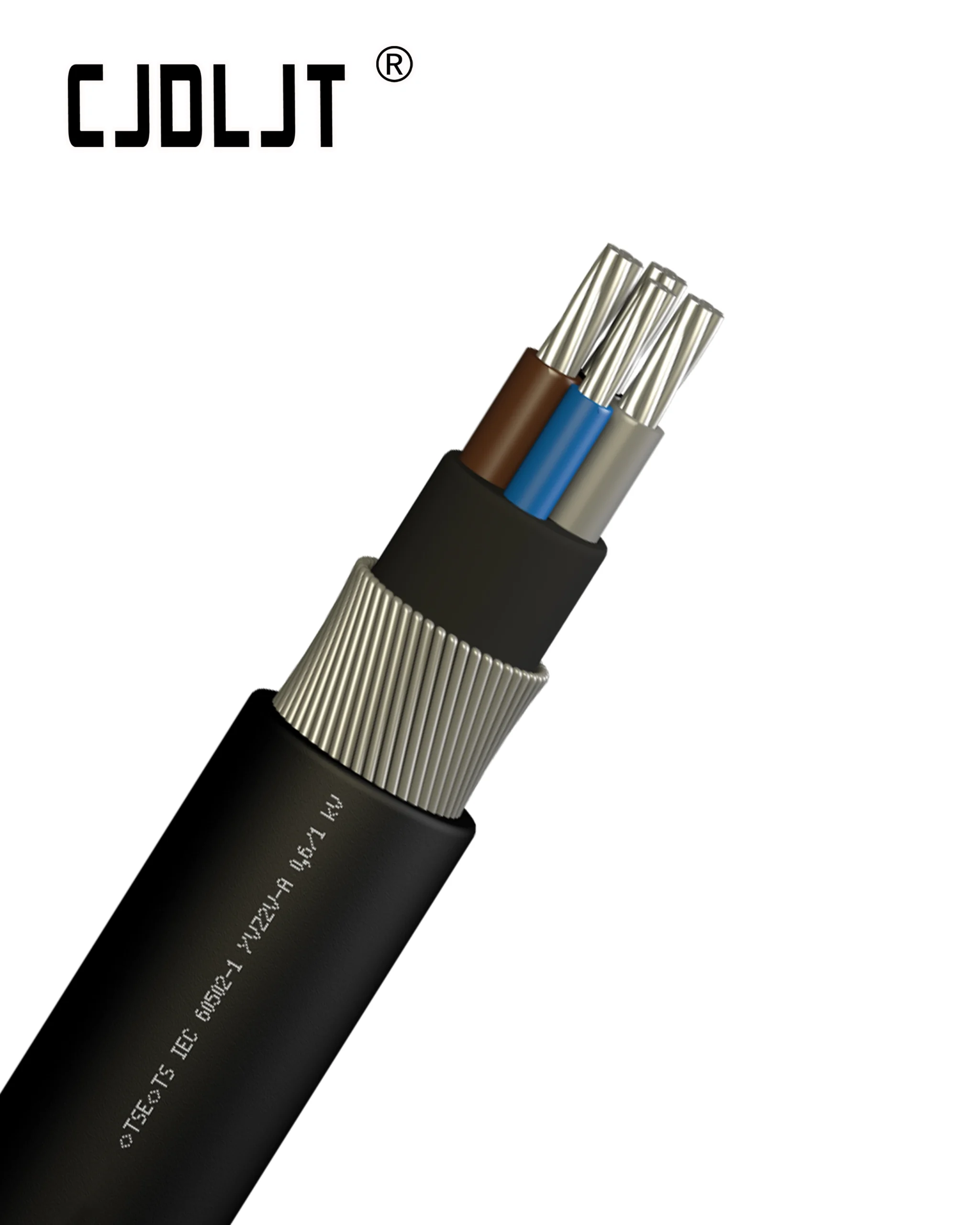

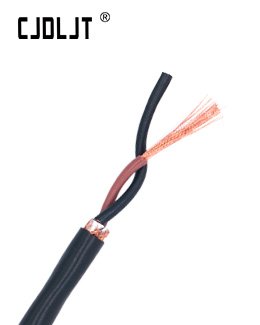

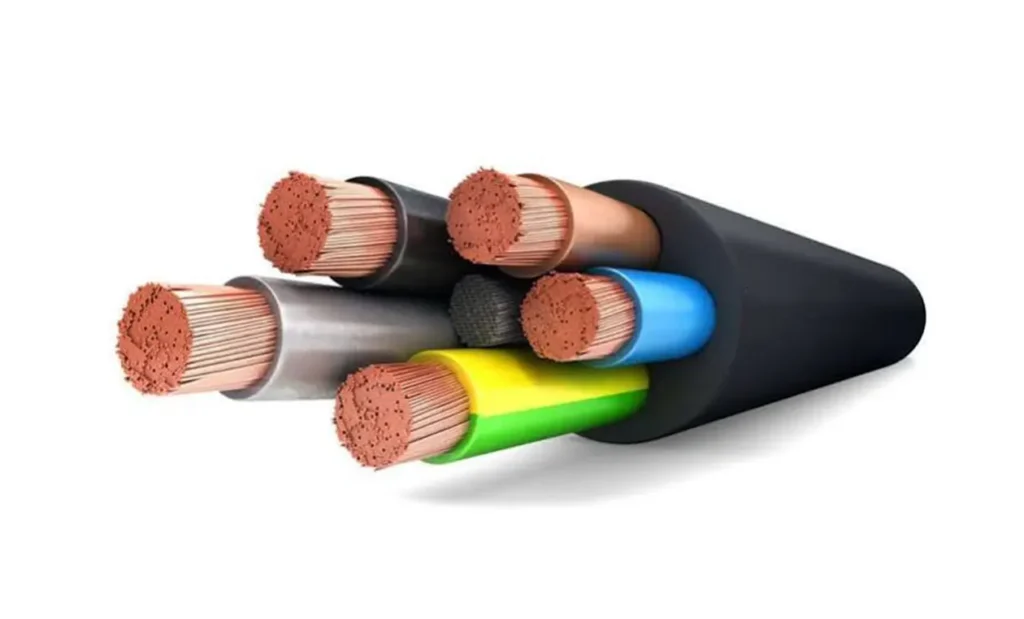
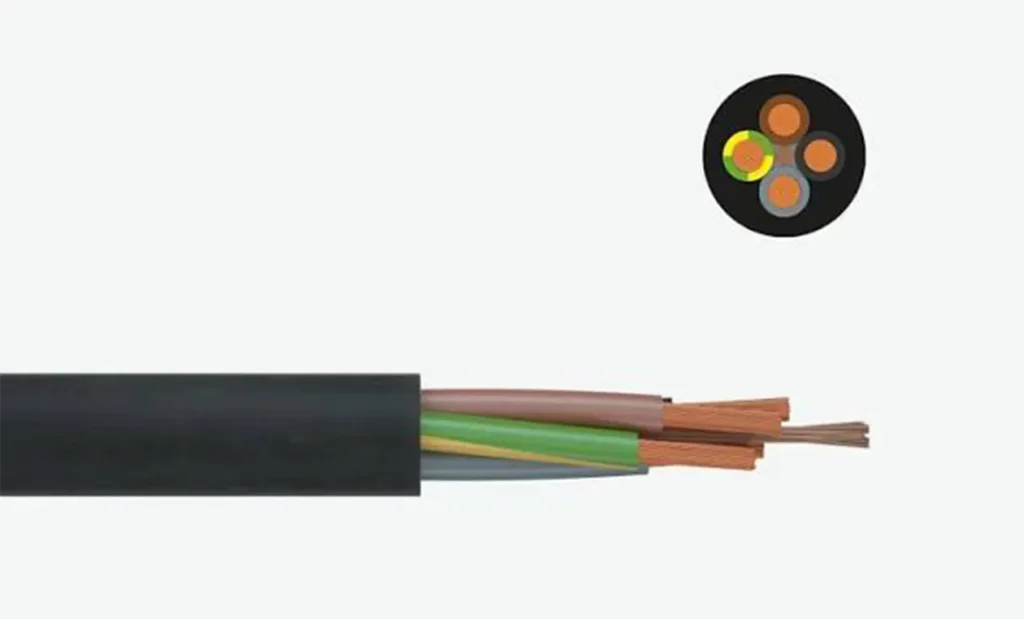
H07RN-F heavy-duty rubber cable can be suitable for outdoor extension leads because it is designed for flexible power connections in demanding environments, including damp and wet locations. Its rubber insulation and outer sheath provide flexibility and mechanical durability for industrial use. However, the cable’s suitability for wet conditions does not automatically make the complete welder extension lead safe to use in rain. The plugs, couplers, connections, welding equipment and power supply must also be suitable for the actual conditions [1] The cable must have an adequate conductor cross-section for the welder’s input current, extension length and installation conditions.
H07RN-F technical parameters relevant to outdoor welding
| Parameter | Typical H07RN-F specification | Relevance to outdoor use |
| Rated voltage | 450/750 V | Check compatibility with the welder’s supply |
| Conductor | Flexible stranded copper, Class 5 | Suitable for flexible connections |
| Core insulation | Rubber compound, typically EPR | Provides electrical insulation |
| Outer sheath | Heavy-duty rubber compound | Provides mechanical and environmental protection |
| Standard | EN 50525-2-21 | Relevant cable product standard |
| Application | Industrial equipment, portable machinery, indoor and outdoor use | Suitable when the specific product and assembly meet site requirements |
Why rain creates additional risks for welding extension leads
The main risk is not simply water contacting the rubber sheath. Rain can enter plug connections, sockets and cable joints, while wet ground, damp clothing and metal workpieces can increase the risk of electric shock. HSE guidance recommends additional precautions when welding in wet conditions, including keeping the welder insulated from conductive surfaces and ensuring the welding equipment and connections remain in good condition [3].An RCD (residual current device) rated at no more than 30 mA can provide additional protection where applicable, but it does not eliminate all shock risks.
What to check before using H07RN-F in rain
- Cable sizing: Select the conductor cross-section based on the welder’s input current, cable length, voltage drop, duty cycle and installation conditions.
- Connections: Use plugs, couplers and sockets specifically rated for the expected wet conditions. Keep connections protected from direct rain and standing water.
- Cable condition: Do not use cables with cuts, exposed conductors, damaged sheath or improvised taped repairs.
- Welding equipment: Follow the manufacturer’s instructions for wet-weather operation and use appropriate electrical protection and grounding.
- Work environment: Avoid welding while standing on wet conductive surfaces. If the equipment or work area cannot be made safe, stop work until conditions improve.
References
[1] Wikipedia contributors. H07RN-F cable overview. H07RN-F[EB/OL]. 2026-01-01.
[2] Wikipedia contributors. EN 50525 standard specifications. EN 50525[EB/OL]. 2026-01-01.
[3] Wikipedia contributors. Health and Safety Executive guidance on electrical safety. Health and Safety Executive[EB/OL]. 2026-01-01.