



Effects of Temperature on PVC Sheath Extrusion
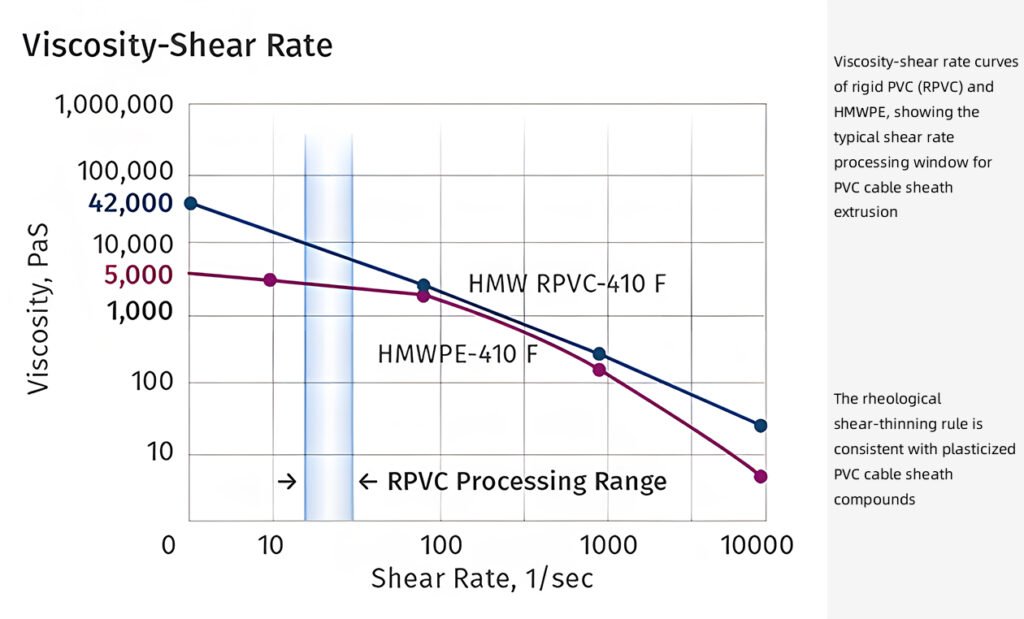
During the cable sheath extrusion process, polyvinyl chloride (PVC) transitions through distinct thermodynamic states that dictate its rheological and mechanical properties. Strict temperature control is critical: underheating results in incomplete gelation (fusion), high melt viscosity, and surface defects like “sharkskin,” while overheating triggers autocatalytic thermal degradation, releasing hydrochloric acid (HCl) and causing voids, discoloration, and reduced tensile strength. Maintaining the optimal processing window—typically between 160°C and 190°C depending on the plasticizer content—ensures complete gelatinization, optimal melt pressure, and maximum mechanical integrity of the final cable sheath in compliance with standards like IEC 60502.
Technical Parameter Matrix: PVC Thermal Behavior
The table below outlines how specific temperature zones affect the physical state, processing behavior, and final material properties of PVC compounds during extrusion.
| Temperature Range | Thermodynamic State | Melt Viscosity & Flow | Impact on Finished Sheath Properties | Processing Risk / Outcome |
| < 150°C | Unmelted / Glassy to Viscoelastic | Extremely high viscosity; high torque required | Poor tensile strength, low elongation at break, rough surface roughness | Incomplete gelation; equipment overload |
| 160°C – 175°C | Early Melt / Partial Gelation | High viscosity; unstable melt pressure | Moderate mechanical strength; potential micro-voids | Standard for highly plasticized (soft) PVC; risk of sharkskin if speed is high |
| 175°C – 190°C | Optimal Molten State (95%+ Gelation) | Homogeneous melt; stable shear thinning | Maximum tensile strength (≥ 12.5 MPa), optimal elongation (≥ 150%) | Ideal processing window; smooth finish, compliant with BS 6746 |
| 195°C – 205°C | Overheated / Initial Degradation | Very low viscosity; melt fracture occurs | Reduced dielectric strength, yellowing, loss of flame retardancy | Initial thermal degradation; release of volatile plasticizers |
| > 210°C | Thermal Decomposition | Severe degradation; gas evolution | Brittle sheath, structural voids, failure of IEC 60811 aging tests | Autocatalytic HCl release; corrosive damage to barrel, screw, and die |
Degradation Mechanics and E-E-A-T Compliance
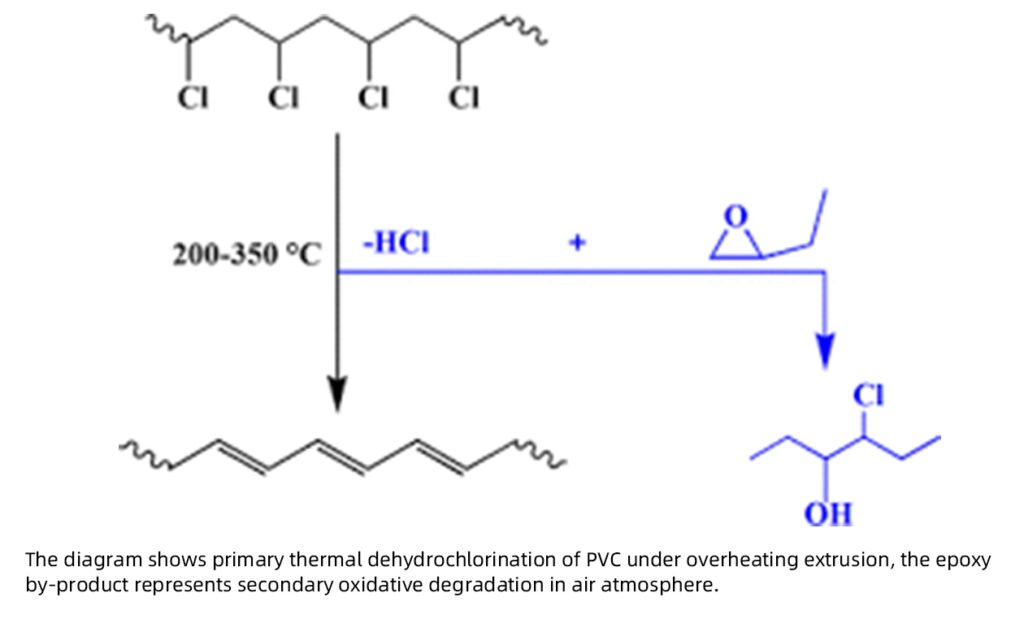
Thermal Decomposition of PVC
PVC is inherently thermally sensitive due to structural defects (such as allylic chlorine sites) formed during polymerization. When processing temperatures exceed 200°C, dehydrochlorination occurs. This reaction releases hazardous hydrochloric acid (HCl) gas, which acts as a catalyst to accelerate further degradation, forming polyene sequences that discolor the polymer from yellow to black.
Impact on International Standards Compliance
- Mechanical Properties (IEC 60502-1): Deviations from the optimal gelation temperature window reduce the tensile strength below the standard requirement of 12.5 N/mm² and elongation below 150%.
- Flame Retardancy: Overheating volatilizes chlorinated paraffin or antimony trioxide additives, compromising the sheath’s performance during IEC 60332 flame propagation tests.
- Insulation Resistance: Thermal degradation creates polar species and voids within the sheath matrix, increasing the dielectric loss factor and reducing insulation resistance.