

The Core Differences Between AAC, AAAC, and ACSR Conductors
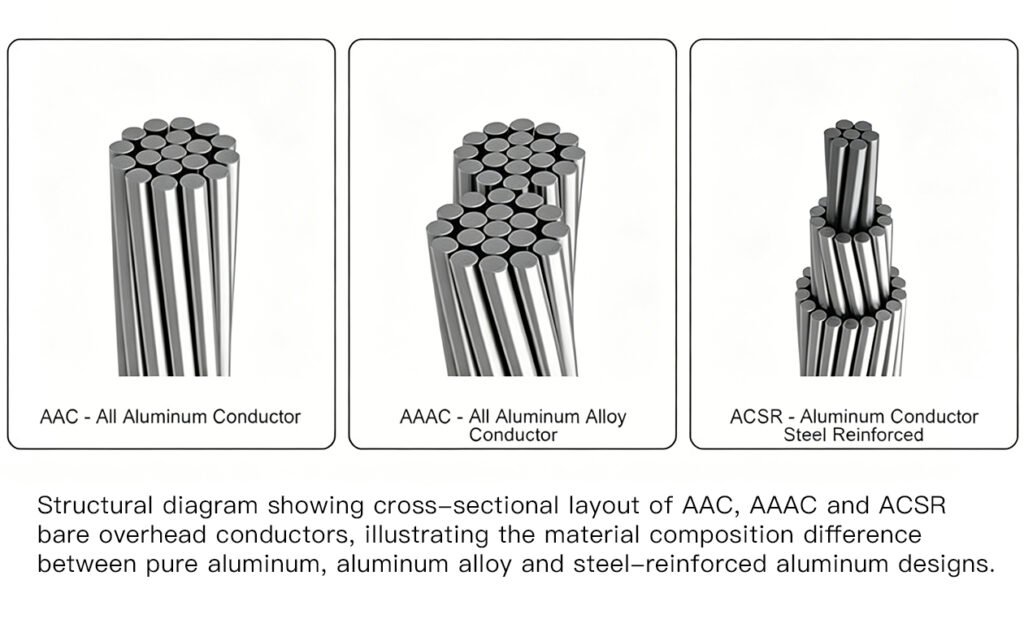
AAC (All Aluminum Conductor), AAAC (All Aluminum Alloy Conductor), and ACSR (Aluminum Conductor Steel Reinforced) are bare overhead transmission and distribution conductors. The primary differences lie in their material composition, mechanical strength, weight-to-span ratios, and electrical conductivity.
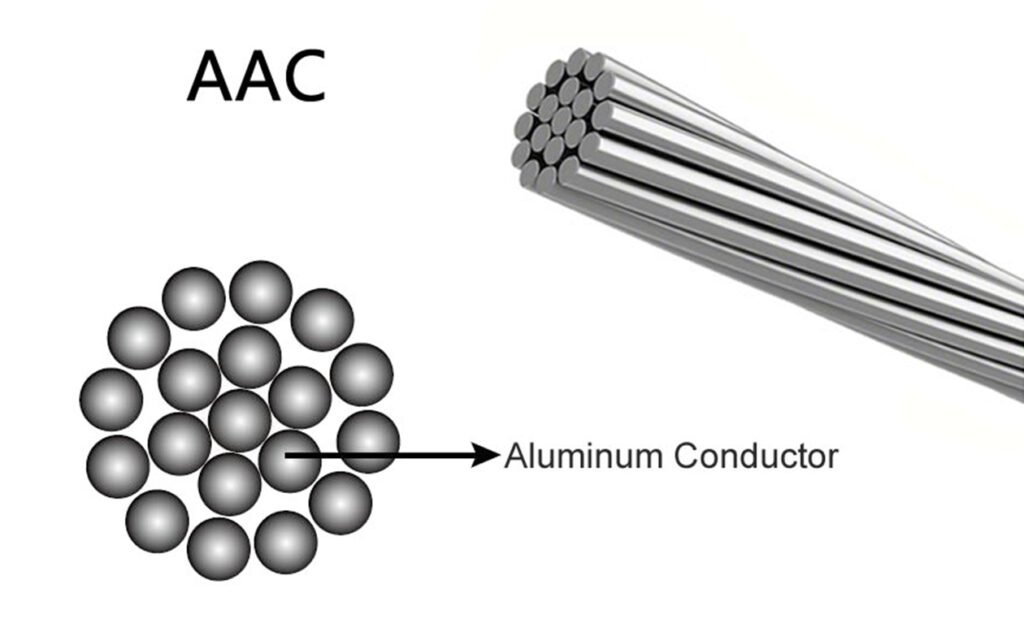
- AAC consists of refined aluminum strands with a minimum purity of 99.7%, offering the highest electrical conductivity but the lowest mechanical strength, limiting it to short spans.
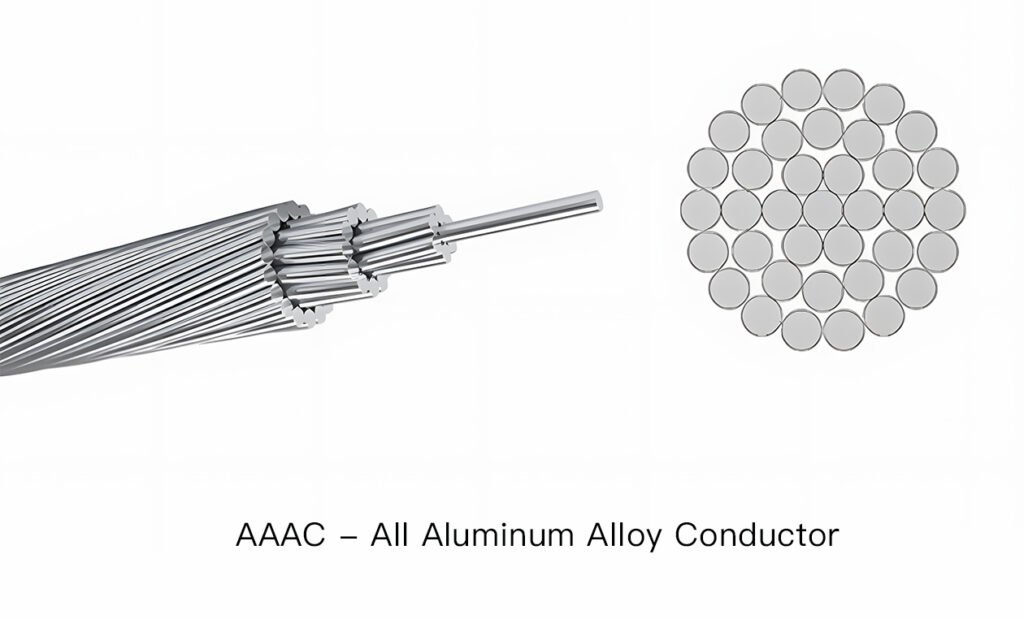
- AAAC utilizes a high-strength Aluminum-Magnesium-Silicon alloy (typically 6201-T81), providing optimized strength-to-weight ratios and superior corrosion resistance for medium-to-long spans.
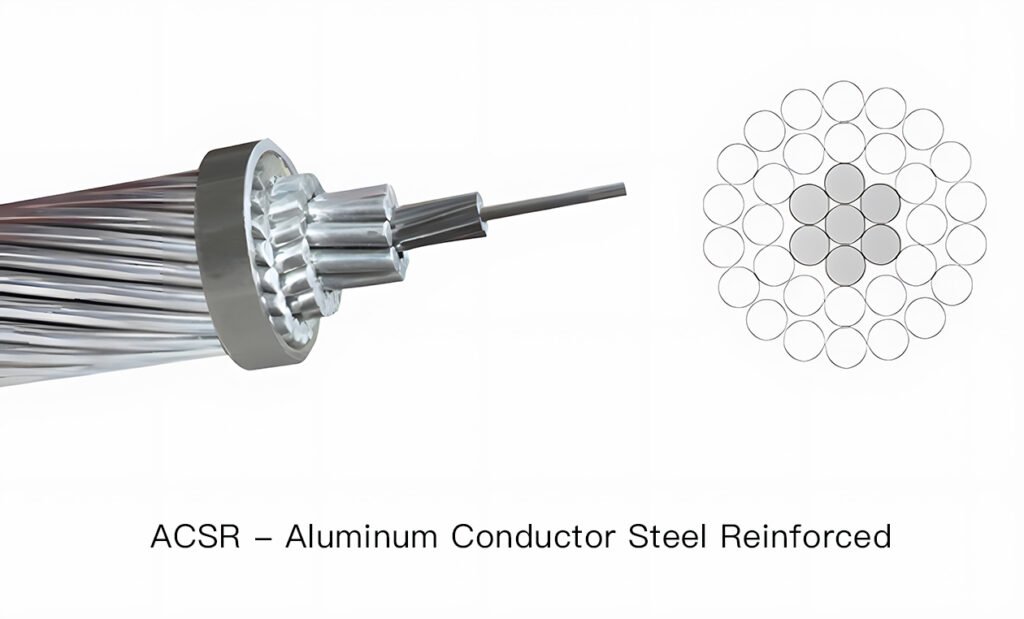
- ACSR features an inner core of high-strength galvanized or coated steel strands wrapped in outer layers of EC-grade aluminum, delivering the ultimate tensile strength required for long spans and heavy ice/wind loading conditions.
Technical Parameter Comparison Matrix
The following structural matrix outlines the mechanical, electrical, and thermal boundaries of AAC, AAAC, and ACSR conductors based on industry baselines (ASTM/IEC specifications).
| Technical Parameter | AAC (All Aluminum Conductor) | AAAC (All Aluminum Alloy Conductor) | ACSR (Aluminum Conductor Steel Reinforced) |
| Material Composition | 1350-H19 Aluminum ($\ge$ 99.7% pure) | 6201-T81 Al-Mg-Si Alloy | 1350-H19 Al / Galvanized Steel Core |
| Electrical Conductivity | ~61.2% IACS | ~52.5% IACS | ~61% IACS (Aluminum layers only) |
| Tensile Strength | Low (approx. 160–200 MPa) | Medium-High (approx. 295–325 MPa) | High to Very High (Up to 1,200+ MPa core) |
| Strength-to-Weight Ratio | Low | High | Medium (High weight due to steel) |
| Corrosion Resistance | High (in benign environments) | Excellent (Optimal for coastal areas) | Moderate (Prone to galvanic corrosion if breached) |
| Max Continuous Temp. | 75°C to 90°C | 90°C | 75°C to 90°C |
| Primary Application | Urban distribution, short spans | Coastal distribution, medium-long spans | High-voltage transmission, long spans |
Individual Conductor Specifications and Structural Breakdown
All Aluminum Conductor (AAC) Overview
AAC is manufactured in compliance with ASTM B231 and IEC 61089 standards. Because it is comprised entirely of EC-grade aluminum, it exhibits excellent galvanic corrosion resistance and high conductivity. However, due to the low yield strength of pure aluminum, its application is strictly constrained by structural sag. It is primarily deployed in urban areas where span lengths are short and support structures are closely spaced.
All Aluminum Alloy Conductor (AAAC) Overview
AAAC is engineered using 6201-T81 aluminum alloy according to ASTM B399 and IEC 60104. The addition of magnesium and silicon elements combined with heat-treatment enhances the tensile strength by nearly 60% compared to standard AAC, while only sacrificing approximately 9% IACS conductivity. This high strength-to-weight ratio allows for longer spans, reduced sag, and decreased structural loading on transmission towers.
Aluminum Conductor Steel Reinforced (ACSR) Overview
ACSR is designed under ASTM B232 and IEC 61089 protocols to resolve ultra-long span and high-load engineering challenges. The mechanical load is fundamentally borne by the central steel core (which may be galvanized, aluminized, or mischmetal-coated), while the outer aluminum strands serve as the primary current path. The primary drawback of ACSR is its higher total weight and vulnerability to internal galvanic corrosion in highly corrosive or marine environments.